
India information · Places & topics
Amaravati Stupa
Buddhist archaeological site beside historic Amaravati and Dharanikota, Palnadu district
Wikipedia — Amaravati Stupa ↗Indias.com source-based synthesis and abridgement of Wikipedia contributor text under CC BY-SA 4.0, captured 21 November 2026. Wording and organisation adapted; this is background information, not a live travel or administrative update.
Tags: Amaravati Stupa · heritage · Palnadu · Krishna River · Satavahana dynasty
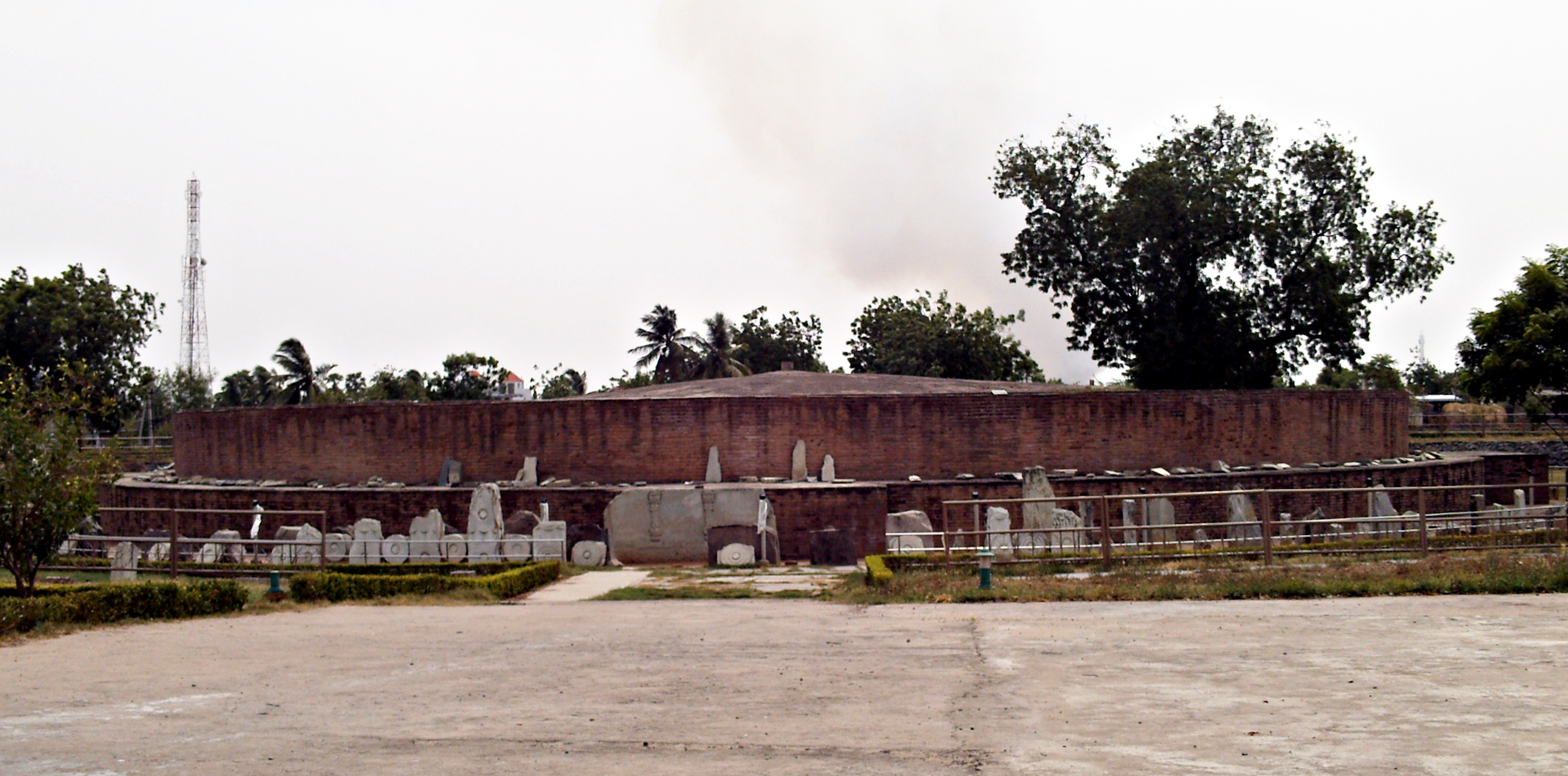
Amaravati Stupa, also known as the Mahachaitya or great sanctuary, is a major Buddhist archaeological site on the Krishna River in Andhra Pradesh. It belongs to the historic Amaravati–Dharanikota landscape in Palnadu district, not the modern planned capital city in Guntur district.
The surviving site and its dispersed limestone sculpture reveal a long history of Buddhist worship and artistic patronage. Many carved pieces are now in museums, so the archaeological remains and museum collections tell complementary parts of the story.
Geographic identity: the older settlement
The historic village source places Amaravati in Palnadu district on the banks of the Krishna River. Dharanikota is the adjacent ancient settlement associated with the name Dhanyakataka. Older publications often describe the region using earlier district boundaries.
Amaravati capital city is a separate planned development farther east. A reference to Amaravati Buddhist heritage normally concerns the historic settlement and stupa, not a capital-government building.
Construction and uncertain beginnings
The stupa source discusses a possible beginning in the third century BCE, but explicitly says the foundation date is not decisively established. Surviving architectural and sculptural evidence includes a post-Mauryan phase from the second century BCE.
The monument was enlarged and remodelled over several periods. Railings, drum slabs and sculptured panels were added or replaced. This chronology makes a single precise construction date misleading; the site developed over centuries.
Sculpture and the Amaravati school
The carved limestone reliefs include Buddhist narratives, decorative motifs and representations of the stupa itself. These images help scholars understand the appearance of a monument whose original superstructure no longer stands intact.
Art historians distinguish the Amaravati or Andhra style from the Mathura and Gandhara traditions. The source describes artistic connections extending toward Sri Lanka and Southeast Asia, alongside maritime links along the eastern Indian coast.
Archaeology and museum collections
Important surviving sculptures are held at the Amaravati Archaeological Museum, the Government Museum in Chennai and the British Museum in London, with further pieces elsewhere. Their dispersal is part of the modern history of recovery and collecting.
Objects in a museum should be read with their labels and archaeological context. The photograph on this page shows the surviving stupa site, not an intact ancient dome or a reconstruction of the complete monument.
Heritage context and practical checks
The Satavahana dynasty provides an important regional historical connection, while the site remained significant beyond a single dynastic period. Buddhism, trade, patronage and sculpture all contribute to its wider interpretation.
Confirm museum and site opening times, entry rules and local access directly before travel. This article deliberately does not repeat contradictory railway, district or dating labels found in some tourism summaries.
Related articles
- Satavahana dynastyHistorical dynasty of the Deccan; not a modern administrative territory
- Kakatiya dynastyHistorical dynasty centred on the Warangal region in present-day Telangana
- Vijayanagara EmpireHistorical South Indian empire centred on the Hampi region in Karnataka
- Qutb MinarDelhi Sultanate victory tower in the Qutb complex, Mehrauli, South Delhi
Related
- Andhra Pradesh state guide
- Modern Amaravati capital city
- Krishna River
- Satavahana dynasty