
Places of India
Gujarat
History, geography, economy and culture of Gujarat
Wikipedia — Gujarat ↗Adapted from the linked English Wikipedia article, retrieved 20 November 2026, under CC BY-SA 4.0. Headings and paragraph selections have been edited; source contributors are recorded in the linked article history. Historical statistics retain their original reference periods.
Tags: Places · Gujarat
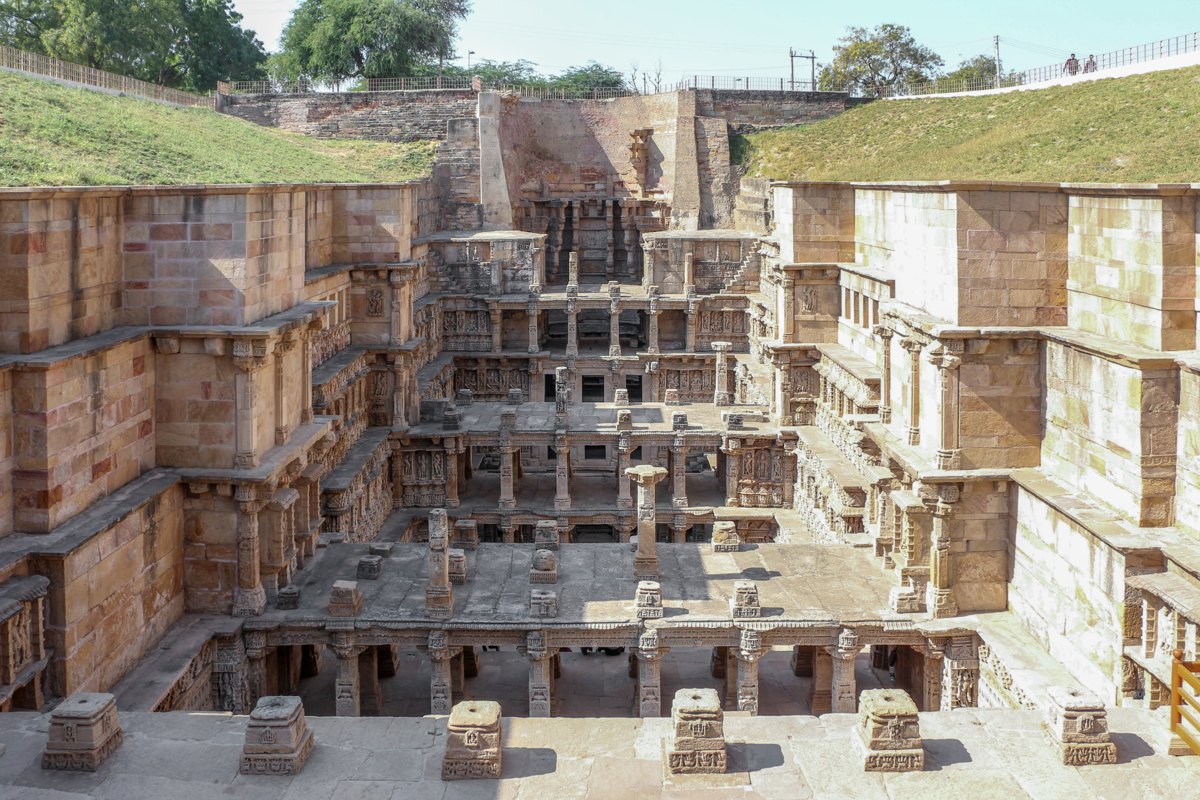
Gujarat (Gujarati: Gujarāt, pronounced [ˈɡudʒəɾaːt] ) is a state along the western coast of India. Its coastline of about 2,340 km (1,450 mi) is the longest in the country, most of which lies on the Kathiawar peninsula. Gujarat is the fifth-largest Indian state by area, covering some 196,024 km2 (75,685 mi2); and the ninth-most populous state, with a population of 60.4 million in 2011. It is bordered by Rajasthan to the northeast, Dadra and Nagar Haveli and Daman and Diu to the south, Maharashtra to the southeast, Madhya Pradesh to the east, and the Arabian Sea and the Pakistani province of Sindh to the west. Gujarat's capital city is Gandhinagar, while its largest city is Ahmedabad. The Gujaratis are indigenous to the state, and their language, Gujarati, is the state's official language. Gujarat state encompasses 23 sites of the ancient Indus Valley Civilisation (more than any other state). The most important sites are Lothal (the world's first dry dock), Dholavira (the fifth largest site), and Gola Dhoro (where five uncommon seals were found). Lothal is believed to have been one of the world's first seaports. Gujarat's coastal cities, chiefly Bharuch and Khambhāt, served as ports and trading centres during the Maurya and Gupta empires, and during the succession of royal Saka dynasties in the Western Satraps era. Along with Bihar, Mizoram and Nagaland, Gujarat is one of the four Indian states to prohibit the sale of alcohol. The Gir National Park in Gujarat is home to the only wild population of the Asiatic lion in the world. Gujarat is regarded as one of the most industrialised states and has a low unemployment rate. The economy of Gujarat is the fourth-largest in India, with a gross state domestic product (GSDP) of ₹33.24 trillion (US$360 billion) and has the country's ninth-highest GSDP per capita of ₹371,000 (US$4,000). Gujarat has the highest exports of all states, accounting for around one-third of national exports. It ranks 21st among Indian states and union territories in human development index. The world's largest data center is being developed by Reliance Industries in Jamnagar. The state has one of the lowest crime rates, with Ahmedabad, Vadodara and Surat crowned among the five safest cities in India.
Etymology
Parts of modern Rajasthan and Gujarat were known as the Gurjarat or Gurjaradesha region for centuries before the Mughal period. It is generally believed that the region derived its name from the Gurjars.
Ancient history
Gujarat was one of the main central areas of the Indus Valley Civilisation, which was spread across modern-day northern India and Pakistan. It contains ancient metropolitan cities from the Indus Valley Civilisation such as Lothal, Dholavira and Gola Dhoro. The ancient city of Lothal was where India's first port was established. The ancient city of Dholavira is one of the largest and most prominent archaeological sites in India, belonging to the Indus Valley Civilisation. The most recent discovery was Gola Dhoro. Altogether, about fifty Indus Valley settlement ruins have been discovered in Gujarat.
The ancient history of Gujarat was enriched by the commercial activities of its inhabitants. There is clear historical evidence of trade and commerce ties with Egypt, Bahrain and Sumer in the Persian Gulf during the time period of 1000 to 750 BCE. There was a succession of various polities such as the Maurya Empire, Satavahana dynasty, Gupta Empire, Gurjara-Pratihara Empire, as well as regional ones such as the Western Satraps, the Kingdom of Valabhi, the Kingdom of Gujarat, the Sultanate of Gujarat, and finally the Kingdom of Baroda. The early history of Gujarat includes the imperial grandeur of Chandragupta Maurya who conquered a number of earlier states in what is now Gujarat. Pushyagupta, a Vaishya, was appointed the governor of Saurashtra by the Mauryan regime. He ruled Girinagar (modern-day Junagadh) (322 BCE to 294 BCE) and built a dam on the Sudarshan lake. Emperor Ashoka the Great, the grandson of Chandragupta Maurya, not only ordered his edicts engraved in the rock at Junagadh, but also asked Governor Tusherpha to cut canals from the lake where an earlier Indian governor had built a dam. Between the decline of Mauryan power and Saurashtra coming under the sway of the Samprati Mauryas of Ujjain, there was an Indo-Greek defeat in Gujarat of Demetrius. In 16th-century manuscripts, there is an apocryphal story of a merchant of King Gondophares landing in Gujarat with Apostle Thomas. The incident of the cup-bearer torn apart by a lion might indicate that the port city described is in Gujarat. For nearly 300 years from the start of the 1st century CE, Saka rulers played a prominent part in Gujarat's history. The weather-beaten rock at Junagadh gives a glimpse of the ruler Rudradaman I (100 CE) of the Saka satraps known as Western Satraps, or Kshatraps. Mahakshatrap Rudradaman I founded the Kardamaka dynasty which ruled from Anupa on the banks of the Narmada up to the Aparanta region bordering Punjab. In Gujarat, several battles were fought between the Indian dynasties such as the Satavahana dynasty and the Western Satraps. The greatest and the mightiest ruler of the Satavahana dynasty was Gautamiputra Satakarni who defeated the Western Satraps and conquered some parts of Gujarat in the 2nd century CE. The Kshatrapa dynasty was replaced by the Gupta Empire with the conquest of Gujarat by Chandragupta Vikramaditya. Vikramaditya's successor Skandagupta left an inscription (450 CE) on a rock at Junagadh which gives details of the governor's repairs to the embankment surrounding Sudarshan lake after it was damaged by floods. The Anarta and Saurashtra regions were both parts of the Gupta empire. Towards the middle of the 5th century, the Gupta empire went into decline. Senapati Bhatarka, the general of the Guptas, took advantage of the situation and in 470 set up the Kingdom of Valabhi. He shifted his capital from Giringer to Valabhi, near Bhavnagar, on Saurashtra's east coast. The Maitrakas of Vallabhi became very powerful with their rule prevailing over large parts of Gujarat and adjoining Malwa. A university was set up by the Maitrakas, which came to be known far and wide for its scholastic pursuits and was compared with the noted Nalanda University. It was during the rule of Dhruvasena Maitrak that Chinese philosopher-traveler Xuanzang/I Tsing visited in 640 along the Silk Road. Gujarat was known to the ancient Greeks and was familiar with other Western centres of civilisation through the end of the European Middle Ages. The oldest written record of Gujarat's 2,000-year maritime history is documented in a Greek book titled The Periplus of the Erythraean Sea: Travel and Trade in the Indian Ocean by a Merchant of the First Century.
Medieval history
In the early 8th century, the Arabs of the Umayyad Caliphate established an empire in the name of the rising religion of Islam, which stretched from Spain in the west to Afghanistan and modern-day Pakistan in the east. Al-Junaid, the successor of Qasim, finally subdued the Hindu resistance within Sindh and established a secure base. The Arab rulers tried to expand their empire southeast, which culminated in the Caliphate campaigns in India fought in 730; they were defeated and expelled west of the Indus river, probably by a coalition of the Indian rulers Nagabhata I of the Gurjara-Pratihara dynasty, Vikramaditya II of the Chalukya dynasty and Bappa Rawal of the Guhila dynasty. After this victory, the Arab invaders were driven out of Gujarat. General Pulakeshin, a Chalukya prince of Lata, received the title Avanijanashraya (refuge of the people of the earth) and honorific of "Repeller of the unrepellable" by the Chalukya emperor Vikramaditya II for his victory at the battle at Navsari, where the Arab troops suffered a crushing defeat. In the late 8th century, the Kannauj Triangle period started. The three major Indian dynasties – the northwestern Indian Gurjara-Pratihara dynasty, the southern Indian Rashtrakuta dynasty and the eastern Indian Pala Empire – dominated India from the 8th to 10th centuries. During this period the northern part of Gujarat was ruled by the northern Indian Gurjara-Pratihara dynasty and the southern part of Gujarat was ruled by the southern Indian Rashtrakuta dynasty. However, the earliest epigraphical records of the Gurjars of Broach attest that the royal bloodline of the Gurjara-Pratihara dynasty of Dadda I, II and III (650–750) ruled south Gujarat. Southern Gujarat was ruled by the Indian Rashtrakuta dynasty until it was captured by the Indian ruler Tailapa II of the Western Chalukya Empire. Zoroastrians from Greater Iran migrated to the western borders of India (Gujarat and Sindh) during the 8th or 10th century, to avoid persecution by Muslim invaders who were in the process of conquering Iran. The descendants of those Zoroastrian refugees came to be known as the Parsi. Subsequently, Lāṭa in southern Gujarat was ruled by the Rashtrakuta dynasty until it was captured by the Western Chalukya ruler Tailapa II. The Chaulukya dynasty ruled the Kingdom of Gujarat from 960 to 1243. Gujarat was a major center of Indian Ocean trade, and their capital at Anhilwara (Patan) was one of the largest cities in India, with a population estimated at 100,000 in the year 1000. Under the rule of Subhatvarman (1194–1209 CE), a Parmara ruler in central India, Jainism faced hardships as a result of the ruler's animosity towards the religion. Subhatavarman attacked Gujarat and plundered large number of Jain temples in Dabhoi and Cambay in 11th century. Subhatavarman, during his campaigns in Lata, destroyed numerous Jain temples. After 1243, the Solankis lost control of Gujarat to their feudatories, of whom the Vaghela chiefs of Dholka came to rule the Kingdom of Gujarat. In 1292, the Vaghelas became tributaries of the Yadava dynasty of Devagiri in the Deccan. Karandev of the Vaghela dynasty was the last Hindu ruler of Gujarat. He was defeated and overthrown by the superior forces of Alauddin Khalji from Delhi in 1297. With his defeat, Gujarat became part of the Delhi Sultanate, and the Rajput hold over Gujarat would never be restored. Fragments of printed cotton from Gujarat have been discovered in Egypt, providing evidence for medieval trade in the western Indian Ocean. These fragments represent the Indian cotton traded in Egypt during the Fatimid, Ayyubid and Mamluk periods, from the 10th to 16th centuries. Similar cotton was also traded as far east as Indonesia.
Islamic conquests (1197–1614)
After the Ghoris had assumed a position of Muslim supremacy over North India, Qutbuddin Aibak attempted to conquer Gujarat and annexe it to his empire in 1197, but failed in his ambitions. An independent Muslim community continued to flourish in Gujarat for the next hundred years, championed by Arab merchants settling along the western coast. From 1297 to 1300, Alauddin Khalji, the Turko-Afghan Sultan of Delhi, destroyed the Hindu metropolis of Anhilwara and incorporated Gujarat into the Delhi Sultanate. After Timur sacked Delhi at the end of the 14th century, weakening the Sultanate, Gujarat's Muslim Khatri governor Zafar Khan Muzaffar (Muzaffar Shah I) asserted his independence, and his son, Sultan Ahmed Shah (ruled 1411–1442), established Ahmedabad as the capital. Khambhat eclipsed Bharuch as Gujarat's most important trade port. Gujarat's relations with Egypt, which was then the premier Arab power in the Middle East, remained friendly over the next century and the Egyptian scholar, Badruddin-ad-Damamimi, spent several years in Gujarat in the shade of the Sultan before proceeding to the Bahmani Sultanate on the Deccan Plateau. Shah e Alam, a famous Sufi saint of the Chishti order who was the descendant of Makhdoom Jahaniyan Jahangasht from Bukhara, soon arrived in a group that included Arab theologian Ibn Suwaid, several Sayyid Sufi members of the Aydarus family of Tarim in Yemen, Iberian court interpreter Ali al-Andalusi from Granada, and the Arab jurist Bahraq from Hadramaut who was appointed a tutor of the prince. Among the illustrious names who arrived during the reign of Mahmud Begada was the philosopher Haibatullah Shah Mir from Shiraz, and the scholar intellectual Abu Fazl Ghazaruni from Persia who tutored and adopted Abu'l-Fazl ibn Mubarak, author of the Akbarnama. Later, a close alliance between the Ottoman Turks and Gujarati sultans to effectively safeguard Jeddah and the Red Sea trade from Portuguese imperialism, encouraged the existence of powerful Rumi elites within the kingdom who took the post of viziers in Gujarat keen to maintain ties with the Ottoman state. Humayun also briefly occupied the province in 1536, but fled due to the threat Bahadur Shah, the Gujarat king, imposed. The Sultanate of Gujarat remained independent until 1572, when the Mughal emperor Akbar conquered it and annexed it to the Mughal Empire. The Surat port (the only Indian port facing west) then became the principal port of India during Mughal rule, gaining widespread international repute. The city of Surat, famous for its exports of silk and diamonds, had reached a par with contemporary Venice and Beijing, great mercantile cities of Europe and Asia, and earned the distinguished title, Bab al-Makkah (Gate of Mecca). Drawn by the religious renaissance taking place under Akbar, Mohammed Ghaus moved to Gujarat and established spiritual centers for the Shattari Sufi order from Iran, founding the Ek Toda Mosque and producing such devotees as Wajihuddin Alvi of Ahmedabad whose many successors moved to Bijapur during the height of the Adil Shahi dynasty. At the same time, Zoroastrian high priest Azar Kayvan who was a native of Fars, immigrated to Gujarat founding the Zoroastrian school of illuminationists which attracted key Shi'ite Muslim admirers of the Safavid philosophical revival from Isfahan. Early 14th-century Maghrebi adventurer, Ibn Battuta, who famously visited India with his entourage, recalls in his memoirs about Cambay, one of the great emporia of the Indian Ocean that indeed:
Cambay is one of the most beautiful cities as regards the artistic architecture of its houses and the construction of its mosques. The reason is that the majority of its inhabitants are foreign merchants, who continually build their beautiful houses and wonderful mosques – an achievement in which they endeavor to surpass each other.
Many of these "foreign merchants" were transient visitors, men of South Arabian and Persian Gulf ports, who migrated in and out of Cambay with the rhythm of the monsoons. But others were men with Arab or Persian patronyms whose families had settled in the town generations, even centuries earlier, intermarrying with Gujarati women, and assimilating everyday customs of the Hindu hinterland. The Age of Discovery heralded the dawn of pioneer Portuguese and Spanish long-distance travel in search of alternative trade routes to "the East Indies", moved by the trade of gold, silver and spices. In 1497, Portuguese explorer Vasco da Gama is said to have discovered the Europe-to-India sea route which changed the course of history, thanks to Kutchi sailor Kanji Malam, who showed him the route from the East African coasts of Mozambique sailing onwards to Calicut off the Malabar coast in India. Later, the Gujarat Sultanate allied with the Ottomans and Egyptian Mamluks naval fleets led by governor-generals Malik Ayyaz and Amir Husain Al-Kurdi, vanquished the Portuguese in the 1508 Battle of Chaul resulting in the first Portuguese defeat at sea in the Indian Ocean. To 16th-century European observers, Gujarat was a fabulously wealthy country. The customs revenue of Gujarat alone in the early 1570s was nearly three times the total revenue of the whole Portuguese Empire in Asia in 1586–87, when it was at its height. Indeed, when the British arrived on the coast of Gujarat, houses in Surat already had windows of Venetian glass imported from Constantinople through the Ottoman Empire. In 1514, the Portuguese explorer Duarte Barbosa described the cosmopolitan atmosphere of Rander known otherwise as City of Mosques in Surat province, which gained the fame and reputation of illustrious Islamic scholars, Sufi-saints, merchants and intellectuals from all over the world:
Ranel (Rander) is a good town of the Moors, built of very pretty houses and squares. It is a rich and agreeable place ... the Moors of the town trade with Malacca, Bengal, Tawasery (Tannasserim), Pegu, Martaban, and Sumatra in all sort of spices, drugs, silks, musk, benzoin and porcelain. They possess very large and fine ships and those who wish Chinese articles will find them there very completely. The Moors of this place are white and well dressed and very rich they have pretty wives, and in the furniture of these houses have china vases of many kinds, kept in glass cupboards well arranged. Their women are not secluded like other Moors, but go about the city in the day time, attending to their business with their faces uncovered as in other parts. The conquest of the Kingdom of Gujarat marked a significant event of Akbar's reign. Being the major trade gateway and departure harbour of pilgrim ships to Mecca, it gave the Mughal Empire free access to the Arabian sea and control over the rich commerce that passed through its ports. The territory and income of the empire were vastly increased.
The Sultanate of Gujarat and the merchants
For the best part of two centuries, the independent Khatri Sultanate of Gujarat was the cynosure of its neighbours on account of its wealth and prosperity, which had long made the Gujarati merchant a familiar figure in the ports of the Indian Ocean. Gujaratis, including Hindus and Muslims as well as the enterprising Parsi class of Zoroastrians, had been specialising in the organisation of overseas trade for many centuries, and had moved into various branches of commerce such as commodity trade, brokerage, money-changing, money-lending and banking. By the 17th century, Chavuse and Baghdadi Jews had assimilated into the social world of the Surat province, later on their descendants would give rise to the Sassoons of Bombay and the Ezras of Calcutta, and other influential Indian-Jewish figures who went on to play a philanthropical role in the commercial development of 19th-century British Crown Colony of Shanghai. Spearheaded by Khoja, Bohra, Bhatiya shahbandars and Moorish nakhudas who dominated sea navigation and shipping, Gujarat's transactions with the outside world had created the legacy of an international transoceanic empire which had a vast commercial network of permanent agents stationed at all the great port cities across the Indian Ocean. These networks extended to the Philippines in the east, East Africa in the west, and via maritime and the inland caravan route to Russia in the north. Tomé Pires, a Portuguese official at Malacca, wrote of conditions during the reigns of Mahmud I and Mozaffar II:
Cambay stretches out two arms; with her right arm she reaches toward Aden and with the other towards Malacca He also described Gujarat's active trade with Goa, the Deccan Plateau and the Malabar. His contemporary, Duarte Barbosa, describing Gujarat's maritime trade, recorded the import of horses from the Middle East and elephants from Malabar, and lists exports which included muslins, chintzes and silks, carnelian, ginger and other spices, aromatics, opium, indigo and other substances for dyeing, cereals and legumes. Persia was the destination for many of these commodities, and they were partly paid for in horses and pearls taken from Hormuz. The latter item, in particular, led Sultan Sikandar Lodi of Delhi, according to Ali-Muhammad Khan, author of the Mirat-i-Ahmadi, to complain that the
support of the throne of Delhi is wheat and barley but the foundation of the realm of Gujarat is coral and pearls Hence, the sultans of Gujarat possessed ample means to sustain lavish patronage of religion and the arts, to build madrasas and ḵānaqāhs, and to provide douceurs for the literati, mainly poets and historians, whose presence and praise enhanced the fame of the dynasty.
Even at the time of Tomé Pires' travel to the East Indies in the early 16th century, Gujarati merchants had earned an international reputation for their commercial acumen and this encouraged the visit of merchants from Cairo, Armenia, Abyssinia, Khorasan, Shiraz, Turkestan and Guilans from Aden and Hormuz. Pires noted in his Suma Orientale:
These [people] are [like] Italians in their knowledge of and dealings in merchandise ... they are men who understand merchandise; they are so properly steeped in the sound and harmony of it, that the Gujaratees say that any offence connected with merchandise is pardonable. There are Gujaratees settled everywhere. They work some for some and others for others. They are diligent, quick men in trade. They do their accounts with fingers like ours and with our very writings.
Gujarat in the Mughal Empire
Gujarat was one of the twelve original subahs (imperial top-level provinces) established by Mughal Emperor (Badshah) Akbar, with a seat at Ahmedabad, bordering on Thatta (Sindh), Ajmer, Malwa and later Ahmadnagar subahs. Aurangzeb, the sixth Mughal Emperor, was born in Dahod, Gujarat. He was the third son and sixth child of Shah Jahan and Mumtaz Mahal. At the time of his birth, his father, Shah Jahan, was then the Subahdar (governor) of Gujarat, and his grandfather, Jehangir, was the Mughal Emperor. Before he became emperor, Aurangzeb was made Subahdar of Gujarat subah as part of his training and was stationed at Ahmedabad. Aurangzeb had great love for his place of birth. In 1704, he wrote a letter to his eldest son, Muhammad Azam Shah, asking him to be kind and considerate to the people of Dahod as it was his birthplace. Muhammad Azam was then the Subedar (governor) of Gujarat. In his letter, Aurangzeb wrote:
My son of exalted rank, the town of Dahod, one of the dependencies of Gujarat, is the birthplace of this sinner. Please consider a regard for the inhabitants of that town as incumbent on you.
Maratha Empire
When the cracks had started to develop in the edifice of the Mughal Empire in the mid-17th century, the Marathas were consolidating their power in the west, Chatrapati Shivaji, the great Maratha ruler, attacked Surat in southern Gujarat twice first in 1664 and again in 1672. These attacks marked the entry of the Marathas into Gujarat. However, before the Maratha had made inroads into Gujarat, the Europeans had made their presence felt, led by the Portuguese, and followed by the Dutch and the English. The Peshwas had established sovereignty over parts of Gujarat and collected taxes and tributes through their representatives. Damaji Rao Gaekwad and Kadam Bande divided the Peshwa territory between them, with Damaji establishing the sway of Gaekwad over Gujarat and making Baroda (present day Vadodara in southern Gujarat) his capital. The ensuing internecine war among the Marathas was fully exploited by the British, who interfered in the affairs of both Gaekwads and the Peshwas. In Saurashtra, as elsewhere, the Marathas were met with resistance. The decline of the Mughal Empire helped form larger peripheral states in Saurashtra, including Junagadh, Jamnagar, Bhavnagar and a few others, which largely resisted the Maratha incursions.
European colonialism (1614–1947)
In the 1600s, the Dutch, French, English and Portuguese all established bases along the western coast of the region. Portugal was the first European power to arrive in Gujarat, and after the Battle of Diu, acquired several enclaves along the Gujarati coast, including Daman and Diu as well as Dadra and Nagar Haveli. These enclaves were administered by Portuguese India under a single union territory for over 450 years, only to be later incorporated into the Republic of India on 19 December 1961 by military conquest. The British East India Company established a factory in Surat in 1614 following the commercial treaty made with Mughal Emperor Nuruddin Salim Jahangir, which formed their first base in India, but it was eclipsed by Bombay after the English received it from Portugal in 1668 as part of the marriage treaty of Charles II of England and Catherine of Braganza, daughter of King John IV of Portugal. The state was an early point of contact with the west, and the first British commercial outpost in India was in Gujarat. 17th-century French explorer François Pyrard de Laval, who is remembered for his 10-year sojourn in South Asia, bears witness in his account that the Gujaratis were always prepared to learn workmanship from the Portuguese, and in turn imparted skills to the Portuguese:
I have never seen men of wit so fine and polished as are these Indians: they have nothing barbarous or savage about them, as we are apt to suppose. They are unwilling indeed to adopt the manners and customs of the Portuguese; yet do they regularly learn their manufactures and workmanship, being all very curious and desirous of learning. In fact, the Portuguese take and learn more from them than they from the Portuguese. Later in the 17th century, Gujarat came under control of the Hindu Maratha Empire that arose, defeating the Muslim Mughals who had dominated the politics of India. Most notably, from 1705 to 1716, Senapati Khanderao Dabhade led the Maratha Empire forces in Baroda. Pilaji Gaekwad, first ruler of Gaekwad dynasty, established the control over Baroda and other parts of Gujarat. The British East India Company wrested control of much of Gujarat from the Marathas during the Second Anglo-Maratha War in 1802–1803. Many local rulers, notably the Maratha Gaekwad Maharajas of Baroda (Vadodara), made a separate peace with the British and acknowledged British sovereignty in return for retaining local self-rule. An epidemic in 1812 killed half the population of Gujarat. Gujarat was placed under the political authority of the Bombay Presidency, with the exception of Baroda State, which had a direct relationship with the Governor-General of India. From 1818 to 1947, most of present-day Gujarat, including Kathiawar, Kutch and northern and eastern Gujarat were divided into hundreds of princely states, but several districts in central and southern Gujarat, namely Ahmedabad, Broach (Bharuch), Kaira (Kheda), Panchmahal and Surat, were governed directly by British officials. In 1819, Sahajanand Swami established the first Swaminarayan Mandir in Kalupur, Ahmedabad.
Post-independence (1947–present)
Initially there was confusion over whether Junagadh would join India or Pakistan. This was resolved in 1947 with a plebiscite for full union with India following the next year. After Indian independence and the partition of India in 1947, the new Indian government grouped the former princely states of Gujarat into three larger units; Saurashtra, which included the former princely states on the Kathiawad peninsula, Kutch, and Bombay state, which included the former British districts of Bombay Presidency together with most of Baroda State and the other former princely states of eastern Gujarat. Bombay state was enlarged to include Kutch, Saurashtra (Kathiawar) and parts of Hyderabad state and Madhya Pradesh in central India. The new state had a mostly Gujarati-speaking north and a Marathi-speaking south. Agitation by Gujarati nationalists, the Mahagujarat Movement, and Marathi nationalists, the Samyukta Maharashtra, for their own states led to the split of Bombay state on linguistic lines; on 1 May 1960, it became the new states of Gujarat and Maharashtra. In 1969 riots, at least 660 died and properties worth millions were destroyed. The first capital of Gujarat was Ahmedabad. The capital of Gujarat was moved to Gandhinagar in 1970. Nav Nirman Andolan was a socio-political movement of 1974. It was a students' and middle class people's movement against economic crisis and corruption in public life. This was the first and last successful agitation after the Independence of India that ousted an elected government. Gujarat has emerged as an important industrial hub in India. In Western India Surat was among the strongest industrial clusters in the 1970s. Between 1971 and 1981 diamond cutting was established as industry in Surat. At the same time the production of artificial silk and a substantial petrochemical industry became a fixture in Surat. The Morvi dam failure, in 1979, resulted in the death of thousands of people and large economic loss. In the 1980s, a reservation policy was introduced in the country, which led to anti-reservation protests in 1981 and 1985. The protests witnessed violent clashes between people belonging to various castes. The 2001 Gujarat earthquake was located about 9 km south-southwest of the village of Chobari in the Bhachau taluka of Kutch District. This magnitude 7.7 shock killed around 20,000 people (including at least 18 in South-eastern Pakistan), injured another 167,000 and destroyed nearly 400,000 homes. In February 2002, the Godhra train burning led to statewide riots, resulting in the deaths of 1,044 people – 790 Muslims and 254 Hindus, and hundreds missing still unaccounted for. The Swaminarayan Akshardham in Gandhinagar was attacked by two terrorists in September 2002, killing 32 people and injuring more than 80 others. National Security Guards intervened to end the siege killing both terrorists. On 26 July 2008 a series of 17 bomb blasts rocked Ahmedabad, killing and injuring several people.
Geography
Gujarat borders the Tharparkar, Badin and Thatta districts of Pakistan's Sindh province to the northwest, is bounded by the Arabian Sea to the southwest, the state of Rajasthan to the northeast, Madhya Pradesh to the east, and by Maharashtra, the Union Territory of Dadra and Nagar Haveli and Daman and Diu to the south. Historically, the north was known as Anarta, the Kathiawar peninsula, "Saurastra", and the south as "Lata". Gujarat was also known as Pratichya and Varuna. The Arabian Sea makes up the state's western coast. The capital, Gandhinagar is a planned city. Gujarat has an area of 75,686 sq mi (196,030 km2) with the longest coastline (24% of Indian sea coast) 1,600 km (990 mi), dotted with 41 ports: one major, 11 intermediate and 29 minor. The Narmada is the largest river in Gujarat followed by the Tapi. The Sabarmati has the longest course through the state. The Sardar Sarovar Project is built on Narmada, one of the major rivers of peninsular India where it is one of only three major rivers that run from east to west – the others being the Tapi and the Mahi. It is about 1,312 km (815 mi) long. Several riverfront embankments have been built on the Sabarmati River. The eastern borders have fringes of low mountains of India, the Aravalli, Sahyadri (Western Ghats), Vindhya and Saputara. Apart from this the Gir hills, Barda, Jessore and Chotila together make up a large minority of Gujarat. Girnar is the tallest peak and Saputara is the only hill-station (hilltop resort) in the state.
Rann of Kutch
Rann (રણ) is Gujarati for desert. The Rann of Kutch is a seasonally marshy saline clay desert in the Thar Desert biogeographic region between the Pakistani province of Sindh and the rest of the state of Gujarat; it commences 8 km (5.0 mi) from the village of Kharaghoda, Surendranagar District.
Prehistoric fauna
In the early 1980s, palaeontologists found dinosaur egg hatcheries and fossils of at least 13 species in Balasinor. The most important find was that of a carnivorous abelisaurid dinosaur named Rajasurus narmadensis which lived in the Late Cretaceous period. A notable discovery in the village of Dholi Dungri was that of Sanajeh indicus, a primitive madtsoiid snake that likely preyed on sauropod dinosaur hatchlings and embryos.
Extant species
As of 2023, Gujarat has 15,016.64 km2 of forest cover, which is about 7.65% of its geographical area. The total recorded forest area in the state is 21,870.35 km2 (11.14%). Among the districts, the Dangs has the largest area under forest cover. Gujarat has four national parks and 21 sanctuaries. It is the only home of Asiatic lions and, outside Africa, is the only present natural habitat of lions. Gir Forest National Park in the southwest part of the state covers part of the lions' habitat. Indian leopards are also found in the state. They are spread across the large plains of Saurashtra and the mountains of South Gujarat. Other national parks include Vansda National Park, Blackbuck National Park, Velavadar, and Narara Marine National Park, Gulf of Kutchh, Jamnagar. Wildlife sanctuaries include Wild Ass Wildlife Sanctuary, Nal Sarovar Bird Sanctuary, Porbandar Bird Sanctuary, Kutch Desert Wildlife Sanctuary, Kutch Bustard Sanctuary, Narayan Sarovar Sanctuary, Jessore Sloth Bear Sanctuary, Anjal, Balaram-Ambaji, Barda, Jambughoda, Khavda, Paniya, Purna, Rampura, Ratan Mahal, and Surpaneshwar. In February 2019, a Bengal tiger claimed to be from Ratapani in Madhya Pradesh was spotted in the area of Lunavada in Mahisagar district, in the eastern part of the state, before being found dead later that month, likely from starvation.
Population
The population of Gujarat was 60,439,692 (31,491,260 males and 28,948,432 females) according to the 2011 census data. The population density is 308 persons per square kilometre (800 persons/mi2), lower than other Indian states. As per the census of 2011, the state has a sex ratio of 918 females for every 1000 males, one of the lowest (ranked 24) among the 29 states in India.
Social groups
While Gujarati speakers constitute a majority of Gujarat's population, the metropolitan areas of Ahmedabad, Vadodara and Surat are cosmopolitan, with numerous other ethnic and language groups. Marwaris compose large minorities of economic migrants; smaller communities of people from the other states of India have also migrated to Gujarat for employment. Luso-Indians, Anglo-Indians, Jews and Parsis also live in the areas. Sindhi presence is traditionally important here following the Partition of India in 1947. The Koli forms the largest caste-cluster, comprising 24% of the total population of the state.
Language
Gujarati is the official language of the state of Gujarat. An Indo-Aryan language, it is spoken natively by 86% of the state's population, or 52 million people (as of 2011). Hindi is the second-most frequently spoken language in the state, being spoken by more than 6% of the population. Marathi also is spoken in urban areas. 1.9% speak Sindhi, 1.5% Marathi, 1.4% Bhili, 0.79% Urdu, 0.30% Odia. In Kutch region people speak the Kutchi and Sindhi languages and Memoni is spoken in Kathiawar by Sindhi Memons. Almost 88% of the Gujarati Muslims speak Gujarati as their mother tongue and the remaining 12% speak Urdu. In rural areas among the tribals, various Bhil dialects are spoken by approximately 1.37% of the population. In the northeast part of the state Bhili is spoken, in the central part of the state Bhili, Bhilali, and Vasava are spoken, while in the southeast part of the state Dangi, Varli, Chodri, and Dhodia (which are related to Marathi) are spoken.
Three language formula
First language: Gujarati/Hindi/English Second language: Gujarati/English Third language: Hindi
Religion
According to 2011 census, the religious makeup in Gujarat was 88.57% Hindu, 9.67% Muslim, 0.96% Jain, 0.52% Christian, 0.10% Sikh, 0.05% Buddhist and 0.03% others. Around 0.1% did not state any religion. Hinduism is the majority religion, and is over 93% in rural areas. Muslims are the biggest minority in the state accounting for 9.7% of the population. Gujarat has the third-largest population of Jains in India, following Maharashtra and Rajasthan, almost all of whom live in urban areas like Vadodara, Ahmedabad and Surat.
Fiscal health index
Gujarat ranked fifth in the Fiscal Health Index (FHI) 2025, with a score of 50.5.
Governance and administration
Gujarat is governed by a Legislative Assembly of 182 members. Members of the Legislative Assembly are elected on the basis of adult suffrage from one of 182 constituencies, of which 13 are reserved for scheduled castes and 27 for scheduled tribes. The term of office for a member of the Legislative Assembly is five years. The Legislative Assembly elects a speaker who presides over the meetings of the legislature. A governor is appointed by the President of India, and is to address the state legislature after every general election and the commencement of each year's first session of the Legislative Assembly. The leader of the majority party or coalition in the legislature (Chief Minister) or his or her designee acts as the Leader of the Legislative Assembly. The Governor is the constitutional head of the state, while the Gujarat Council of Ministers, headed by the Chief Minister, exercises executive authority and functions as the de facto government. After the independence of India in 1947, the Indian National Congress (INC) ruled the Bombay State (which included present-day Gujarat and Maharashtra). Congress continued to govern Gujarat after the state's creation in 1960. During and after India's State of Emergency of 1975–1977, public support for the INC eroded, but it continued to hold government until 1995 with the brief rule of nine months by Janata Morcha. In the 1995 Assembly elections, the Congress lost to the Bharatiya Janata Party (BJP) led by Keshubhai Patel who became the Chief Minister. His government lasted only two years. The fall of that government was provoked by a split in the BJP led by Shankersinh Vaghela. BJP again won election in 1998 with clear majority. In 2001, following the loss of two assembly seats in by-elections, Keshubhai Patel resigned and yielded power to Narendra Modi. BJP retained a majority in the 2002 election, and Narendra Modi remained as Chief Minister. On 1 June 2007, Narendra Modi became the longest serving Chief Minister of Gujarat. BJP retained the power in subsequent elections in 2007 and 2012 and Narendra Modi continued as the chief minister. After Narendra Modi became the prime minister of India in 2014, Anandiben Patel became the first female chief minister of the state. Vijay Rupani took over as chief minister and Nitin Patel as deputy chief minister on 7 August 2016 after Anandiben Patel resigned earlier on 3 August. Bhupendrabhai Patel became chief minister in September 2021 after the resignation of Vijay Rupani. The incumbent chief secretary of Gujarat is Raj Kumar and director general of police (DGP) is KLN Rao. Gujarat has 34 districts, listed below:
For administrative purposes, Gujarat is structurally divided into districts (Zilas), prants (subdivisions), talukas, and villages, primarily to facilitate land revenue administration. The state is divided into 34 districts, 122 prants, 265 talukas and 18,584 revenue villages. There are 17 municipal corporations and 152 municipalities for urban governance, and 33 district panchayats, 247 taluka panchayats, and 16,778 gram panchayats for rural governance. Elections to these local bodies are held every five years for their members and councils.
Economy
Gujarat is the most industrialised state in India and has the highest industrial output when compared to other states in the country. It has the highest exports of any Indian state, accounting for 30.7% of all Indian exports in 2024–2025. It leads in diverse industrial sectors such as chemicals, petrochemicals, dairy, drugs and pharmaceuticals, cement and ceramics, gems and jewellery, textiles and engineering. It has the highest electricity production capacity and maritime port cargo volume among all states in India. Major agricultural produce of the state includes cotton, groundnuts (peanuts), dates, sugar cane, milk and milk products. Industrial products include cement and petrol. Gujarat is ranked number one in the pharmaceutical industry in India, with a 33% share in drug manufacturing and 28% share in drug exports. The state has 130 USFDA certified drug manufacturing facilities. Ahmedabad and Vadodara are considered as pharmaceutical hubs, as there are many big and small pharmaceutical companies established in these cities. Gujarat has the longest coastline in India (1600 km), and its ports (both private and public sector) handle around 40% of India's ocean cargo, with Mundra Port located in Gulf of Kutch being the largest port of India by cargo handled (144 million tons) due to its favourable location on the westernmost part of India and closeness to global shipping lanes. Gujarat also contributes around 20% share in India's industrial production and merchandise exports. According to a 2009 report on economic freedom by the Cato Institute, Gujarat is the most free state in India (the second one being Tamil Nadu). Reliance Industries operates the oil refinery at Jamnagar, which is the world's largest grass-roots refinery at a single location. The world's largest shipbreaking yard is in Gujarat near Bhavnagar at Alang. India's only Liquid Chemical Port Terminal at Dahej, developed by Gujarat Chemical Port Terminal Co Ltd. Gujarat has two of the three liquefied natural gas (LNG) terminals in the country (Dahej and Hazira). Two more LNG terminals are proposed, at Pipavav and Mundra. According to most recent data, Gujarat is considered the fourth richest state in India. Gujarat has 85% village connectivity with all‐weather roads. Nearly 100% of Gujarat's 18,000 villages have been connected to the electrical grid for 24-hour power to households and eight hours of power to farms, through the Jyotigram Yojana. As of 2015, Gujarat ranks first nationwide in gas-based thermal electricity generation with a national market share of over 8%, and second nationwide in nuclear electricity generation with national market share of over 1%. The state registered 12.8% agricultural growth in the last five years against the national average of 2%. Gujarat records highest decadal agricultural growth rate of 10.97%. Over 20% of the S&P CNX 500 conglomerates have corporate offices in Gujarat. As per RBI report, in year 2006–07, 26% of total bank finance in India was in Gujarat. According to a 2012 survey report of the Chandigarh Labour Bureau, Gujarat had the lowest unemployment rate of 1% against the national average of 3.8%. Legatum Institute's Global Prosperity Index 2012 recognised Gujarat as one of the two highest-scoring among all states of India on matters of social capital. The state ranks 15th alongside Germany in a list of 142 nations worldwide: higher than several developed nations.