

Arunachal Pradesh, with its rich cultural tapestry and natural beauty, offers a unique experience for travelers and researchers alike. Its commitment to preserving tribal heritage while embracing development makes it a fascinating region in India's northeastern frontier.
Arunachal Pradesh
Wikipedia Article: Arunachal Pradesh
Arunachal Pradesh (/ˌɑːrəˌnɑːtʃəl prəˈdɛʃ/) is a state in northeast India. It was formed from the North-East Frontier Agency (NEFA) region, and India declared it as a state on 20 February 1987. Itanagar is its capital and largest town. ( Wikipedia )
Overview
Arunachal Pradesh, known as the "Land of the Dawn-Lit Mountains," is India's northeasternmost state, sharing international borders with Bhutan, China, and Myanmar. It is renowned for its diverse tribal cultures, rich biodiversity, and breathtaking landscapes.
History
Historically referred to as the North-East Frontier Agency (NEFA), Arunachal Pradesh was administered by the Ministry of External Affairs until it became a Union Territory in 1972 and achieved statehood on 20 February 1987. The region has been mentioned in ancient Hindu scriptures like the Kalika Purana and Mahabharata. It is also notable for the Tawang Monastery, one of the largest Buddhist monasteries in India.
Culture and Ethnicity
Arunachal Pradesh is home to 26 major tribes and over 100 sub-tribes, each with its own unique traditions and customs. The Monpas and Sherdukpens of Tawang and West Kameng districts follow Mahayana Buddhism. The Adis, Akas, Apatanis, Bangnis, Mijis, Mishmis, Nishis, and Thongsas worship the Sun and Moon Gods. The Octes and Wanchos of Tirap district adhere to Vaishnavism. Traditional festivals like Losar, Solung, Boori-Boot, Mopin, Dree, Nyokum, Reh, and Si-Donyi are celebrated with enthusiasm.
Major Cities and Towns
Itanagar : The state capital, housing the Legislative Assembly and various administrative offices.
Tawang : Famous for the Tawang Monastery and scenic beauty.
Ziro : Known for the Ziro Music Festival and the Apatani tribal culture.
Pasighat : The oldest town in Arunachal Pradesh, located on the banks of the Siang River.
Bomdila : Offers panoramic views of the Himalayan landscapes.
Temples and Monasteries
Tawang Monastery : The largest monastery in India and a significant center of Mahayana Buddhism.
Malinithan Temple : An archaeological site with ruins of a temple dedicated to the Hindu goddess Durga.
Parshuram Kund : A sacred Hindu pilgrimage site on the Brahmaputra River.
Bhismaknagar Fort : An ancient fort associated with the legend of Rukmini and Lord Krishna.
Geography
Arunachal Pradesh spans an area of 83,743 square kilometers, characterized by mountainous terrains, deep valleys, and dense forests. The state is divided into five river valleys: the Kameng, Subansiri, Siang, Lohit, and Tirap. The highest peak is Kangto, rising to about 7,060 meters.
People and Languages
The state's population is predominantly tribal, with each tribe speaking its own language or dialect. The languages belong mainly to the Tibeto-Burman family. Hindi, English, and Assamese are commonly used for inter-tribal communication. ( Kaziranga Tours & Safaris , Encyclopedia Britannica )
Cuisine
Arunachali cuisine is diverse, reflecting its tribal cultures. Staples include rice, meat, and green vegetables. Popular dishes are Thukpa (noodle soup), Momos (dumplings), and boiled rice cakes. Apong, a traditional rice beer, is commonly consumed during festivals.
Healthcare
Healthcare facilities in Arunachal Pradesh are developing, with hospitals and primary health centers established in major towns. Traditional medicine, using local herbs and practices, is also prevalent among tribal communities.
Religions
The religious landscape includes indigenous beliefs, Buddhism, Hinduism, and Christianity. Buddhism is predominant in the western districts, while Christianity has a significant following in other parts. Indigenous animistic practices are still observed among many tribes.
Tourism
Arunachal Pradesh offers a plethora of tourist attractions:
Adventure Tourism : Trekking, river rafting, and mountaineering in the Himalayan terrains.
Eco-Tourism : Exploring the rich biodiversity in national parks and sanctuaries.
Cultural Tourism : Experiencing tribal festivals, dances, and crafts.
Spiritual Tourism : Visiting monasteries and pilgrimage sites.
Politics and Government
Arunachal Pradesh has a unicameral legislature with 60 members. The state is governed by the Chief Minister and the Council of Ministers. It sends two members to the Lok Sabha and one to the Rajya Sabha.
Transportation
Roads : The state has a network of national and state highways connecting major towns.
Airports : The state has several airports, including Tezu Airport and Pasighat Airport, enhancing connectivity.
Railways : The state has a small network of railways approaching through Harmuty in Arunachal Pradesh. ( Ministry of Tourism )
Education System
Educational institutions include primary schools, secondary schools, and higher education centers like Rajiv Gandhi University and the National Institute of Technology, Arunachal Pradesh.
Agriculture and Allied Activities
Agriculture is the mainstay, with crops like rice, maize, millet, and pulses. Shifting cultivation (jhum) is practiced in hilly areas. Horticulture, including orange and apple cultivation, is also significant. Fishing and cattle farming contribute to the rural economy.
Industries
Industrial development is in nascent stages, focusing on:
Handicrafts and Handlooms : Traditional weaving and bamboo crafts.
Food Processing : Processing of fruits and spices.
Sericulture : Silk production, especially in tribal areas.
Tourism : Eco and cultural tourism as emerging sectors. ( Ministry of Tourism )
Dams and Hydropower
Arunachal Pradesh has significant hydropower potential, with several projects planned or under construction to harness its river systems for electricity generation.
Arunachal Pradesh, with its rich cultural tapestry and natural beauty, offers a unique experience for travelers and researchers alike. Its commitment to preserving tribal heritage while embracing development makes it a fascinating region in India's northeastern frontier.
More in india
Indian Economy
The Indian economy presents a complex picture of impressive achievements alongside persistent challenges. Its strengths include a large, youthful population; a vibrant entrepreneurial ecosystem; strong service sectors; and accelerating digital adoption.

Nuclear Bomb - What if?
Nuclear weapons are stored and maintained under extremely rigorous security and safety protocols. The most effective protection remains prevention of nuclear conflict through international diplomacy, arms control agreements, and crisis management mechanisms.

Indian Entertainment
When one thinks of Indian entertainment on a global scale, Bollywood immediately springs to mind. Based primarily in Mumbai, the Hindi film industry is a behemoth, producing a vast number of films annually, often characterized by their vibrant musical numbers

Indian Industry
India's economy has evolved into a multifaceted system encompassing traditional sectors like agriculture and textiles, as well as cutting-edge industries such as pharmaceuticals, information technology, and renewable energy.

Indian Cities
From the bustling metropolises that pulse with economic energy to the ancient centers steeped in history and culture, India's cities are the vibrant heartbeats of this diverse nation. These urban landscapes are dynamic microcosm.

Latest News
The political landscape is currently abuzz with discussions surrounding upcoming state elections in several regions. Parties are actively campaigning, focusing on issues ranging from economic development and job creation to social welfare programs.

Union Territories of India
Union territories are federal territories governed directly by the Central Government of India. Some UTs have their own legislatures and elected governments, while others are administered by appointed administrators or lieutenant governors.
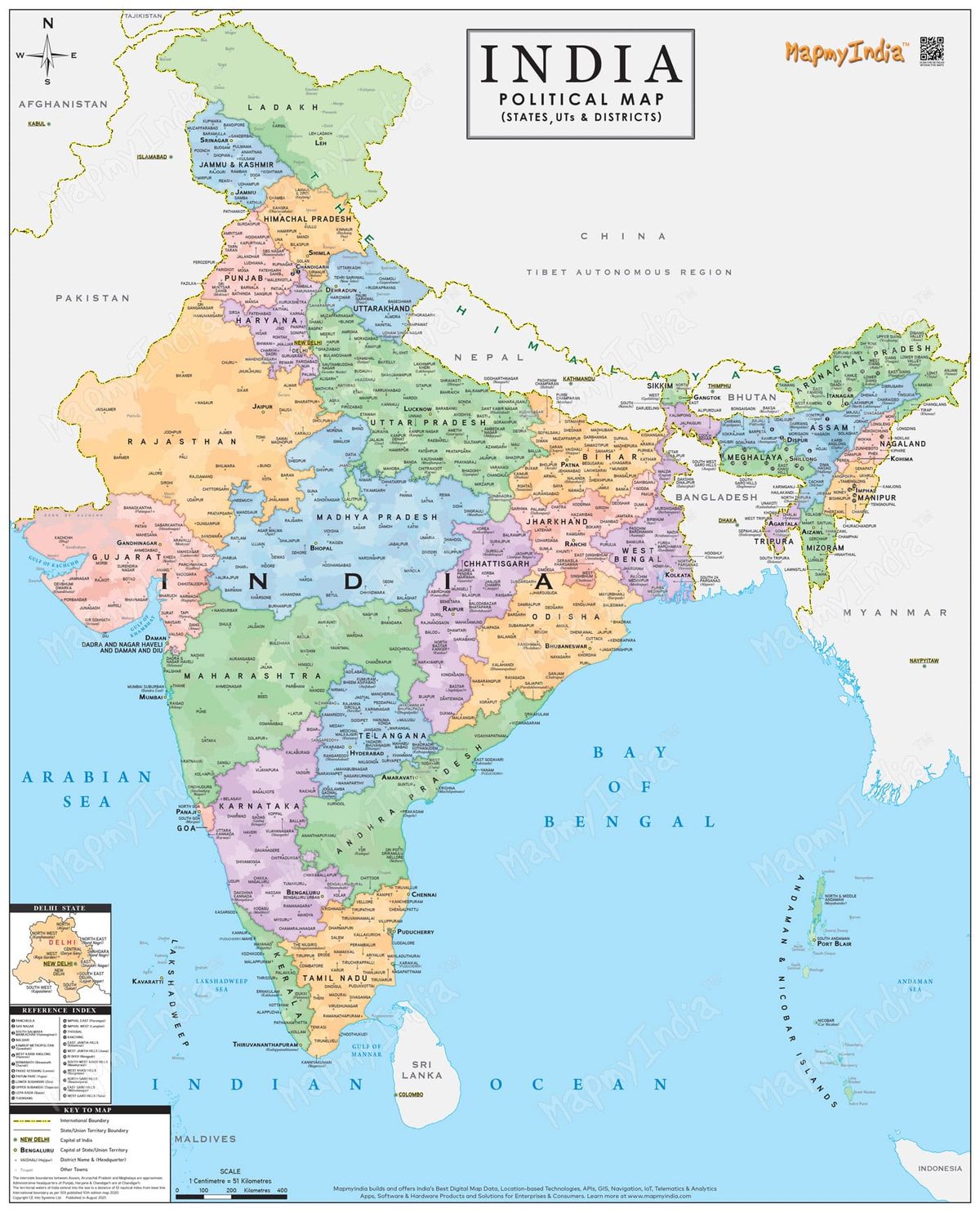
Indian States
India comprises 28 states and 8 union territories, each with unique geographical features, economic strengths, cultural heritage, and governance structures. Each of these administrative divisions contributes uniquely to the nation's vibrant mosaic.
More in news

Ayurveda
Discover the ancient wisdom of Ayurveda from the heart of Kerala with AyurKerala—a comprehensive resource for personalized wellness rooted in tradition. This platform offers in-depth guidance on Ayurvedic philosophy, dosha analysis, dietary and lifestyle recommendations, herbal remedies,

Chandigarh India
The history of the area around Chandigarh dates back to the Indus Valley Civilization. Archaeological findings have revealed settlements in the region dating back thousands of years. However, the modern city of Chandigarh is a relatively recent creation.

Lakshadweep India
Lakshadweep is shrouded in mystery, with limited archaeological evidence. Local legends attribute the first settlement to the period of Cheraman Perumal, the last ruler of the Chera dynasty of Kerala.

Delhi India
Delhi's history spans several millennia, with evidence of continuous habitation from at least the 6th century BCE. It has served as the capital of numerous empires and kingdoms, each leaving its indelible mark on the city's landscape and culture.

Puducherry
Puducherry's history can be traced back to ancient times, with archaeological evidence suggesting Roman trade links in the vicinity. However, its documented history begins with the arrival of European traders. The Portuguese were the first to establish a factory in Puducherry in the 16th century.

Ladakh India
adakh's history is deeply intertwined with Tibetan culture and Buddhism. Archaeological evidence suggests settlements dating back to the Bronze Age. By the 1st century CE, Ladakh was part of the Kushan Empire. In the following centuries, it came under the influence of various Tibetan kingdoms.

Jammu and Kashmir India
The culture of Jammu and Kashmir is a vibrant blend of Hindu, Muslim, Sikh, and Buddhist traditions, reflecting the region's diverse history and geography. Distinct cultural identities are found in the Jammu, Kashmir Valley, and Ladakh regions.