India · choose your state, district and city or village
About & Contact

State · West

Goa

गोवा

Capital
Panaji
Region
West
Area
3,702 km²
Population
~0.15 cr
Formed
1987
Languages
Konkani, English
Browse all 3 district articles ↓

Goa · Culture & Festivals

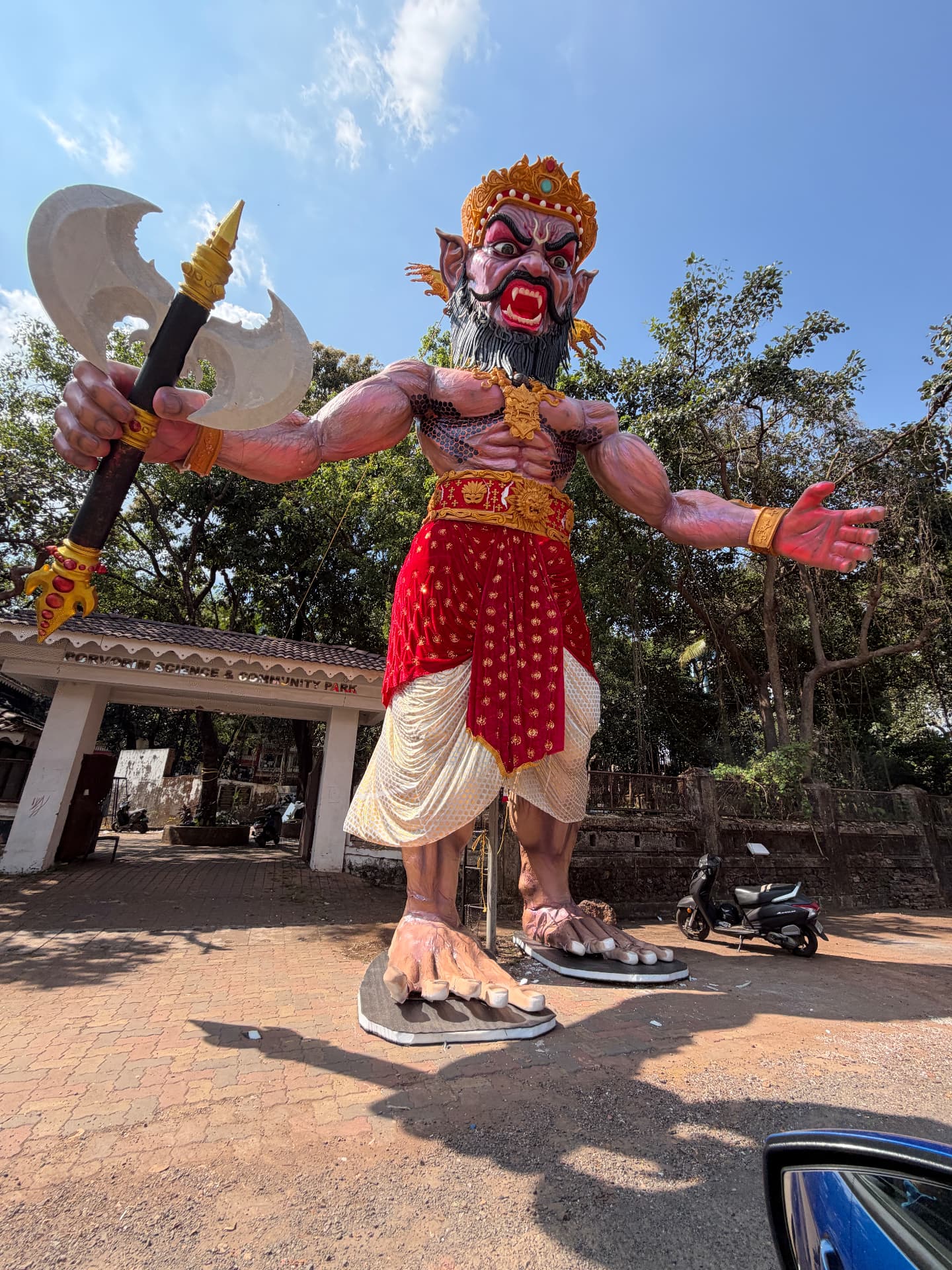
Narakasur effigy in GoaGoa’s Narakasur Night: Myth, Music and the Meaning of DiwaliNeighbourhood craftsmanship, festive traditions and care for the community.

Market Place · Goa

Loading market place…

BeachFun.jpg
Wikimedia Commons — see file page for creator and licence

Restored from the original Indias.com state hub. Its AI-drafted descriptions and source claims remain pending editorial verification; the district list below uses the government directory checked on 19 November 2026.

Overview

Goa, India's smallest state by area, is located on the western coast along the Arabian Sea. Renowned for its rich blend of Indian and Portuguese heritage, the state's capital is Panaji, a vibrant city that showcases its unique cultural identity. Goa is characterized by its scenic coastline, lush green landscapes, and a notable range of languages, with Konkani and English being the most widely spoken. Economically, Goa is significant for its tourism sector, which draws millions of domestic and international visitors each year. The state is also known for its agriculture, fishing, and mining industries. Goa's distinctive identity is further enriched by its diverse communities, festivals, and culinary traditions, making it an intriguing destination within India.

Goa, nestled on the western coast of India, is often regarded as a tapestry of cultural amalgamation, predominantly showcasing a blend of Indian and Portuguese influences. With an area of just 3,702 square kilometers, it stands as India's smallest state, yet it holds a substantial place in the country's cultural and economic landscape. The state capital, Panaji, is well-known for its unique architecture, lively markets, and the serene Mandovi River that flows through the city, contributing to its charm.

The state's coastal position along the Arabian Sea affords Goa an extensive coastline punctuated by serene beaches and rocky outcrops. This geographical distinction not only enhances its natural beauty but also plays a crucial role in its tourism sector, which significantly contributes to Goa's economy. With an influx of visitors seeking sun, sand, and vibrant nightlife, Goa has become synonymous with leisure and relaxation.

The cultural identity of Goa is distinct, primarily due to its historical ties with Portugal, which governed the region for over four centuries before its liberation in 1961. This influence is evident in its architecture, with numerous churches, forts, and vibrant festivals reflecting a fusion of traditions. Konkani, the official language, alongside English, is widely spoken, demonstrating the state's bilingual character that resonates through its education and daily life.

Economically, beyond tourism, Goa also showcases agricultural practices, primarily in rice, cashew, and coconut cultivation, along with a notable fishing industry that contributes to the local economy. The mining sector, historically a significant contributor to the state's revenue, particularly for iron ore, has faced regulatory changes impacting its scale and operation in recent years.

Goa’s distinctive characteristics extend to its culinary diversity, with local dishes heavily influenced by its multicultural heritage. From spicy fish curries to sweet bebinca, the food scene is a gastronomical delight that reflects its rich traditions. Festivals like Carnival and Shigmo resonate closely with the community, emphasizing Goa's vibrant social fabric and the importance of celebration in local life.

In conclusion, Goa's blend of stunning landscapes, historical nuances, and economic significance establishes it as a unique Indian state. Its diverse communities and rich traditions continue to shape its identity, making Goa not just a travel destination but a culturally rich region that contributes meaningfully to India's heritage.

  • Smallest state in India by area (3,702 sq. km)
  • Capital city: Panaji
  • Official languages: Konkani and English
  • Famous for its beaches and vibrant nightlife
  • Cultural fusion of Indian and Portuguese heritages
  • Key economic sectors: Tourism, agriculture, fishing, and mining
Area of Goa
3,702 sq. km

Government of India · 2023

Population of Goa
1.5 million

Census of India · 2021

Official Languages
Konkani and English

Government of Goa · 2023

Tourism Contribution to GDP
20.6%

Ministry of Tourism, India · 2019

Questions readers ask

  • What is the capital of Goa?

    The capital of Goa is Panaji.

  • What languages are spoken in Goa?

    The official languages in Goa are Konkani and English.

  • What is Goa known for?

    Goa is known for its beautiful beaches, vibrant nightlife, and rich cultural heritage.

  • What are the main economic activities in Goa?

    The main economic activities in Goa include tourism, agriculture, fishing, and mining.

AI-drafted · pending editor review

Sources (1)

History

Goa, a small but historically rich state on India's west coast, has a unique past marked by various dynasties, the colonial era, and subsequent independence. Originally inhabited by various tribes, Goa's history can be traced back to ancient times when it was part of the Mauryan Empire. Over the centuries, it became a prominent trading hub due to its strategic coastal location. The influence of various dynasties like the Satavahanas, Kadambas, and the Vijayanagar Empire shaped its cultural landscape. The Portuguese colonization transformed Goa into a center for trade and missionary activity during the 16th century. Post-independence, Goa's integration into India in 1961 was a significant milestone, followed by efforts to develop the region culturally and economically. Today, Goa is celebrated for its rich heritage, beautiful landscapes, and vibrant culture.

Goa's history is a fascinating narrative that begins with its ancient origins. The region was home to various tribes before becoming part of prominent empires. It was included in the Mauryan Empire around the 3rd century BCE under Emperor Ashoka. The emergence of the Satavahana Dynasty around the 1st century CE marked a significant shift, bringing trade and interaction with the Western world.

In the 10th century, the Kadamba dynasty gained control over Goa, establishing it as a key center for Hindu culture. The Kadambas ruled until the emergence of the powerful Vijayanagar Empire in the 14th century, which expanded its influence over Goa, incorporating the region into its vast territory and promoting the spread of Hinduism.

The arrival of the Portuguese in the early 16th century heralded a new era. Under the leadership of Afonso de Albuquerque, they established a successful colony in 1510. The Portuguese transformed Goa into a significant trading post and a center for Christianity. For over four centuries, Portuguese culture, language, and religion dominated the region, leading to the construction of iconic churches and a unique blend of Indo-Portuguese culture.

Goa's history took a pivotal turn during the independence movement in India. Although the Indian National Congress was active in Goa, the region remained a Portuguese enclave until the mid-20th century. The liberation movement intensified between the 1940s and early 1960s, culminating in the Indian Armed Forces' Operation Vijay in December 1961, which led to Goa's integration into India.

After becoming a Union Territory, Goa was granted statehood on May 30, 1987, becoming the 25th state of India. The post-independence period saw significant socio-economic changes, with a focus on tourism and preservation of its rich cultural heritage. Goa is now known for its diverse population and vibrant festivals, making it a unique part of India's cultural mosaic.

The history of Goa is a testament to its resilience and adaptability, shaped by diverse influences and the ever-evolving dynamics of power and culture. Today, Goa stands as a celebrated region, where ancient traditions meet modern aspirations, continuing to attract visitors from around the globe.

Portuguese Colonization
In 1510, Afonso de Albuquerque took control of Goa, marking the beginning of Portuguese rule.

Goa Government Archives · 1510

Operation Vijay
The Indian Armed Forces conducted Operation Vijay in 1961 to liberate Goa from Portuguese control.

Indian Ministry of Defence · 1961

Statehood of Goa
Goa was granted statehood on May 30, 1987.

Government of India · 1987

Cultural Heritage
Goa is known for its unique blend of Indo-Portuguese culture, seen in its architecture and festivities.

Goa Tourism Department · Present

Questions readers ask

  • What was the significance of the Kadamba dynasty in Goa's history?

    The Kadamba dynasty established a strong cultural foundation in Goa, promoting Hinduism and art during the 10th century.

  • When did Goa become a part of India?

    Goa was integrated into India on December 19, 1961, after a military operation against Portuguese rule.

  • How did Portuguese colonization impact Goa?

    Portuguese colonization introduced Christianity, significantly influencing Goa's culture, architecture, and societal norms for over 400 years.

  • What are the major economic activities in modern Goa?

    Tourism, agriculture, and mining are major economic activities in Goa, with tourism being a significant contributor to the state's economy.

  • What events led to Goa's statehood?

    After being a Union Territory post-independence, Goa was granted statehood on May 30, 1987, due to its unique cultural identity and demands for self-governance.

AI-drafted · pending editor review

Sources (1)

Geography

Goa, a state located on the western coast of India, is known for its unique geographical features and rich biodiversity. Bordered by the Arabian Sea to the west and sharing its borders with the state of Maharashtra to the north and Karnataka to the east and south, Goa covers an area of approximately 3,702 square kilometers. The state's terrain is characterized by a mix of coastal plains, rolling hills, and plateaus, with the Western Ghats running along its eastern border. Goa boasts a coastline of about 101 kilometers, dotted with beautiful beaches and estuaries. The state is home to several rivers, including the Mandovi and Zuari, as well as numerous lakes, wetlands, and forests, which enrich its ecology. With a variety of soil types, the region supports diverse agriculture and is known for its cashew, rice, and coconut production. The biodiversity hotspots in Goa contribute significantly to its natural wealth.

Goa is positioned along the western coast of India, prominently situated between latitude 14°53' and 15°31' N and longitude 73°40' and 74°22' E. It shares its borders with the Arabian Sea on the west and is bordered by Maharashtra to the north and Karnataka to the east and south. The state spans a total area of approximately 3,702 square kilometers, making it one of the smallest states in India.

The terrain of Goa is predominantly hilly and undulating, with a major part of the state covered by the Western Ghats, a mountain range recognized as a UNESCO World Heritage Site due to its rich biodiversity. This mountain range rises dramatically from the coastal plains and forms the eastern part of the state's topography. The highest peak is Sonsogor, reaching an elevation of 1,157 meters (3,799 feet) above sea level.

Goa is known for its coastal plains, characterized by a shoreline stretching about 101 kilometers along the Arabian Sea. The beaches are lined with palm trees, and the coastline consists of several estuaries and lagoons. Prominent beaches include Baga, Anjuna, and Palolem, which are not only tourist hotspots but also crucial to the coastal ecosystem.

Rivers in Goa play an important role in its geography. The Mandovi and Zuari are the two primary rivers, flowing from the Western Ghats toward the Arabian Sea. These rivers are essential for irrigation and also support a rich aquatic ecosystem. Besides these, several smaller rivers and seasonal streams contribute to the water bodies of the state, some of which form estuaries that are vibrant with biodiversity.

The wetlands of Goa, including marshy areas and lagoons, provide habitats for various species of flora and fauna. The significance of these wetlands is further accentuated as they act as natural flood control systems and are vital for maintaining the ecological balance.

Forests cover around 33% of Goa's total area, predominantly found in the Western Ghats region. These forests are classified into different types, including evergreen, deciduous, and scrub forests, which harbor diverse wildlife. The forests are home to several species of medicinal plants, birds, and mammals, making Goa a biodiversity hotspot in India.

In terms of soil types, the region features laterite and alluvial soils, which are essential for agriculture. The laterite soils are predominantly found in the hilly regions, while alluvial soils are present in the river valleys. The area is suitable for growing various crops, including rice, cashew, and spices, contributing significantly to the local economy.

Goa also possesses various natural resources, such as bauxite and iron ore, which have been extensively mined. However, the mining activities have raised environmental concerns, leading to increased regulation to protect Goa's rich ecosystem.

Overall, the geographical diversity of Goa, ranging from its mountains to its coastline and forests, plays a crucial role in shaping the state's ecology and economy, highlighting its importance as a natural and cultural treasure within India.

Area of Goa
3,702 square kilometers

Census of India · 2021

Highest Peak
Sonsogor

State Government Records · 2023

Forest Coverage
Approximately 33% of the total area

Forest Survey of India · 2022

Length of Coastline
101 kilometers

Department of Tourism, Goa · 2020

Questions readers ask

  • What are the major rivers in Goa?

    The major rivers in Goa include the Mandovi, Zuari, and several smaller seasonal streams.

  • What type of soil is found in Goa?

    Goa has mainly laterite and alluvial soils, suitable for diverse agricultural practices.

  • What is the highest peak in Goa?

    The highest peak in Goa is Sonsogor, which stands at an elevation of 1,157 meters (3,799 feet).

  • How much area do forests cover in Goa?

    Forests cover approximately 33% of the total area of Goa, contributing to its biodiversity.

AI-drafted · pending editor review

Sources (1)

Climate

Goa, located on the western coast of India, experiences a tropical monsoon climate characterized by distinct wet and dry seasons. The state enjoys warm temperatures year-round, with average highs ranging from 29°C to 34°C (84°F to 93°F). The monsoon season, from June to September, brings heavy rainfall, contributing to approximately 80% of the state's annual rainfall. Humidity levels are high, typically above 70%, particularly during the monsoon months. Goa is vulnerable to regional hazards such as cyclones and floods, particularly during the monsoon season. Dry spells can occasionally lead to drought conditions, while the coastal terrain makes it susceptible to landslides during heavy rains. Despite these challenges, Goa’s climate supports a rich biodiversity and vibrant agricultural practices.

Goa is classified within the tropical monsoon climate zone, which has specific characteristics that influence its weather patterns throughout the year. The state experiences three main seasons: summer, monsoon, and winter.

Summer, which generally lasts from March to May, sees temperatures ranging from 29°C to 34°C (84°F to 93°F). During this time, the humidity starts to rise, making the heat feel more intense. The coastal area, however, benefits from sea breezes that provide some relief.

The monsoon season commences in June and lasts until September, during which Goa receives a substantial amount of rainfall, averaging between 2,500 mm to 3,500 mm (98 to 138 inches) annually. The southwest monsoon brings heavy rain, which can lead to flooding in certain areas. July is typically the wettest month, and the landscape flourishes as rivers swell and greenery becomes lush, although this period also brings challenges such as landslides in hilly areas.

Winter in Goa runs from November to February, featuring pleasantly cooler temperatures, averaging between 20°C to 32°C (68°F to 90°F). The humidity drops significantly, creating a more comfortable climate. The winter months are popular with tourists due to the moderate weather.

Goa's high humidity levels, particularly during summer and monsoon, often exceed 70% and can lead to discomfort, especially when combined with high temperatures. Residents and travelers alike need to stay hydrated and protect themselves from the sun's rays during peak hours.

Regional hazards in Goa include cyclones, mainly from the Arabian Sea, which can bring heavy rainfall and damage to infrastructure. Flooding is a frequent occurrence during the monsoon, especially in low-lying areas and near rivers. Drought conditions can also emerge in the dry season, particularly if rainfall during the monsoon is below average.

Heatwaves are a concern during the summer months, where prolonged periods of high temperature can impact health. Additionally, the risk of landslides increases during heavy rains, particularly in hilly regions, necessitating vigilance during monsoon season. Overall, while Goa's climate presents challenges, it also fosters unique ecosystems and agricultural practices that are vital to the state's economy.

Average Annual Rainfall
2,500 mm to 3,500 mm

India Meteorological Department · 2023

Typical Summer Temperature Range
29°C to 34°C

India Meteorological Department · 2023

Humidity Levels
Above 70%

India Meteorological Department · 2023

Questions readers ask

  • What is the best time to visit Goa for pleasant weather?

    The best time to visit Goa for pleasant weather is during the winter months, from November to February, when temperatures are moderate and humidity is lower.

  • Does Goa experience cyclones?

    Yes, Goa can experience cyclones, especially during the monsoon season from June to September, leading to heavy rainfall and potential flooding.

  • What are the temperature extremes in Goa?

    Goa's temperatures typically range from 20°C to 34°C throughout the year, with summer months experiencing the highest temperatures.

AI-drafted · pending editor review

Sources (1)

People

Goa, known for its stunning coastline and rich cultural heritage, has a population of approximately 1.6 million as of the 2021 Census. The state exhibits a unique demographic profile, with a high literacy rate of around 88.7%, indicating a strong emphasis on education. The population density stands at about 394 individuals per square kilometer, showcasing a predominantly urban landscape, with around 62% of the residents living in urban areas. The state is characterized by a linguistic diversity, primarily speaking Konkani and English, while communities also converse in Marathi, Hindi, and Portuguese. Goa's population growth has been relatively stable, reflecting a blend of migration trends and natural growth rates, contributing to the state's vibrant demographic fabric, with notable diaspora communities around the globe.

Goa, located on the western coast of India, is a state that offers a unique blend of culture, history, and demographics. According to the 2021 Census, Goa has a population of approximately 1.6 million people. As a small state, it boasts a population density of about 394 individuals per square kilometer, which is higher than many regions in India, reflecting its urban character. The urban-rural split shows that about 62% of the population resides in urban areas, primarily concentrated in major cities like Panaji (the capital), Margao, and Vasco da Gama, while the remaining 38% live in rural settings.

The linguistic landscape of Goa is diverse. The official language is Konkani, which is widely spoken by the locals. English is also commonly used, especially in education and business. Marathi and Hindi are prevalent among certain communities, and there remains a historical influence of Portuguese, a relic from the colonial era.

Goa has a remarkable literacy rate of approximately 88.7% as per the 2011 Census, with significant efforts made to improve education accessibility in the state. This high literacy rate is a vital factor contributing to the high standard of living enjoyed by its residents.

Population growth in Goa has been relatively stable, although it has shown signs of decline in recent years. The natural growth rate is complemented by migration patterns, as many Goans migrate to other parts of India and abroad for employment and education. This trend of migration has resulted in a vibrant diaspora, particularly in countries like the United States, Canada, and the United Arab Emirates, where Goans have established communities that maintain strong ties to their homeland.

In summary, Goa's population reflects a rich tapestry of cultures and languages shaped by its history and geography. Its urban centers are bustling communities filled with a mix of traditional and modern influences, contributing to the unique identity of this coastal state.

  • Population: Approximately 1.6 million (2021 Census)
  • Population density: About 394 individuals per square kilometer
  • Urban-rural split: 62% urban, 38% rural
  • Official languages: Konkani and English
  • Literacy rate: Approximately 88.7% (2011 Census)
  • Major cities: Panaji, Margao, Vasco da Gama
Population
1.6 million

Census of India · 2021

Urban population percentage
62%

Census of India · 2021

Population density
394 individuals per square kilometer

Census of India · 2021

Literacy rate
88.7%

Census of India · 2011

Questions readers ask

  • What is the official language of Goa?

    The official languages of Goa are Konkani and English.

  • What is the population density of Goa?

    As of the 2021 Census, the population density of Goa is approximately 394 individuals per square kilometer.

  • How many people live in urban areas in Goa?

    About 62% of Goa's population lives in urban areas, according to the 2021 Census.

  • What is the literacy rate in Goa?

    The literacy rate in Goa is approximately 88.7%, based on the 2011 Census.

AI-drafted · pending editor review

Sources (1)

Culture & Festivals

Goa, a small state on the western coast of India, is renowned for its vibrant culture and rich heritage, which is a blend of Indian and Portuguese influences. The predominant language is Konkani, but English is widely spoken. The state's traditions are reflected in its music, dance forms, literature, and festivals, showcasing a unique lifestyle. Goa is famous for its folk traditions and elaborate festivals like Carnival and Shigmo, which highlight its rich historical tapestry. Its architecture, a mix of Portuguese colonial and traditional Goan styles, can be seen in the numerous heritage sites and churches, many of which are UNESCO World Heritage Sites. Traditional crafts, including pottery, weaving, and feni making, are also integral to Goa's culture. The state's art scene thrives, with various cultural institutions and museums dedicated to preserving and promoting Goa's artistic heritage.

Goa's culture is a unique tapestry woven from its rich historical background, diverse traditions, and its evolution over centuries. It is an amalgamation of indigenous customs and Portuguese influences, primarily stemming from the 450 years of colonial rule that left a lasting impact on the state's architecture, cuisine, and societal norms.

The official language of Goa is Konkani, which is spoken by the majority of the population, while English is also widely used in education and business. The culture is vividly expressed in Goa's literature, which includes a variety of genres such as poetry, novels, and plays that reflect the life and ethos of the Goan people. Notable writers include the likes of Mahabaleshwar Sail, and the evergreen poet A. K. Ramanujan who have showcased the essence of Goan life through their literary works.

Music and dance are integral to Goan culture, with traditional forms such as 'mando', 'dhangar', and film music reflecting the state's rich cultural ethos. The music scene is diverse, encompassing Western genres, thanks to its Portuguese past, alongside traditional Goan music that accompanies various festivals and social gatherings.

Dance forms like the 'Dekhnni' and 'Fugdi' exemplify the vibrancy of Goan festivities. Artefacts of heritage are showcased during the numerous festivals celebrated here. The Carnival, an exuberant festival marked by parades, vibrant costumes, and lively dances, is one of the most celebrated events in Goa, showcasing the Goan spirit. Similarly, Shigmo, a spring festival celebrated with great fervor, highlights the folk traditions of the region with processions and performances.

Goa's heritage sites, including the Basilica of Bom Jesus and Se Cathedral, reflect its colonial history. These churches are not only architectural marvels but also significant tourist attractions that provide insight into the state's past. The combination of Indo-Portuguese architecture is a hallmark of Goan buildings, evident in numerous old houses and churches.

Furthermore, the state's handloom and handicraft industries thrive, encompassing pottery, weaving, and intricate woodcraft. The local market features a vibrant array of these craftworks, including the famous bamboo crafts and the famous feni, a traditional Goan spirit distilled from cashew apples and coconut. These crafts not only provide livelihood to many artisans but also keep alive the cultural legacy of the region.

Cultural institutions such as the Goa Chitra Museum and the Latin Quarter of Fontainhas offer a glimpse into Goa’s traditional lifestyles and artistic practices. Museums in Goa, like the Archaeological Museum, preserve artifacts that reveal Goa's historical narratives.

Traditional clothing in Goa reflects its cultural diversity, with men typically donning 'dhoti' or 'kurta' while women wear 'sari' and the traditional 'navi' outfit, captivating with its vibrant colors and designs.

Overall, Goa's cultural landscape is defined by its rich tapestry of traditions, festivals, art, and a vibrant lifestyle that continues to flourish, making it one of the most captivating regions in India.

AI-drafted · pending editor review

Sources (1)

Food & Cuisine

Goa's culinary landscape is a vibrant fusion of its rich history and diverse cultures, resulting in a unique gastronomic experience. The Goan diet predominantly includes rice and fish, influenced by the abundant coastline and Portuguese colonial history. Staples include Goan rice, fish, and coconuts, with spices such as cinnamon, nutmeg, and coriander playing crucial roles in flavoring dishes. Traditional meals are often accompanied by pickles and chutneys, showcasing the region's love for bold flavors. Breakfast in Goa commonly features 'poha' and 'idli', while street food offers delights like 'vadapav' and 'pav bhaji'. Sweets like 'bebinca' and 'sorrput' reflect local traditions. The annual harvest festival, 'Sao Joao', and Christmas celebrations showcase Goa’s festive food culture, highlighting the importance of seasonal ingredients. Overall, Goan cuisine caters to both vegetarians and non-vegetarians, rooted in a rich tapestry of flavors, spices, and cooking techniques.

Goa is renowned for its diverse and flavorful cuisine, heavily influenced by its coastal geography, historical Portuguese presence, and various cultural traditions. The everyday staple foods of Goan households revolve around rice, fish, and coconut, all integral to its nutritional and cultural identity.

In typical Goan households, rice is the primary carbohydrate, served with a variety of curry dishes often featuring fish. Fish, particularly prawn and pomfret, are cooked in rich coconut milk based curries and flavored with local spices such as kokum, tamarind, and fresh cilantro. A key spice in Goan cooking is the local 'Goan masala', a blend that varies by household but often includes ingredients like coriander seeds, turmeric, and dried red chilies.

For breakfast, Goans might enjoy 'poha', a light and fluffy dish made from flattened rice, often garnished with peanuts and coconut. Another common breakfast item is 'idli', steamed rice cakes typically served with chutney. Street food in Goa is bustling and varied, offering quick bites like 'vada pav' and 'pav bhaji', which are popular among locals and tourists alike. 'Bhel puri', a tangy snack made from puffed rice and vegetables, is also favored.

When it comes to sweets, Goans have an array of traditional confections. 'Bebinca' is a multi-layered cake made from coconut milk and sugar, often enjoyed during festivities. 'Sorrput', a sweet rice dumpling, is another cherished delicacy found during celebrations.

Goa's vibrant festival foods highlight its rich traditions. During the 'Sao Joao', the feast of St. John, locals often put on festive feasts featuring rice dishes and seafood specialties. Similarly, Christmas brings special dishes highlighting the region's Goan Christian heritage, often including roast dishes and sweet treats.

Vegetarian options are also abundant, with dishes like 'sol kadhi', a refreshing drink made from kokum and coconut milk, often enjoyed as an accompaniment to meals. Seasonal foods reflect local agricultural practices; during the monsoon, for instance, many utilize fresh greens and locally grown vegetables to create nourishing dishes.

Spices and fresh ingredients are at the heart of Goan cuisine, with local fish markets and farmers' markets providing fresh produce vital for traditional cooking. Culinary influences from Portugal bring unique recipes using vinegar and certain cooking techniques that have been adapted into everyday Goan life.

Whether it's a hearty meal at a beach shack or a traditional family gathering, the food of Goa captures the essence of its culture and history, making it an unforgettable culinary destination in India.

Primary staple
Rice is the primary staple food of Goa, accompanied by fish.

Goa Department of Agriculture · 2021

Daily fish consumption
Goans consume an average of 60 kg of fish per person annually.

National Fisheries Development Board · 2020

Bebinca
Bebinca is traditionally served during festivals and celebrations.

Goan Culinary Heritage Report · 2022

Questions readers ask

  • What are the staple foods of Goa?

    The staple foods of Goa include rice, fish, and coconut, which are foundational to the Goan diet.

  • Are there vegetarian options in Goan cuisine?

    Yes, Goan cuisine offers a variety of vegetarian options, including sol kadhi and various vegetable curries.

  • What is the significance of bebinca in Goan culture?

    Bebinca, a traditional layered coconut cake, is considered a celebratory dish and is often made during festivals and special occasions.

AI-drafted · pending editor review

Sources (1)

Agriculture

Agriculture in Goa, a state located in the western part of India, plays a crucial role in its economy and sustains the livelihoods of many families. Predominantly characterized by its small and marginal farmers, Goa's agriculture predominantly focuses on a mix of food, cash crops, plantation crops, and a variety of fruits and vegetables. Major food crops include rice, which thrives in the state's wetland, while cash crops like cashew and coconut are significant to the local economy. Fisheries and animal husbandry also contribute to agriculture in Goa, with an increasing emphasis on dairy production. The state’s tropical climate largely influences agricultural practices, divided into kharif (monsoon) and rabi (winter) seasons. Many farmers are organized into cooperatives for better productivity and self-sustainability. Despite modernization efforts, traditional agricultural practices still uphold Goa's rich cultural heritage.

In the state of Goa, agriculture is predominantly powered by small and marginal farmers, who often engage in mixed farming. The region's fertile lateritic soil, along with its tropical monsoon climate, supports the cultivation of a variety of crops throughout the year, although the principal agricultural practices are distinctly divided into two main seasons: kharif and rabi. During the kharif season, which coincides with the monsoon from June to September, rice remains the staple food crop, as it thrives in the wetland conditions characteristic of this period. Other kharif crops include pulses and certain vegetable varieties.

The rabi season, from October to March, sees the cultivation of several cash crops. Key among these are cashew and coconut, which are not only integral to the state's economy but also form an essential part of the local cuisine and culture. Additionally, spices such as black pepper, cardamom, and various others find a niche in Goa's diverse agricultural landscape, catering to both local needs and export demands.

Beyond traditional staples and cash crops, Goa is also rich in fruit production. The state is known for its mangos, bananas, and pineapples, which flourish due to the favorable climatic conditions. Vegetable cultivation is another vital component, with farmers growing tomatoes, carrots, beans, and gourds.

Animal husbandry and dairy farming have gained prominence in Goa, contributing to the agricultural economy. The introduction of improved dairy cows and buffaloes has aided in enhancing milk production. Several farmer organizations in Goa facilitate dairy cooperatives, ensuring that farmers receive fair prices and quality support, leading to improved livelihoods.

Fisheries are equally significant, as Goa is blessed with a coastline along the Arabian Sea. Fishing, both coastal and inland, sustains many local families and is an essential aspect of Goan culture and diet. Fish like pomfret, mackerel, and shrimp are widely consumed and form a crucial part of the local economy.

Goa's forestry sector is also noteworthy, with significant forest cover that supports a variety of biodiversity and also aids in sustaining agricultural lands. The state government actively promotes agroforestry practices, enhancing both economic and ecological benefits for local farmers.

Irrigation is vital for sustaining agricultural productivity in Goa, with various systems in place, including traditional systems such as 'khazans' and modern irrigation facilities for regulated farming. The khazans are a unique method of utilizing coastal lands and include a series of bunds and channels to cultivate rice in saline conditions, showcasing innovative agricultural practices adapted by local farmers.

In addition to traditional farming practices, advancements in agricultural research and extension education have been initiated by local institutions, focusing on enhancing crop yield and sustainable practices. Various agricultural universities and research centers in the state are working towards improving agricultural practices through innovative research, benefitting local farmers significantly.

While agriculture in Goa is undergoing modernization, many farmers strive to maintain a balance between traditional methods and contemporary practices. This blend ensures the continuous contribution of agriculture to the state's economy while preserving its rich cultural heritage.

Gross State Domestic Product from Agriculture
16.08%

Goa Economic Survey · 2021-2022

Area under Rice cultivation
46,600 hectares

Department of Agriculture, Goa · 2019-2020

Number of dairy cooperatives
20

Goa Dairy Cooperative Society · 2023

Total fish production
60,000 metric tons

Department of Fisheries, Goa · 2020-2021

Questions readers ask

  • What are the main crops grown in Goa?

    The main crops in Goa include rice, cashew, coconut, and various spices and vegetables.

  • How is irrigation managed in Goa?

    Irrigation in Goa is managed through traditional systems like khazans and modern irrigation facilities.

  • What role does fisheries play in Goa's agriculture?

    Fisheries significantly contribute to the local economy, sustaining families and influencing local culture.

  • Are there any farmer organizations in Goa?

    Yes, there are several farmer cooperatives and organizations that support dairy farming and agricultural practices.

  • What influence does the climate have on agriculture in Goa?

    Goa's tropical monsoon climate affects the growing seasons, with distinct kharif and rabi seasons for different crops.

AI-drafted · pending editor review

Sources (1)

Economy

Goa's economy is characterized by a blend of traditional and modern sectors, heavily influenced by tourism, agriculture, and mining. The state boasts a relatively high Gross State Domestic Product (GSDP) per capita, primarily driven by its thriving tourism industry, which attracts millions of tourists annually. Historically, Goa's strategic location on the western coast facilitated trade and commerce during colonial times, and it has continued to evolve post-independence. Key sectors contributing to the state's economy include tourism, pharmaceuticals, IT, and MSMEs. The investment climate is generally favorable, with the government actively promoting startups and small enterprises. The overall employment landscape is a mix of formal and informal sectors, with remittances from Goans working abroad also significantly bolstering the economy.

Goa's economy has undergone substantial changes since its liberation from Portuguese rule in 1961. Once primarily reliant on agriculture and fisheries, the state has transformed into a significant tourist destination, which has become the cornerstone of its economic growth. In 2021-22, Goa recorded a Gross State Domestic Product (GSDP) of INR 77,028 crore (USD 10.16 billion), as reported by the Ministry of Statistics and Programme Implementation (2023). This reflects a robust growth trend and positions Goa among the wealthier states in India in terms of per-capita income.

Per capita income in Goa was estimated at INR 4,07,000 (about USD 5,500) in 2022, suggesting a high standard of living compared to many other Indian states. The state's service sector, particularly tourism, accounts for approximately 30% of its GSDP. The vibrant tourism industry not only generates direct employment but also creates opportunities in correlated sectors such as hospitality, transportation, and trade.

Beyond tourism, Goa's economy benefits from its fertile soil and favorable climate, which allows for agriculture, particularly in cashew and coconut production. The state is also known for its fishery sector, contributing to both local consumption and export markets. Additionally, the mining sector was historically crucial; however, recent legal challenges and environmental concerns significantly impacted this industry, leading to a reassessment of mining practices.

Employment in Goa is diverse, with the service sector being the largest employer. However, a significant number of Goans also work abroad, contributing to the economy through remittances, which are vital for many households. The ease of doing business in Goa has improved, with the government focusing on attracting investments in biotechnology, pharmaceuticals, and IT, among other sectors. The establishment of the Goa Startups Policy in 2020 aims to foster innovation and entrepreneurship, making the state an attractive destination for startups and micro, small, and medium enterprises (MSMEs).

Goa's favorable investment climate has been recognized through various initiatives aimed at improving infrastructure and business facilities. Incentives for startups, coupled with a supportive regulatory framework, have led to a burgeoning ecosystem that encourages new business ideas and innovation.

In conclusion, Goa's economy is characterized by its tourism-led growth, with agriculture and emerging sectors playing significant roles. The combination of a robust GSDP, high per capita income, and an evolving business environment contributes to the economic dynamism of this coastal state. With continued investment and focus on sustainable practices, Goa is poised to enhance its economic landscape in the coming years.

Gross State Domestic Product (GSDP)
INR 77,028 crore

Ministry of Statistics and Programme Implementation · 2021-22

Per Capita Income
INR 4,07,000

Government of Goa · 2022

GDP Contribution from Tourism
Approximately 30%

Economic Survey of Goa · 2023

Investment in Startups
Goa Startup Policy established

Government of Goa · 2020

Questions readers ask

  • What is the primary driver of Goa's economy?

    The primary driver of Goa's economy is tourism, contributing significantly to the state's GSDP.

  • How has Goa's economy evolved over the years?

    Goa's economy has shifted from agriculture and fisheries to a focus on tourism and service sectors, which has enhanced its economic status.

  • What role do remittances play in Goa's economy?

    Remittances from Goans working abroad are significant, providing financial support to many families and contributing to local consumption.

  • What sectors are emerging in Goa's economy?

    Emerging sectors in Goa's economy include pharmaceuticals, IT, and biotechnology, bolstered by government incentives for startups.

AI-drafted · pending editor review

Sources (1)

Industry

Goa, known for its stunning beaches and vibrant culture, also boasts a diverse industrial landscape. The state's economy is primarily driven by tourism, which plays a significant role in employment and business opportunities. In addition to tourism, Goa has developed its manufacturing sector with industries like pharmaceuticals, textiles, and chemicals gaining prominence. The Information Technology (IT) sector is also emerging, with various IT parks and business hubs fostering growth. Goa's mining industry, particularly iron ore extraction, historically contributed significantly to its economy, though it faced regulatory challenges in recent years. The state's government has introduced policies to promote sustainable industrial growth, focusing on eco-friendly practices and entrepreneurship, helping to transform Goa into a hub for local businesses and startups.

Goa's industrial landscape is unique, blending traditional economic sectors with modern advancements. Tourism remains the backbone of Goa's economy, significantly influencing other industries. It accounts for a considerable portion of the state's GDP and employment, with numerous hotels, restaurants, and services catering to domestic and foreign tourists.

Beyond tourism, Goa has diversified its economy through manufacturing. The state is home to a thriving pharmaceuticals industry, with many companies setting up facilities due to favorable government policies and a skilled workforce. The manufacturing sector not only includes pharmaceuticals but also textiles and chemicals. The textiles industry, though smaller, has seen a consistent presence of local producers, particularly in traditional garments which tap into the cultural heritage of the region.

The Information Technology sector is gaining ground, with various IT parks established in Goa, particularly near Panaji and the tourist-friendly regions. These hubs are equipped with modern infrastructure aimed at attracting both startups and established IT firms. The growth of the IT industry provides employment opportunities and helps in diversifying the economy away from its heavy reliance on tourism.

Mining has historically been a significant industry in Goa, particularly for iron ore. The state used to be one of the largest exporters of iron ore in India. However, the mining sector faced a downturn in recent years due to environmental concerns, regulatory challenges, and a ban on mining activities imposed in 2012. Although mining activities have resumed to some extent, the government is now focusing on sustainable mining practices.

Goa also witnesses a range of small-scale industries, including food processing, handicrafts, and renewable energy businesses. The government has initiated efforts to promote entrepreneurship, encouraging locals to venture into business spurred by the startup ecosystem.

In terms of employment, the service sector, particularly tourism and hospitality, dominates the job market in Goa. However, with the growth of manufacturing and IT, new employment opportunities are emerging, aiming to retain the educated youth within the state. The challenge for Goa remains balancing industrial growth with environmental sustainability, given its ecological sensitivity and reliance on tourism. Hence, industries are being encouraged to adopt eco-friendly technologies and practices, blending development with conservation to preserve Goa's natural beauty and cultural heritage.

Contribution of Tourism to GDP
35%

Goa Economic Survey · 2021

Number of IT Parks Established
5

Department of Information Technology, Goa · 2023

Iron Ore Exports
50 million tonnes

Indian Bureau of Mines · 2011

Employment in Tourism Sector
80,000 jobs

Goa Employment Department · 2022

Growth of Pharmaceuticals Sector
500 companies

Goa Pharmaceutical Manufacturers Association · 2023

Questions readers ask

  • What are the major industries in Goa?

    The major industries in Goa include tourism, pharmaceuticals, textiles, chemicals, and Information Technology (IT).

  • How does tourism affect Goa's economy?

    Tourism significantly contributes to Goa's GDP and employment, creating a ripple effect on other sectors such as hospitality and retail.

  • Is the mining industry still operational in Goa?

    Mining in Goa has faced regulatory challenges and environmental concerns, leading to a downturn, but certain activities have resumed under strict regulations.

  • What steps is the government taking to promote local businesses?

    The government of Goa is promoting entrepreneurship through various initiatives, including support for startups and small-scale industries in eco-friendly sectors.

  • What role does IT play in Goa’s industrial landscape?

    The IT sector in Goa is rapidly growing, supported by the establishment of IT parks that attract both startups and established tech companies, diversifying the economy.

AI-drafted · pending editor review

Sources (1)

Travel Guide

Goa, India's smallest state, is renowned for its stunning beaches, vibrant culture, and rich historical tapestry. A top travel destination for both domestic and international tourists, it offers a mix of adventure, relaxation, and exploration. The best time to visit Goa is from November to February when the weather is pleasantly cool and the festive spirit is high. Key attractions include the lively beaches of Baga and Anjuna, historic sites like the Basilica of Bom Jesus, wildlife sanctuaries such as Bhagwan Mahavir National Park, and the lush Western Ghats. Goa also supports a variety of adventure activities from water sports to trekking. Emphasizing responsible tourism, the state encourages eco-friendly practices to preserve its natural beauty and cultural heritage.

Goa, located on the western coast of India, is a paradise for travelers seeking sun, sand, and a slice of history. Known for its immaculate beaches, diverse culture, and vibrant nightlife, this small state is a perfect getaway for all types of travelers.

Historically, Goa has been influenced by various civilizations, making it a melting pot of cultures. The capital city, Panaji, showcases Portuguese-style architecture and is home to some significant historical sites like the Basilica of Bom Jesus, a UNESCO World Heritage Site. Tourists can immerse themselves in the local culture through the annual Carnival and other vibrant local festivals.

The best time to visit Goa is during the winter months from November to February, when the weather is dry and pleasant, making it ideal for beach activities and sightseeing. During this period, the tourist footfall peaks, with numerous events and activities taking place.

Beaches are the main attraction in Goa. Popular ones like Baga, Anjuna, and Calangute are known for their nightlife and water sports, while quieter beaches like Palolem and Agonda are perfect for relaxation. Water sports enthusiasts can enjoy parasailing, jet-skiing, and banana boat rides, adding excitement to their beach experience.

Besides beaches, Goa's natural landscapes, including the lush Western Ghats, provide opportunities for trekking and exploring wildlife. Bhagwan Mahavir National Park and Cotigao Wildlife Sanctuary are two key spots where you can witness diverse flora and fauna.

For a captivating experience of Goa's spirituality, visitors can explore numerous temples, churches, and forts, such as Chapora Fort and Aguada Fort, which narrate stories of Goa’s rich past. The state is also an excellent destination for adventure seekers with options like scuba diving, dolphin spotting, and paragliding.

Responsible tourism is becoming increasingly important in Goa. To preserve the natural environment, tourists are encouraged to adopt sustainable practices such as using eco-friendly products, respecting local wildlife, and supporting local businesses. Maintaining cleanliness on beaches and respecting local customs can significantly enhance the travel experience.

In summary, Goa offers a unique blend of relaxation, adventure, and cultural richness. Whether you are lounging on the beach, indulging in local delicacies, or exploring historical sites, Goa promises a memorable experience for every traveler.

  • Best time to visit: November to February
  • Major cities: Panaji, Margao, Vasco da Gama, Calangute
  • Famous beaches: Baga, Anjuna, Palolem
  • Adventure activities: water sports, trekking, scuba diving
  • Historical sites: Basilica of Bom Jesus, Fort Aguada
  • Wildlife sanctuaries: Bhagwan Mahavir National Park, Cotigao Wildlife Sanctuary
Area of Goa
3,702 square kilometers

Government of Goa · 2023

Tourist Arrivals
8 million visitors annually

Goa State Tourism Department · 2020

Table of known beaches
Currently, over 25 popular beaches

Goa State Tourism Department · 2023

UNESCO World Heritage Sites
2 in Goa: Churches and Convents of Old Goa, and the Gelly Caves

UNESCO · 2023

Questions readers ask

  • What languages are spoken in Goa?

    The official language is Konkani, but English and Hindi are widely spoken and understood.

  • What are the must-try local dishes in Goa?

    Must-try dishes include Goan fish curry, vindaloo, bebinca, and xacuti.

  • Are there any unique cultural events in Goa?

    Yes, the Goa Carnival and Shigmo are vibrant cultural events that showcase traditional music, dance, and festive parades.

  • Is Goa safe for solo travelers?

    Yes, Goa is generally considered safe for solo travelers, but standard precautions should be taken.

AI-drafted · pending editor review

Sources (1)

Transportation

Goa, a picturesque state in western India, is well connected through various modes of transportation including air, rail, road, and water. The state is served by Goa International Airport (IATA: GOI) located in Dabolim, offering connectivity to major domestic and international destinations. The railway network is robust, with major railway stations like Madgaon (MGN) and Thivim (THVM) facilitating transport across the country. Goa’s network of national and state highways, including NH 66, supports seamless road travel. The state also boasts an efficient bus network operated by Goa's Kadamba Transport Corporation. Additionally, the state has a significant coastline, featuring important ports like Mormugao Port and options for water transport, including ferries that connect various islands and coastal areas. Despite the absence of a metro system, these various modes ensure that residents and tourists can navigate the enchanting landscapes of Goa with ease.

Goa, known for its stunning beaches and vibrant culture, has a well-developed transportation system that accommodates both local residents and millions of tourists each year.

Air travel in Goa is primarily facilitated by the Goa International Airport, situated in Dabolim, approximately 29 kilometers from the state capital, Panaji. The airport, designated with the IATA code GOI, serves as a crucial gateway for domestic flights as well as international connections to major cities in the Middle East and Southeast Asia. The state has seen an increase in passenger traffic over the years, especially during the peak tourist season, reflecting its growing popularity as a travel destination.

Rail connectivity in Goa is also significant, with several important railway stations serving the state. Madgaon Railway Station (MGN) is one of the busiest stations and serves as a key junction for trains traveling to major cities like Mumbai, Bangalore, and Pune. Another important station is Thivim Railway Station (THVM), which is particularly convenient for tourists heading to popular beach areas in the northern parts of Goa. The Konkan Railway, which passes through Goa, is well-known for its scenic views, making train journeys an enjoyable experience.

The road network in Goa includes a combination of National Highways and State Highways. National Highway 66 (NH 66) runs along the coastline, linking Goa to other states like Maharashtra and Karnataka. The well-maintained state highways further connect various towns and tourist hotspots within Goa. Buses operated by the Kadamba Transport Corporation provide an efficient mode of public transport, connecting key destinations and making it easy for travelers to explore the region. Additionally, private taxis and bike rentals are widely available, providing flexibility for tourists who wish to traverse at their own pace.

Despite the absence of a metro system, road transport remains a viable option for getting around Goa. The lack of traffic congestion, compared to many other Indian states, allows for relatively smooth journeys on the roads.

Goa's geographical location along the Arabian Sea provides it with a rich maritime transportation system. Mormugao Port is one of India's leading ports and plays a critical role in trade and cargo logistics. The port supports bulk and container cargo and is also a gateway for cruise tourism. Moreover, Goa’s extensive coastline has given rise to various water transport options, including ferries that operate between islands and across rivers, enhancing connectivity for local residents and tourists alike.

In conclusion, Goa's transportation infrastructure is well-equipped to handle the demands of its residents and an influx of visitors. With a combination of air, rail, road, and water transport, Goa ensures convenient travel options across its scenic landscapes, making it not just a desirable destination but also a well-connected state in India.

Airport passenger traffic
Approximately 7 million passengers in 2019

Airport Authority of India · 2019

Railway stations in Goa
Madgaon Railway Station is the busiest in Goa with over 200 trains stopping weekly

Indian Railways · 2021

National Highway 66 length
NH 66 stretches approximately 1,600 kilometers, passing through Goa

Ministry of Road Transport and Highways · 2020

Kadamba Transport Corporation
Approximately 200 buses operate across the state

Kadamba Transport Corporation · 2022

Questions readers ask

  • What is the main airport in Goa?

    The main airport in Goa is Goa International Airport, located in Dabolim.

  • Which railway stations are significant in Goa?

    Significant railway stations in Goa include Madgaon and Thivim.

  • How do I travel within Goa?

    You can travel within Goa by bus, taxis, auto-rickshaws, or rented vehicles.

  • Is there a metro system in Goa?

    No, Goa does not currently have a metro system.

  • What maritime facilities are available in Goa?

    Goa has Mormugao Port, essential for cargo, along with various ferry services for local transportation.

AI-drafted · pending editor review

Sources (1)

Education

Goa's education system is well-structured and offers a plethora of opportunities for students, making it one of the more sought-after states for education in India. The state boasts a high literacy rate of 88.70% as of 2011, making it one of the most literate regions in the country. The medium of instruction in schools is primarily Konkani and English. Goa is home to several notable universities such as Goa University, which offers an array of undergraduate, graduate, and doctoral programs. In addition to traditional universities, numerous technical and medical colleges like the Goa Medical College and the Don Bosco College of Engineering have made significant contributions to education in the state. The increasing focus on research has also led to the establishment of institutions that promote higher learning and innovation, particularly in fields like science, technology, and medicine.

Goa’s education system is overseen by the Goa Directorate of Education, which administers a robust school framework. The state has made substantial investments in basic education, resulting in a well-distributed network of schools that cater to students from different socio-economic backgrounds. The primary education in Goa is free and compulsory, ensuring that a larger segment of the population has access to education.

The medium of instruction in schools varies; while Benches of schools offer education in Konkani, many others use English to meet international standards. Particularly in urban areas like Panaji, Margao, and Vasco da Gama, English is often the medium of choice, reflected in the preference among parents for English-speaking schools.

The two main boards for schools are the Goa Board of Secondary and Higher Secondary Education (GBSHSE) and the Council for the Indian School Certificate Examinations (CISCE). The curriculum focuses not only on academics but also on extracurricular activities, ensuring a holistic development for students.

At the higher education level, Goa houses several prominent institutions. Goa University, located in Taleigao, is the premier institution in the state and offers various undergraduate, postgraduate, and doctoral programs across diverse disciplines including arts, science, and social sciences. Established in 1985, the university aims to cultivate an environment conducive to research and education.

In addition to Goa University, there are specialized colleges and institutions such as the Goa Medical College, one of the oldest medical colleges in Asia, and the Don Bosco College of Engineering, both of which have contributed significantly to the technical and medical education landscape. These institutions not only serve local students but also attract individuals from different parts of the country.

Goa also focuses on enhancing research and innovation, which is evident through collaborations between educational institutes and industries. Research institutions like the National Institute of Oceanography (NIO) and the Centre for Marine Biotechnology offer various research opportunities, fostering a culture of scientific inquiry.

While Goa offers a relatively high literacy rate compared to the national average, efforts are consistently being made to improve educational access and quality. The literacy rate in Goa was recorded at 88.70% in the 2011 Census, with male literacy at 92.65% and female literacy at 84.51%. This high literacy rate reflects the success of educational policies and community engagement in promoting education.

Moreover, Goa has increasingly positioned itself as an educational hub in India, attracting students due to its pleasant climate, stable social environment, and scenic beauty. Various initiatives by the government and private sectors to introduce more courses in higher education and vocational training are likely to continue elevating the educational standards in the state, making it a nucleus for academic growth and innovation.

Literacy Rate
88.70%

Census of India · 2011

Goa University Established
1985

Goa University · 1985

First Medical College in Asia
Goa Medical College

History of Goa Medical College · 1842

Engineers Graduated Annually
Approx. 300

Annual Reports of Engineering Colleges in Goa · 2020

Questions readers ask

  • What is the primary medium of instruction in Goa's schools?

    The primary medium of instruction in Goa's schools is Konkani and English, depending on the school type.

  • How many universities are located in Goa?

    Goa is home to one major university, Goa University, along with several other colleges and institutions.

  • What is the literacy rate in Goa?

    As of the 2011 Census, Goa has a literacy rate of 88.70%.

  • Which notable medical college is found in Goa?

    Goa Medical College, established in 1842, is one of the oldest medical colleges in Asia located in Goa.

  • Are there technical colleges in Goa?

    Yes, Goa has several technical colleges, including Don Bosco College of Engineering, which offer various engineering programs.

AI-drafted · pending editor review

Sources (1)

Healthcare

Goa's healthcare system encompasses a mix of public and private services aimed at providing quality medical care to its residents and a growing number of medical tourists. The state boasts several government hospitals including the Goa Medical College, one of the oldest medical colleges in Asia. Public health infrastructure is bolstered by a network of primary health centers and community health centers. Goa's compact size allows for fairly accessible healthcare services, although rural areas still face some challenges. The region has increasingly become a hub for medical tourism, attracting visitors for both elective procedures and wellness therapies, contributing positively to its healthcare revenue.

Goa has a well-established healthcare system that combines both public and private sectors to cater to the health needs of its population. The capital city, Panaji, houses several important medical institutions including the state’s premier healthcare facility, the Goa Medical College. Established in 1842, this college is a key provider of medical education and healthcare services and is recognized as one of the oldest medical colleges in Asia.

In addition to Goa Medical College, Goa offers a number of government hospitals like the Hospicio Hospital in Margao and the District Hospital in North Goa, which provide a range of services from emergency care to specialized treatments. The state operates several primary health centers and community health centers that aim to deliver essential health services to rural and underserved populations.

Despite its relatively small geographic area, the healthcare infrastructure in Goa is considered to be fairly robust, although there are challenges in ensuring equitable access, particularly in remote areas. The government has launched various initiatives to improve healthcare accessibility and quality, emphasizing the need for ongoing reforms and investment.

In recent years, Goa has gained reputation as a destination for medical tourism. It attracts patients seeking a variety of health services, including cosmetic surgery, fertility treatments, and wellness therapies such as Ayurveda. The state's conducive environment, coupled with skilled medical professionals and cost-effective treatment options, has bolstered this trend. The government is actively promoting medical tourism as a growth sector for the state’s economy.

Goa's health indicators reflect an improvement over the years, yet some challenges remain. The state grapples with issues such as non-communicable diseases and the need for enhanced mental health services. The convergence of traditional and modern healthcare approaches, combined with the vibrant tourist economy, continues to shape the healthcare landscape of Goa. As Goa moves forward, strengthening public health infrastructure and increasing access to healthcare services will be pivotal for the well-being of both residents and visitors alike.

Goa Medical College Established
1842

Goa Medical College · 1842

Number of Government Hospitals
5 large government hospitals, multiple primary health centers

Goa State Health Department · 2023

Medical Tourism Growth
Increased by 15% in the last five years

Directorate of Tourism, Goa · 2022

Questions readers ask

  • What are the main public hospitals in Goa?

    Key public hospitals include Goa Medical College, Hospicio Hospital, and District Hospital in North Goa.

  • Is Goa a popular destination for medical tourism?

    Yes, Goa has emerged as a hub for medical tourism, landing international patients for various treatments.

  • What healthcare challenges does Goa face?

    Goa faces challenges such as equitable access to healthcare in rural areas and the rising rates of non-communicable diseases.

  • When was Goa Medical College established?

    Goa Medical College was established in 1842 and is one of the oldest medical institutions in Asia.

  • What initiatives are being taken to improve healthcare in Goa?

    The government is focusing on reforms, investment in public health infrastructure, and enhancing access to healthcare services.

AI-drafted · pending editor review

Sources (1)

Nature & Wildlife

Goa, known for its stunning landscapes and rich biodiversity, is a treasure trove of natural beauty. The state features a diverse range of flora and fauna, with many unique species that thrive in its various ecosystems, including forests, wetlands, and coastal areas. Goa is home to several wildlife sanctuaries like Bhagwan Mahavir Wildlife Sanctuary and Cotigao Wildlife Sanctuary, which provide refuge for various species, including the Indian bison and leopard. The state is also characterized by its numerous rivers and estuaries, playing a crucial role in supporting its ecosystems. Despite its natural wealth, Goa faces significant environmental challenges, including deforestation, habitat loss, and pollution. Conservation efforts are underway to protect its unique environmental assets, focusing on sustainable practices and protecting its biodiversity.

Goa is not just renowned for its pristine beaches; it is also a region rich in biodiversity and natural habitats. The coastline is interspersed with mangroves that serve as vital breeding grounds for fish and other marine wildlife. Additionally, Goa's forests, covering about 62% of its total geographical area, consist predominantly of tropical deciduous trees, including teak, mahogany, and cashew. The Western Ghats, a UNESCO World Heritage site, runs along the eastern edge of Goa, providing an array of flora and fauna that is endemic to this region.

Among the notable animal species found in Goa are the Indian bison (gaur), sloth bear, various types of deer, and a wide range of bird species, making it a paradise for birdwatchers. The state's wetlands are crucial for migratory birds, providing shelter during seasonal changes. Important birding sites include the Salim Ali Bird Sanctuary, which is located on Chorao Island, where visitors can observe various migratory and local bird species.

Rivers, such as the Mandovi and Zuari, are not only significant for Goa's ecology but also for its culture and economy. These rivers support local fish populations and are essential for irrigation. Known for their irregular but seasonal flooding, these water bodies create fertile banks that support agriculture and diverse ecosystems.

Wildlife sanctuaries like Bhagwan Mahavir and Cotigao serve as sanctuaries for terrestrial wildlife, while the Netravali Wildlife Sanctuary is known for its lush greenery and rich biodiversity, home to rare species like the Great Indian Hornbill and Bengal Tiger. Each sanctuary and national park plays a vital role in conservation efforts, protecting animal populations and their habitats.

Despite its ecological richness, Goa faces numerous environmental challenges. Rapid urbanization, tourism development, illegal mining, and agricultural expansion have put immense pressure on its natural resources. Issues like deforestation and pollution threaten the integrity of Goa's delicate ecosystems.

In response to these challenges, several initiatives have been undertaken to promote conservation and sustainable practices. The Goa Forest Department, along with various NGOs, has launched awareness campaigns, eco-restoration projects, and habitat conservation programs aimed at preserving biodiversity and ensuring sustainable use of resources. Efforts to maintain the ecological balance involve the participation of local communities in sustainable agricultural practices and responsible tourism.

By prioritizing environmental conservation, Goa aims to protect its unique ecosystems while balancing development. With continued efforts, Goa can preserve its natural heritage for future generations, ensuring that its diverse and vibrant habitats remain a source of pride and ecological health.

Percentage of forest cover in Goa
62%

Forest Survey of India · 2021

Area of Bhagwan Mahavir Wildlife Sanctuary
240 square kilometers

Goa Forest Department · 2021

Number of bird species recorded in Salim Ali Bird Sanctuary
over 200

Bird Conservation India · 2020

Questions readers ask

  • What type of forests are found in Goa?

    Goa primarily has tropical deciduous forests with species like teak and mahogany.

  • Are there any wildlife sanctuaries in Goa?

    Yes, Goa has several wildlife sanctuaries, including Bhagwan Mahavir and Cotigao.

  • What are the primary environmental concerns in Goa?

    Key concerns include deforestation, pollution, and habitat loss due to urbanization.

  • Which rivers are significant for Goa's ecology?

    The Mandovi and Zuari rivers are two of the most important for Goa's ecosystems.

AI-drafted · pending editor review

Sources (1)

Did you know?

Surprising facts about Goa

  1. 1Goa was a Portuguese territory for over 450 years before it was liberated in 1961, making it one of the last places in India to be colonized.history
  2. 2It has the highest population density of any state in India, with about 392 people per square kilometer as of the last census.people
  3. 3Goa is famous for its unique blend of Indian and Portuguese cultures, reflected in its cuisine, architecture, and festivals.culture
  4. 4The state has over 40 beaches, each with its own unique atmosphere, ranging from bustling night markets to serene retreats.nature

Timeline of Goa

Key historical milestones

  1. ~3rd century BCE

    Goa was referenced in ancient texts, indicating human habitation during this period.

  2. ~1500s

    Goa became a significant trade hub for spices in the Indian Ocean region.

  3. 1510

    The Portuguese established control over Goa after defeating the Sultan of Bijapur.

  4. 1560

    The construction of the Basilica of Bom Jesus began in Goa, which later became a UNESCO World Heritage Site.

  5. 1600

    Goa emerged as the center of Portuguese India, thriving economically and culturally.

  6. 1961

    India annexed Goa, ending 451 years of Portuguese colonial rule.

  7. 1987

    Goa was granted statehood within the Indian Union.

  8. 2004

    Goa was recognized as a region of the World Heritage Properties due to its cultural and historical significance.

From Indias.com

More to discover

Agriculture & local produce

Agriculture in Goa, a state located in the western part of India, plays a crucial role in its economy and sustains the livelihoods of many families. Predominantly characterized by its small and marginal farmers, Goa's agriculture predominantly focuses on a mix of food, cash crops, plantation crops, and a variety of fruits and vegetables.

Read more

In the state of Goa, agriculture is predominantly powered by small and marginal farmers, who often engage in mixed farming. The region's fertile lateritic soil, along with its tropical monsoon climate, supports the cultivation of a variety of crops throughout the year, although the principal agricultural practices are distinctly divided into two main seasons: kharif and rabi. During the kharif season, which coincides with the monsoon from June to September, rice remains the staple food crop, as it thrives in the wetland conditions characteristic of this period. Other kharif crops include pulses and certain vegetable varieties. The rabi season, from October to March, sees the cultivation of several cash crops. Key among these are cashew and coconut, which are not only integral to the state's economy but also form an essential part of the local cuisine and culture. Additionally, spices such as black pepper, cardamom, and various others find a niche in Goa's diverse agricultural landscape, catering to both local needs and export demands. Beyond traditional staples and cash crops, Goa is also rich in fruit production. The state is known for its mangos, bananas, and pineapples, which flourish due to the favorable climatic conditions. Vegetable cultivation is another vital component, with farmers growing tomatoes, carrots, beans, and gourds. Animal husbandry and dairy farming have gained prominence in Goa, contributing to the agricultural economy. The introduction of improved dairy cows and buffaloes has aided in enhancing milk production. Several farmer organizations in Goa facilitate dairy cooperatives, ensuring that farmers receive fair prices and quality support, leading to improved livelihoods. Fisheries are equally significant, as Goa is blessed with a coastline along the Arabian Sea. Fishing, both coastal and inland, sustains many local families and is an essential aspect of Goan culture and diet.

AI-drafted · pending editor review

Industry & livelihoods

Goa, known for its stunning beaches and vibrant culture, also boasts a diverse industrial landscape. The state's economy is primarily driven by tourism, which plays a significant role in employment and business opportunities. In addition to tourism, Goa has developed its manufacturing sector with industries like pharmaceuticals, textiles, and chemicals gaining prominence.

Read more

Goa's industrial landscape is unique, blending traditional economic sectors with modern advancements. Tourism remains the backbone of Goa's economy, significantly influencing other industries. It accounts for a considerable portion of the state's GDP and employment, with numerous hotels, restaurants, and services catering to domestic and foreign tourists. Beyond tourism, Goa has diversified its economy through manufacturing. The state is home to a thriving pharmaceuticals industry, with many companies setting up facilities due to favorable government policies and a skilled workforce. The manufacturing sector not only includes pharmaceuticals but also textiles and chemicals. The textiles industry, though smaller, has seen a consistent presence of local producers, particularly in traditional garments which tap into the cultural heritage of the region. The Information Technology sector is gaining ground, with various IT parks established in Goa, particularly near Panaji and the tourist-friendly regions. These hubs are equipped with modern infrastructure aimed at attracting both startups and established IT firms. The growth of the IT industry provides employment opportunities and helps in diversifying the economy away from its heavy reliance on tourism. Mining has historically been a significant industry in Goa, particularly for iron ore. The state used to be one of the largest exporters of iron ore in India. However, the mining sector faced a downturn in recent years due to environmental concerns, regulatory challenges, and a ban on mining activities imposed in 2012. Although mining activities have resumed to some extent, the government is now focusing on sustainable mining practices. Goa also witnesses a range of small-scale industries, including food processing, handicrafts, and renewable energy businesses. The government has initiated efforts to promote entrepreneurship, encouraging locals to venture into business spurred by the startup ecosystem.

AI-drafted · pending editor review

Education

Goa's education system is well-structured and offers a plethora of opportunities for students, making it one of the more sought-after states for education in India. The state boasts a high literacy rate of 88.70% as of 2011, making it one of the most literate regions in the country. The medium of instruction in schools is primarily Konkani and English.

Read more

Goa’s education system is overseen by the Goa Directorate of Education, which administers a robust school framework. The state has made substantial investments in basic education, resulting in a well-distributed network of schools that cater to students from different socio-economic backgrounds. The primary education in Goa is free and compulsory, ensuring that a larger segment of the population has access to education. The medium of instruction in schools varies; while Benches of schools offer education in Konkani, many others use English to meet international standards. Particularly in urban areas like Panaji, Margao, and Vasco da Gama, English is often the medium of choice, reflected in the preference among parents for English-speaking schools. The two main boards for schools are the Goa Board of Secondary and Higher Secondary Education (GBSHSE) and the Council for the Indian School Certificate Examinations (CISCE). The curriculum focuses not only on academics but also on extracurricular activities, ensuring a holistic development for students. At the higher education level, Goa houses several prominent institutions. Goa University, located in Taleigao, is the premier institution in the state and offers various undergraduate, postgraduate, and doctoral programs across diverse disciplines including arts, science, and social sciences. Established in 1985, the university aims to cultivate an environment conducive to research and education. In addition to Goa University, there are specialized colleges and institutions such as the Goa Medical College, one of the oldest medical colleges in Asia, and the Don Bosco College of Engineering, both of which have contributed significantly to the technical and medical education landscape. These institutions not only serve local students but also attract individuals from different parts of the country.

AI-drafted · pending editor review

Healthcare

Goa's healthcare system encompasses a mix of public and private services aimed at providing quality medical care to its residents and a growing number of medical tourists. The state boasts several government hospitals including the Goa Medical College, one of the oldest medical colleges in Asia.

Read more

Goa has a well-established healthcare system that combines both public and private sectors to cater to the health needs of its population. The capital city, Panaji, houses several important medical institutions including the state’s premier healthcare facility, the Goa Medical College. Established in 1842, this college is a key provider of medical education and healthcare services and is recognized as one of the oldest medical colleges in Asia. In addition to Goa Medical College, Goa offers a number of government hospitals like the Hospicio Hospital in Margao and the District Hospital in North Goa, which provide a range of services from emergency care to specialized treatments. The state operates several primary health centers and community health centers that aim to deliver essential health services to rural and underserved populations. Despite its relatively small geographic area, the healthcare infrastructure in Goa is considered to be fairly robust, although there are challenges in ensuring equitable access, particularly in remote areas. The government has launched various initiatives to improve healthcare accessibility and quality, emphasizing the need for ongoing reforms and investment. In recent years, Goa has gained reputation as a destination for medical tourism. It attracts patients seeking a variety of health services, including cosmetic surgery, fertility treatments, and wellness therapies such as Ayurveda. The state's conducive environment, coupled with skilled medical professionals and cost-effective treatment options, has bolstered this trend. The government is actively promoting medical tourism as a growth sector for the state’s economy. Goa's health indicators reflect an improvement over the years, yet some challenges remain. The state grapples with issues such as non-communicable diseases and the need for enhanced mental health services.

AI-drafted · pending editor review

Source: Indias.com state guide · Checked 18 October 2026

Civic reading & local action

Community reporting · CivicPulse

Independent community stories and reporting, not a government complaint service. Posting here does not submit a complaint to an authority.

No matching published stories in the available feed. Browse the community and topic links below.

Topic links cover the available feed across India, not verified reports for this locality.

Official complaint channel · Government

For a public-service grievance, check the responsible department’s official process. CPGRAMS is the Government of India’s public-grievance portal, with its own scope and exclusions; it is not an emergency service or an RTI channel.

CPGRAMS · official public-grievance portal

Check eligibility and the authority handling your issue on the portal. No complaint is submitted by clicking a link on Indias.com.

Featured state articles

Articles from Goa

Major cities & towns

All 3 districts

Listed by the Government of India district directory, checked 19 November 2026. Open a district for its article and source-dated statistics.

Combined from Indias.com and CivicPulse place profiles.

Upcoming events in Goa

Loading events…

Events from IndianEvents.org · Add an event

Indian Family Trees

Discover your roots, celebrate your heritage and preserve your family's story from Goa.

Build your family tree

Celebrate a Life — Memorials

Honour a loved one from Goa with a memorial page their family and community can share.

Create a memorial
Browse families and memorials from Goa on IndianFamilyTree.com