
City · Sikkim
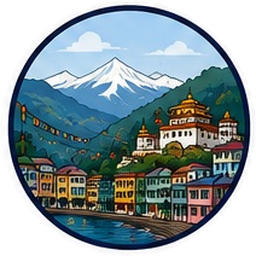 Gangtok
Summarised from Wikipedia (CC BY-SA) · verification pending
Sections identify their own public sources. Figures, names, travel services and accommodation availability still need independent verification.
Claims needing verification (5)
- The overview is the Wikipedia article summary as retrieved on 21 October 2026; Wikipedia is community-edited, so confirm figures with official census or government sources before reuse.
- Population, area and administrative figures may be out of date or refer to an older boundary.
- The getting there, tourism sections are extracts from the Wikipedia article; transport routes, train and flight services, and opening details change often, so confirm with operators before travelling.
- Wikipedia has no usable food section for this place, so none has been written; that tab shows open-map search links only.
- Accommodation source gap: no reliable local listing was established in this review; Stay shows map searches, not verified providers. This does not mean accommodation is unavailable.
References consulted for this update
These support regional context only; they do not verify every local claim or endorse accommodation providers.
- Wikipedia — Gangtok
Source of the overview and any getting-there, tourism and food extracts, licensed CC BY-SA 4.0; not independently verified.
Overview
Gangtok is the capital and the most populous city of the Indian state of Sikkim.
The seat of eponymous district, Gangtok is in the eastern Himalayan range, at an elevation of 1,650 m (5,410 ft). The city's population of 100,000 consists of the three Sikkimese ethnicities: the Bhutias, Lepchas, Indian Gorkhas as well as plainsmen from other states of India. Within the higher peaks of the Himalayas and with a year-round mild temperate climate, Gangtok is at the centre of Sikkim's tourism industry.
Source: Summarised from Wikipedia (CC BY-SA)
Wikipedia summary, quoted with attribution; figures not independently verified.
Source: OverviewLocal history guidance is unavailable; the following is state-wide context for Sikkim.
History
Sikkim's history is a tapestry woven from its ancient roots to modern times. This small but culturally rich state, with its capital at Gangtok, has a history shaped by various dynasties, colonial influences, and a struggle for independence. Initially inhabited by indigenous tribes, Sikkim was unified under the Namgyal dynasty in the 17th century.
Sikkim's history dates back to ancient times when it was inhabited by various tribes, including the Lepchas, who are considered the original inhabitants of the region. Their social and cultural practices laid the foundation for the region's identity. In the 17th century, the region saw the establishment of the Namgyal dynasty, which unified the state and positioned Sikkim as a center of Tibetan Buddhism. The first Chogyal (king), Phuntsog Namgyal, was crowned in 1642, and the dynasty flourished, promoting Buddhism and maintaining ties with Tibet. During the medieval period, Sikkim witnessed civil strife and power struggles among local rulers and external forces. The Namgyal dynasty engaged in a series of conflicts with neighboring states, while also negotiating and forming alliances. These political dynamics were highlighted when British colonial interests began to encroach on Sikkim's territory in the 19th century. In 1817, Sikkim was forced to sign the Treaty of Titalia, which opened the state to British political influence. The British established a foothold in Sikkim, recognizing its strategic importance in the context of British India and Tibet. After the Anglo-Sikkimese War of 1888, Sikkim was effectively administered as a protectorate of the British Raj. The monarchy retained its internal governance, but British officials handled matters of diplomacy and defense. The winds of change began to sweep through Sikkim during the early 20th century as Indian national movements gained momentum. Sikkimese residents became increasingly aware of their political rights. The Indian independence movement inspired many in Sikkim, leading to demands for more autonomy. However, the local government sought to maintain a delicate balance between traditional power and modern statehood. Post-independence, Sikkim remained an independent monarchy allied to India.
- Sikkim was originally inhabited by the Lepcha tribe.
- The state is renowned for its biodiversity and cultural heritage.
- Formation of the Namgyal Dynasty
- Sikkim State Government Archive · 1642
- Formation of the Namgyal Dynasty
- 1642
- Treaty of Titalia
- 1817
- Sikkim’s accession to India
- 1975
- Population Growth Rate post-1975
- 32.6% increase
Sikkim State Government Archive · 1642
British India Government Records · 1817
Government of India Press Release · 1975
Census of India 2011 · 2001-2011
Source: Indias.com · Sikkim state guide
Local geography guidance is unavailable; the following is state-wide context for Sikkim.
Geography
Sikkim, a small yet geographically diverse state in North-East India, is located in the eastern Himalayas. It shares borders with the Tibetan Autonomous Region of China to the north, Bhutan to the east, and West Bengal to the south. Covering an area of approximately 7,096 square kilometers, Sikkim is characterized by its stunning mountainous terrain, dominated by the majestic Kanchenjunga, the thi…
Sikkim, situated in the eastern part of India, is bordered by the Tibetan Autonomous Region of China to the north, Bhutan to the east, and West Bengal to the south. This strategic location contributes to its cultural diversity and natural beauty. Covering an area of about 7,096 square kilometers, Sikkim is one of the smallest states in India. The state's landscape is predominantly mountainous, characterized by the towering peaks of the Himalayan range, including Kanchenjunga, which stands at 8,586 meters. This peak is a significant part of Sikkim's geography and attracts trekkers and climbers from around the globe. The terrain is rugged and steep, with majestic valleys and high-altitude plateaus. Sikkim's elevation varies drastically, with the southern plains lying at approximately 300 meters above sea level and the mountainous northern region exceeding 8,500 meters. Sikkim does not have a coastline, as it is a landlocked state. However, it is crisscrossed by numerous rivers, the most notable being the Teesta and Rangit rivers. These rivers play a crucial role in shaping the state's geography, creating fertile valleys and providing essential water resources for agricultural activities. The rivers also serve as vital conduits for hydropower generation, which is an important aspect of Sikkim's economy. The state is rich in wetlands, particularly in the high alpine regions, where numerous glacial lakes exist, such as Tsomgo Lake and Gurudongmar Lake. These lakes are crucial for biodiversity and serve as important ecological resources for both local wildlife and human populations. Sikkim boasts a diverse forest ecosystem, which covers nearly 47% of its total area. The forests are categorized based on elevation, ranging from tropical forests in the lower regions to temperate and alpine forests at higher altitudes. This variety of forest types supports a rich diversity of flora and fauna, including several endangered species.
- Borders China, Bhutan, and West Bengal.
- Covering an area of 7,096 square kilometers.
- Home to Kanchenjunga, the third-highest peak in the world.
- Rich network of rivers including Teesta and Rangit.
- Area of Sikkim
- 7,096 square kilometers
- Height of Kanchenjunga
- 8,586 meters
- Percentage of forest cover
- 47%
Government of Sikkim · 2021
Government of Sikkim · 2021
Forest Survey of India · 2020
Source: Indias.com · Sikkim state guide
Local climate guidance is unavailable; the following is state-wide context for Sikkim.
Climate
Sikkim experiences a diverse climate influenced by its topography and geographic location in the Eastern Himalayas. The state features four primary climate zones: subtropical, temperate, cold, and alpine, with variations based on altitude. The weather is characterized by four distinct seasons: spring, summer, monsoon, and winter.
Sikkim's climate is shaped by its varied topography, which ranges from the low valleys at around 300 meters to the high peaks exceeding 8,000 meters. This range leads to the development of multiple climate zones within the state, namely subtropical, temperate, cold, and alpine. The subtropical zone experiences warm temperatures, while the alpine zone has much colder conditions year-round. The major seasons in Sikkim include spring (March to May), summer (June to mid-August), monsoon (mid-August to September), and winter (October to February). In spring, temperatures generally vary between 10°C and 20°C, while summer temperatures can reach up to 25°C. The monsoon season brings heavy rainfall that often exceeds 3000 mm annually, particularly in the southern and eastern regions. This period typically results in a dramatic rise in humidity that can reach up to 87%. During the winter months, temperatures can drop significantly, especially in higher altitudes, often falling to as low as -5°C. This cold weather is accompanied by snowfall in the higher elevations, contributing to a picturesque winter landscape. The humidity is also lower during winter, making it a preferred season for tourists and locals alike. The rainfall patterns in Sikkim are critical for agriculture; the majority of the precipitation occurs from June to September due to the southwest monsoon winds. The heavy rainfall during this period can lead to natural disasters such as landslides and flash floods, particularly affecting the hilly regions. It is important to note that the state has faced challenges with landslides, which can disrupt transportation and endanger lives. Moreover, cyclones are rare in Sikkim due to its location, though the tail end of cyclones affecting the eastern coast can bring some fluctuations in weather patterns. Drought conditions are also less common but can occur, mainly in the lower regions during prolonged dry spells.
- Average temperatures vary from 10°C in winter to 25°C in summer.
- Monsoon brings heavy rainfall, often exceeding 3000 mm annually.
- Humidity levels can reach up to 87% during the monsoon season.
- Indian Meteorological Department · 2022
- Annual Rainfall
- 3000 mm
- Average Summer Temperature
- 25°C
- Average Winter Temperature
- 10°C
- Monsoon Period
- June to September
Indian Meteorological Department · 2022
Indian Meteorological Department · 2022
Indian Meteorological Department · 2022
Indian Meteorological Department · 2022
Source: Indias.com · Sikkim state guide
Local people guidance is unavailable; the following is state-wide context for Sikkim.
People
Sikkim, a small yet culturally rich state in North-East India, has a population estimated at around 610,577 as of the 2011 Census. The state's demographic is marked by a mix of ethnicities, with Nepali being the dominant language, alongside English. The urban-rural divide in Sikkim suggests that a significant portion of the population resides in urban areas, particularly in the capital, Gangtok.
Sikkim, nestled in the Eastern Himalayas, is one of the smallest states in India, both in terms of land area and population. As per the 2011 Census, the total population of Sikkim was recorded at approximately 610,577. The state's relatively small size means it exhibits distinct demographic characteristics, including a low population density of around 86 people per square kilometer. The population is primarily composed of several ethnic groups, including the Nepali, Bhutia, and Lepcha communities, which enrich the social fabric of the state. The main language spoken in Sikkim is Nepali, which serves as a lingua franca among the diverse ethnic groups. English is also widely used, especially in administrative and educational contexts, reflecting Sikkim's commitment to inclusivity and modernization. The multilingual landscape also includes various dialects associated with indigenous communities, showcasing a rich cultural diversity. Sikkim has experienced moderate population growth, attributed partly to migration from neighboring states as people seek better job opportunities in urban areas. The urban center of Gangtok, the state capital, is a significant hub for commerce and education, drawing residents from surrounding rural areas. As of the last census, around 30% of the state's population lived in urban areas, underscoring a trend toward urbanization. The literacy rate in Sikkim is commendable, standing at 81.42% as per the 2011 Census. This figure reflects the state's focus on education and social development. Factors contributing to the high literacy rate include the establishment of numerous educational institutions and government initiatives aimed at improving access to education. Migration trends in Sikkim reveal a mix of inbound and outbound movements. Many young people migrate to larger cities within India for further education and career prospects, while some return after gaining experience in metropolitan areas.
- Total population: approximately 610,577 (2011 Census)
- Majority ethnic groups: Nepali, Bhutia, Lepcha
- Urban population accounts for about 30% of total population
- Literacy rate: 81.42% (2011 Census)
- Total Population
- 610,577
- Literacy Rate
- 81.42%
- Population Density
- 86 people/km²
Census of India · 2011
Census of India · 2011
Census of India · 2011
Source: Indias.com · Sikkim state guide
Local culture guidance is unavailable; the following is state-wide context for Sikkim.
Culture
Sikkim, a small yet culturally vibrant state in Northeast India, is rich in traditions and heritage that reflect its diverse ethnic background. The state's population includes various communities, primarily Nepalis, Lepchas, and Bhutias, each contributing to the local culture through their unique customs, languages, and art forms.
Sikkim is a melting pot of diverse cultures, primarily influenced by its ethnic communities: the Nepalis, Lepchas, and Bhutias. Each community has imbued the state with a rich tapestry of traditions, values, and practices. Nepali is the dominant language, spoken alongside English, which serves as a medium of instruction and communication. Festivals form an integral part of Sikkimese culture. Losar, the Tibetan New Year, is celebrated with great enthusiasm by the Tibetan Buddhist community. Families prepare special foods, perform traditional dances, and engage in rituals that symbolize renewal and prosperity. Another significant festival, Bhumchu, is celebrated at the Tashiding Monastery and involves the reading of sacred texts and examining the water from a pot to predict the year ahead. Music and dance are vital cultural expressions in Sikkim. Folk music often features traditional instruments like the damphu (a hand-held drum) and the flute, while popular dance forms include the Cham dance performed during festivals at monasteries. The dancers, attired in colorful costumes and masks, depict stories from Buddhist teachings, fostering community bonding and a sense of cultural pride. Art and crafts in Sikkim reflect the intricate skills of local artisans. Handwoven textiles, bamboo crafts, and wood carvings are prevalent, with local markets offering a variety of handmade items. Traditional clothing, particularly during festivals, includes garments like the gho (a long kurta worn by men) and gunyo-cholo (traditional attire for women), showcasing vibrant colors and intricate designs. Sikkim's architectural landscape is marked by its stunning monasteries, such as the Rumtek Monastery and Pemayangtse Monastery, which are significant both religiously and architecturally. The designs often include intricate woodwork, colorful paintings, and sculptures depicting Buddhist symbols, making them important heritage sites.
- Major festivals include Losar, Bhumchu, and Saga Dawa.
- Folk music and traditional dances, particularly the Cham dance.
- Population of Sikkim
- Census of India · 2021
- Population of Sikkim
- 610,577
- Major religions in Sikkim
- Buddhism (27.4%), Hinduism (57.8%)
- Number of Buddhist monasteries in Sikkim
- Around 200
Census of India · 2021
Census of India · 2011
State Government Reports · 2023
Source: Indias.com · Sikkim state guide
Local economy guidance is unavailable; the following is state-wide context for Sikkim.
Economy
Sikkim, located in the northeastern region of India, boasts a mixed economy primarily driven by agriculture, tourism, and hydropower. The state's geographical diversity contributes to its agricultural richness, yielding crops such as rice, maize, and cardamom.
Sikkim’s economy has evolved significantly over the years, with a blend of traditional agriculture and emerging sectors such as tourism and hydropower. Historically, the state's economy was predominantly based on agriculture, which continues to play a vital role today. Sikkim is known for its cardamom cultivation, often referred to as the largest producer of this spice in India. Other significant crops include rice, maize, and large cardamom, contributing to the livelihood of a considerable portion of the population. In recent decades, there has been a notable shift towards tourism, fueled by Sikkim's picturesque landscapes, rich biodiversity, and vibrant culture. The state attracts both domestic and international tourists, fostering growth in the hospitality sector. The economic history of Sikkim shows a gradual transition from a somewhat isolated economy to one that is more integrated with broader Indian economic activities, particularly since it became the 22nd state of India in 1975. Sikkim's Gross State Domestic Product (GSDP) for the year 2019-20 was approximately ₹37,401 crores, marking a steady increase from previous years (Ministry of Statistics and Programme Implementation, 2021). This economic output reflects growth driven primarily by tourism and agricultural productivity. Additionally, the per capita income of Sikkim is relatively high compared to the national average, standing at around ₹1,37,000 (2020), showcasing the state's economic resilience (Department of Economics, Sikkim, 2021). Sikkim’s employment landscape is diverse but still heavily inclined towards agriculture, tourism, and public sector jobs. The government has made efforts to stimulate job creation through various initiatives aimed at encouraging entrepreneurship, particularly among young people. The emergence of Micro, Small, and Medium Enterprises (MSMEs) has been significant, with the government providing incentives and support to foster this sector.
- GSDP of approximately ₹37,401 crores in 2019-20
- Per capita income around ₹1,37,000 as of 2020
- First fully organic state in India
- Tourism and agriculture as key economic drivers
- Gross State Domestic Product (GSDP)
- ₹37,401 crores
- Per Capita Income
- ₹1,37,000
- Organic Farming Status
- First fully organic state in India
- Major Agricultural Product
- Largest producer of cardamom
Ministry of Statistics and Programme Implementation · 2019-20
Department of Economics, Sikkim · 2020
Sikkim Organic Mission · 2016
Agricultural Statistics of India · 2021
Source: Indias.com · Sikkim state guide
Civic reading & local action
Community reporting · CivicPulse
Independent community stories and reporting, not a government complaint service. Posting here does not submit a complaint to an authority.
No matching published stories in the available feed. Browse the community and topic links below.
Topic links cover the available feed across India, not verified reports for this locality.
Official complaint channel · Government
For a public-service grievance, check the responsible department’s official process. CPGRAMS is the Government of India’s public-grievance portal, with its own scope and exclusions; it is not an emergency service or an RTI channel.
CPGRAMS · official public-grievance portalCheck eligibility and the authority handling your issue on the portal. No complaint is submitted by clicking a link on Indias.com.
Local news and civic guides
Upcoming events in Gangtok
Loading events…
Events from IndianEvents.org · Add an event
Indian Family Trees
Discover your roots, celebrate your heritage and preserve your family's story from Gangtok.
Celebrate a Life — Memorials
Honour a loved one from Gangtok with a memorial page their family and community can share.