
District · Sikkim
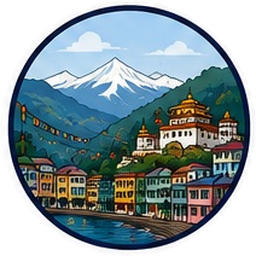 Gangtok
Summarised from Wikipedia (CC BY-SA) · verification pending
Sections identify their own public sources. Figures, names, travel services and accommodation availability still need independent verification.
Claims needing verification (5)
- The overview is the Wikipedia article summary as retrieved on 21 October 2026; Wikipedia is community-edited, so confirm figures with official census or government sources before reuse.
- Population, area and administrative figures may be out of date or refer to an older boundary.
- The getting there, tourism sections are extracts from the Wikipedia article; transport routes, train and flight services, and opening details change often, so confirm with operators before travelling.
- Wikipedia has no usable food section for this place, so none has been written; that tab shows open-map search links only.
- Accommodation source gap: no reliable local listing was established in this review; Stay shows map searches, not verified providers. This does not mean accommodation is unavailable.
References consulted for this update
These support regional context only; they do not verify every local claim or endorse accommodation providers.
- Wikipedia — Gangtok
Source of the overview and any getting-there, tourism and food extracts, licensed CC BY-SA 4.0; not independently verified.
Tourism
Apart from the major religious festivals of Dashain, Tihar, Christmas, Holi etc., the diverse ethnic populace of the town celebrates several local festivals.
The Lepchas and Bhutias celebrate new year in January, while Tibetans celebrate the new year (Losar) with "Devil Dance" in January–February. The Maghe sankranti, Ram Navami are some of the important Nepalese festivals. Chotrul Duchen, Buddha Jayanti, the birthday of the Dalai Lama, Loosong, Bhumchu, Saga Dawa, Lhabab Duechen and Drupka Teshi are some other festivals, some distinct to local culture and others shared with the rest of India, Nepal, Bhutan and Tibet. A popular food in Gangtok is the momo, a steamed dumpling containing pork, beef and vegetables cooked in a doughy wrapping and served with watery soup. Wai-Wai is a packaged snack consisting of noodles which are eaten either dry or in soup form.
- City institutions
Source: Summarised from Wikipedia (CC BY-SA)
Extract from the Wikipedia "Culture" section, quoted with attribution; routes, timings and services not independently verified.
Source: TourismLocal nature & wildlife guidance is unavailable; the following is state-wide context for Sikkim.
Nature & wildlife
Sikkim, a small yet biodiverse state in Northeast India, is renowned for its stunning landscapes and rich natural heritage. Nestled in the Eastern Himalayas, Sikkim boasts a variety of ecosystems, from tropical forests to alpine meadows. The state is home to several protected areas, including Khangchendzonga National Park, a UNESCO World Heritage site, which harbors unique flora and fauna.
Sikkim is a treasure trove of biodiversity and is celebrated for its breathtaking natural surroundings. The state is situated in the Eastern Himalayas, boasting magnificent views and lush green landscapes that change dramatically with varying altitudes. The region's topography ranges from tropical foothills to high-altitude alpine pastures, leading to a diverse array of ecosystems. The forests of Sikkim are rich in flora, with more than 5,000 species of flowering plants recorded, highlighting the state's remarkable plant diversity. Significant species include the rhododendron, which blooms in vibrant colors between March and May, creating a canvas of flowers across the hills. Other notable trees are pine and oak, which provide a habitat for various birds and mammals. Sikkim is also home to diverse fauna, including some rare and endangered species. The Khangchendzonga National Park, home to the third highest mountain in the world, houses a wildlife sanctuary where one can find the snow leopard, Himalayan black bear, and the red panda, which is the state animal. The park is crucial for conservation efforts and showcases the unique wildlife and rich ecosystems of the Himalayas. Birdwatchers find Sikkim a paradise, with over 550 species of birds documented. Species like the Himalayan monal, the state bird, and various types of pheasants can be spotted, alongside numerous migratory birds that visit during different seasons. The state is also home to numerous rivers, such as the Teesta and Rangit, which flow through the valleys, providing essential water resources and habitats for aquatic life. These rivers are vital for irrigation and support agriculture, an essential part of the local economy. Wetlands in Sikkim, including several high-altitude lakes and marshes, contribute significantly to the biodiversity of the region. These wetlands serve as breeding grounds for various aquatic species and play an essential role in the local ecology.
- Over 5,000 species of flowering plants
- Home to rare wildlife like the snow leopard and red panda
- Khangchendzonga National Park is a UNESCO World Heritage Site
- More than 550 bird species identified
- Number of flowering plant species
- Over 5,000
- Bird species documented
- More than 550
- First state to ban plastic bags
- Yes
- Endangered species in Khangchendzonga National Park
- Snow Leopard and Red Panda
- Total area of Khangchendzonga National Park
- 1,784 square kilometers
Forest Department of Sikkim · 2023
BirdLife International · 2022
Sikkim Government · 1998
Wildlife Institute of India · 2023
UNESCO · 2021
Source: Indias.com · Sikkim state guide
Local culture & festivals guidance is unavailable; the following is state-wide context for Sikkim.
Culture & festivals
Sikkim, a small yet culturally vibrant state in Northeast India, is rich in traditions and heritage that reflect its diverse ethnic background. The state's population includes various communities, primarily Nepalis, Lepchas, and Bhutias, each contributing to the local culture through their unique customs, languages, and art forms.
Sikkim is a melting pot of diverse cultures, primarily influenced by its ethnic communities: the Nepalis, Lepchas, and Bhutias. Each community has imbued the state with a rich tapestry of traditions, values, and practices. Nepali is the dominant language, spoken alongside English, which serves as a medium of instruction and communication. Festivals form an integral part of Sikkimese culture. Losar, the Tibetan New Year, is celebrated with great enthusiasm by the Tibetan Buddhist community. Families prepare special foods, perform traditional dances, and engage in rituals that symbolize renewal and prosperity. Another significant festival, Bhumchu, is celebrated at the Tashiding Monastery and involves the reading of sacred texts and examining the water from a pot to predict the year ahead. Music and dance are vital cultural expressions in Sikkim. Folk music often features traditional instruments like the damphu (a hand-held drum) and the flute, while popular dance forms include the Cham dance performed during festivals at monasteries. The dancers, attired in colorful costumes and masks, depict stories from Buddhist teachings, fostering community bonding and a sense of cultural pride. Art and crafts in Sikkim reflect the intricate skills of local artisans. Handwoven textiles, bamboo crafts, and wood carvings are prevalent, with local markets offering a variety of handmade items. Traditional clothing, particularly during festivals, includes garments like the gho (a long kurta worn by men) and gunyo-cholo (traditional attire for women), showcasing vibrant colors and intricate designs. Sikkim's architectural landscape is marked by its stunning monasteries, such as the Rumtek Monastery and Pemayangtse Monastery, which are significant both religiously and architecturally. The designs often include intricate woodwork, colorful paintings, and sculptures depicting Buddhist symbols, making them important heritage sites.
- Major festivals include Losar, Bhumchu, and Saga Dawa.
- Folk music and traditional dances, particularly the Cham dance.
- Population of Sikkim
- Census of India · 2021
- Population of Sikkim
- 610,577
- Major religions in Sikkim
- Buddhism (27.4%), Hinduism (57.8%)
- Number of Buddhist monasteries in Sikkim
- Around 200
Census of India · 2021
Census of India · 2011
State Government Reports · 2023
Source: Indias.com · Sikkim state guide
Find on the map
Civic reading & local action
Community reporting · CivicPulse
Independent community stories and reporting, not a government complaint service. Posting here does not submit a complaint to an authority.
No matching published stories in the available feed. Browse the community and topic links below.
Topic links cover the available feed across India, not verified reports for this locality.
Official complaint channel · Government
For a public-service grievance, check the responsible department’s official process. CPGRAMS is the Government of India’s public-grievance portal, with its own scope and exclusions; it is not an emergency service or an RTI channel.
CPGRAMS · official public-grievance portalCheck eligibility and the authority handling your issue on the portal. No complaint is submitted by clicking a link on Indias.com.
Articles from Sikkim
- Sikkim
History, geography, economy and culture of Sikkim
Local news and civic guides
Upcoming events in Gangtok
Loading events…
Events from IndianEvents.org · Add an event
Indian Family Trees
Discover your roots, celebrate your heritage and preserve your family's story from Gangtok.
Celebrate a Life — Memorials
Honour a loved one from Gangtok with a memorial page their family and community can share.