
District · Kerala
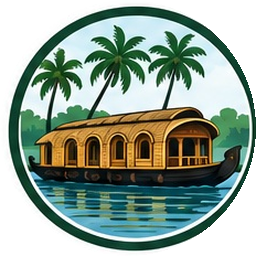 Alappuzha
ആലപ്പുഴ
Alappuzha — the "Venice of the East" — is a coastal Kerala district of 2,127,789 residents (Census 2011), famous for the Punnamada Nehru Trophy Boat Race, Kuttanad below-sea-level rice farming (FAO Global Heritage Site) and Alleppey coir.
Alappuzha district overview
Alappuzha — the "Venice of the East" — is a coastal Kerala district of 2,127,789 residents (Census 2011), famous for the Punnamada Nehru Trophy Boat Race, Kuttanad below-sea-level rice farming (FAO Global Heritage Site) and Alleppey coir.
Alappuzha (Alleppey) district lies on the central Kerala coast, covering 1,415 km² with a population of 2,127,789 (Census 2011) and a density of 1,504 per km² — the highest of any Kerala district. Alappuzha has 6 municipalities, 72 gram panchayats and 6 taluks: Ambalappuzha, Chengannur, Cherthala, Karthikappally, Kuttanad and Mavelikkara. The district borders the Arabian Sea for 82 km. Alappuzha town was founded by Raja Kesavadas of Travancore in 1762 as a planned port town on a grid of canals — the "Venice of the East" nickname was applied by British Viceroy Lord Curzon in the early 20th century.
- Population (2011)
- 2,127,789
- Source: Census of India · 2011
- Area
- 1,415 km²
- Source: Census · 2011
- Density
- 1,504/km² (highest in Kerala)
- Source: Census · 2011
- Coastline
- 82 km
- Source: Kerala Fisheries Dept
- Founding of Alappuzha town
- 1762 by Raja Kesavadas
- Source: Travancore records · 1762
Verified by Indias.com Editorial on 2026-09-14. From the original Indias.com district page.

- Population (2011)
- 2,127,789
- Area
- 1,415 km²
- Density
- 1,504/km² (highest in Kerala)
- Coastline
- 82 km
- Founding of Alappuzha town
- 1762 by Raja Kesavadas
About Alappuzha
Alappuzha (ആലപ്പുഴ) is a coastal district in Kerala - Keralam, India, bordered by the Arabian Sea and shaped by backwaters, canals and low-lying farmland. Its headquarters is Alappuzha town, often called Alleppey. The district is known for houseboat tourism, coir production and the paddy fields of Kuttanad, where farming takes place in areas below sea level.
Malayalam is the main language, and local life reflects fishing, agriculture, trade and tourism. Boat races, temple festivals and diverse religious traditions contribute to its culture. Notable places include Alappuzha Beach, the town’s lighthouse and the Ambalappuzha Sree Krishna Temple. The Nehru Trophy Boat Race on Punnamada Lake is a major annual attraction.
Residents commonly focus on flooding, coastal erosion, safe drinking water, sanitation and waste management. Protecting backwater ecosystems while supporting tourism, improving transport and drainage, and sustaining livelihoods for fishers, farmers and coir workers are important civic concerns.
Source: CivicPulse · Alappuzha
Overview
Alappuzha — the "Venice of the East" — is a coastal Kerala district of 2,127,789 residents (Census 2011), famous for the Punnamada Nehru Trophy Boat Race, Kuttanad below-sea-level rice farming (FAO Global Heritage Site) and Alleppey coir.
Alappuzha (Alleppey) district lies on the central Kerala coast, covering 1,415 km² with a population of 2,127,789 (Census 2011) and a density of 1,504 per km² — the highest of any Kerala district. Alappuzha has 6 municipalities, 72 gram panchayats and 6 taluks: Ambalappuzha, Chengannur, Cherthala, Karthikappally, Kuttanad and Mavelikkara. The district borders the Arabian Sea for 82 km. Alappuzha town was founded by Raja Kesavadas of Travancore in 1762 as a planned port town on a grid of canals — the "Venice of the East" nickname was applied by British Viceroy Lord Curzon in the early 20th century.
Source: Indias.com · Alappuzha
Local history guidance is unavailable; the following is state-wide context for Kerala.
History
Kerala's recorded history stretches from Sangam-era Chera kingdoms and 2nd-century BCE Muziris trade with Rome, through Portuguese, Dutch and British colonial phases, to a 1956 States Reorganisation that merged Malabar, Kochi and Travancore into today's state.
Kerala's history begins in the Sangam period (roughly 3rd century BCE to 3rd century CE), when the Cheras ruled much of the region alongside the Cholas and Pandyas. The ancient port of Muziris (near modern Kodungallur) was the principal Malabar port on the Indo-Roman spice route; Pliny and the Periplus of the Erythraean Sea record active trade in pepper, ivory and pearls by the 1st century CE. Christianity arrived, according to tradition, with the apostle Thomas at Kodungallur in 52 CE, and Jewish and Arab-Muslim mercantile communities were established at Kochi and along the coast well before European contact. The medieval period saw the rise of the second Chera dynasty (Kulasekhara, c. 800–1102 CE) and later the Zamorin of Kozhikode. Vasco da Gama landed at Kappad near Kozhikode on 20 May 1498, opening a Portuguese, Dutch (from 1663) and finally British colonial phase. The princely states of Travancore and Cochin negotiated separate accords with the British while the northern Malabar district was directly administered from Madras. On 1 November 1956 the States Reorganisation Act merged Malabar with Travancore–Cochin to form Kerala; the four northern taluks of Travancore were transferred to Tamil Nadu the same day.
- Sangam-era Chera kingdom
- Muziris — principal port on the Indo-Roman spice route
- Portuguese landing at Kappad, 1498
- Kerala formed on 1 November 1956
- Sangam period
- 3rd c. BCE – 3rd c. CE
- Muziris trade with Rome
- from 1st c. CE
- Vasco da Gama at Kappad
- 20 May 1498
- State of Kerala formed
- 1 November 1956
Sangam literature
Periplus of the Erythraean Sea
Portuguese colonial records · 1498
States Reorganisation Act · 1956
Sources (4)
- States Reorganisation Act, 1956 — Ministry of Law, Government of India · retrieved2026-09-14 · applies tostate formation date and boundaries
- The Periplus of the Erythraean Sea (translated by Wilfred Schoff, 1912) — Public domain / archive.org · retrieved2026-09-14 · applies toRoman-era Muziris trade
- Vasco da Gama's landing at Kappad — Archaeological Survey of India · retrieved2026-09-14 · applies toPortuguese arrival date
- Encyclopaedia Britannica — Kerala — Encyclopaedia Britannica · retrieved2026-09-14 · applies togeneral historical narrative
Key facts last verified by Indias.com editors on 2026-09-14
Source: Indias.com · Kerala state guide
Local geography guidance is unavailable; the following is state-wide context for Kerala.
Geography
Kerala is a narrow, coastal state on India’s south-western tip — 590 km of Arabian Sea coastline to the west, the Western Ghats to the east, and a dense mesh of rivers, lakes and backwaters between them.
Kerala occupies the south-western tip of the Indian peninsula between the Arabian Sea and the Western Ghats. The state stretches roughly 590 kilometres along the coast (Ministry of Environment, Forest and Climate Change, State of Environment Report 2016) and is between 35 and 120 kilometres wide, with a total area of 38,863 km² (Census of India 2011). The land is traditionally described in three parallel belts: the coastal lowlands (below 7.5 m elevation), the midlands (7.5–75 m) covering roughly 41 percent of the state, and the eastern highlands rising into the Western Ghats where the highest peak, Anamudi in Idukki district, reaches 2,695 metres. 44 rivers originate in Kerala; 41 flow west into the Arabian Sea and only three flow east into Tamil Nadu. The famous backwaters — a network of interconnected brackish lagoons and lakes running roughly parallel to the coast — cover about 1,687 km², of which Vembanad Lake (Alappuzha–Ernakulam–Kottayam) is the largest at about 230 km² and is a Ramsar-designated wetland since 2002.
- Between Arabian Sea and the Western Ghats
- 3 topographic belts: lowlands, midlands, highlands
- 44 rivers — all short (longest, Periyar, 244 km)
- Backwaters cover 1,687 km²
- Coastline
- 590 km
- Total area
- 38,863 km²
- Highest peak
- Anamudi 2,695 m
- Rivers
- 44 (41 west-flowing)
- Vembanad Lake
- 230 km² (Ramsar site)
MoEFCC State of Environment 2016 · 2016
Census of India · 2011
Survey of India
Kerala State Water Policy · 2008
Ramsar Convention · 2002
Sources (4)
- State of Environment Report, Kerala 2016 — Ministry of Environment, Forest and Climate Change (Government of India) · retrieved2026-09-14 · applies tocoastline length, land-use figures
- District Census Handbook — Kerala — Census of India · retrieved2026-09-14 · applies tototal area
- Ramsar Sites Information Service — Vembanad-Kol Wetland — Ramsar Convention Secretariat · retrieved2026-09-14 · applies towetland status and area
- Anamudi peak — Survey of India · retrieved2026-09-14 · applies tohighest peak elevation
Key facts last verified by Indias.com editors on 2026-09-14
Source: Indias.com · Kerala state guide
Local climate guidance is unavailable; the following is state-wide context for Kerala.
Climate
Kerala has a tropical monsoon climate with two rainy seasons: the south-west monsoon (June–September) delivers about 2,000–3,000 mm of rain, followed by a lighter north-east monsoon (October–November); coastal temperatures stay between 22–36°C year-round.
Kerala's climate is classified Am (tropical monsoon) under the Köppen system, with high humidity and heavy monsoon rainfall shaped by the Western Ghats acting as an orographic barrier. Mean annual rainfall is around 3,055 mm (India Meteorological Department normals, 1991–2020), of which roughly 68% falls during the south-west monsoon (June to September) and another 16% during the north-east monsoon (October to November). Coastal Kerala averages 27–32°C through the year; high hills (Munnar, Ponmudi) drop to 5–10°C on winter nights. Kerala was severely flooded during the 2018 south-west monsoon — the worst flood since 1924 — causing 483 deaths and displacing 1.4 million people (Government of Kerala Post-Disaster Needs Assessment 2018).
- Two distinct monsoons
- Kerala first landfall of Indian SW monsoon each year
- 2018 floods — worst since 1924
- Mean annual rainfall
- Mean annual rainfall
- ~3,055 mm
- SW monsoon share
- ~68%
- 2018 flood deaths
- 483
- 2018 flood displaced
- 1.4 million
IMD Rainfall Normals 1991–2020 · 2022
IMD · 2022
Government of Kerala PDNA · 2018
Government of Kerala PDNA · 2018
Sources (2)
- IMD Rainfall Statistics — India Meteorological Department · retrieved2026-09-14 · applies torainfall, monsoon timing
- Kerala Floods 2018 — Post Disaster Needs Assessment — Government of Kerala with UN & World Bank · retrieved2026-09-14 · applies to2018 flood impact
Key facts last verified by Indias.com editors on 2026-09-14
Source: Indias.com · Kerala state guide
Local people guidance is unavailable; the following is state-wide context for Kerala.
People
Kerala's 33.4 million people live at the highest population density in south India, achieve the country's highest literacy rate, and speak Malayalam alongside significant Tamil, Kannada and Tulu minorities.
Kerala had 33,406,061 residents at the 2011 Census of India — the 12th most populous state — living at 860 persons per km², well above the national average of 382. Malayalam is the official language and the mother tongue of about 97 percent of residents; smaller communities speak Tamil (in the border districts), Kannada, Tulu, Konkani and Marathi. Religious composition per the 2011 Census: Hindus 54.7%, Muslims 26.6% and Christians 18.4% — the most religiously balanced state in India. Kerala reports the highest overall literacy rate in India (94.0%, Census 2011; 96.2% per the 2017–18 NSO Household Survey) and the highest female literacy (91.9%). Life expectancy at birth is 75 years — the highest in India — and infant mortality is the lowest at 6 per 1,000 live births (SRS 2020). Kerala's Human Development Index (HDI) of 0.782 (UNDP 2021) is the highest among Indian states. About 47.7% of the population is urban.
- Highest literacy of any Indian state
- Lowest infant mortality in India
- Highest HDI in India
- Balanced religious composition
- Population
- 33,406,061
- Density
- 860 /km²
- Literacy
- 94.0% (highest in India)
- Female literacy
- 91.9%
- Life expectancy
- 75 years
- Infant mortality
- 6 per 1,000 live births
- HDI
- 0.782
Census of India · 2011
Census of India · 2011
Census of India · 2011
Census of India · 2011
SRS Life Tables · 2020
SRS · 2020
UNDP Human Development Report · 2021
Sources (4)
- Census of India — Kerala at a Glance — Registrar General & Census Commissioner of India · retrieved2026-09-14 · applies topopulation, density, literacy, language & religion breakdown
- Sample Registration System Statistical Report 2020 — Office of the Registrar General, India · retrieved2026-09-14 · applies tolife expectancy, infant mortality
- UNDP Human Development Report 2021/22 — United Nations Development Programme · retrieved2026-09-14 · applies toHuman Development Index
- NSO Household Social Consumption on Education 2017–18 — National Statistical Office, MoSPI · retrieved2026-09-14 · applies toupdated literacy figure
Key facts last verified by Indias.com editors on 2026-09-14
Source: Indias.com · Kerala state guide
Local culture guidance is unavailable; the following is state-wide context for Kerala.
Culture
Kerala's cultural identity is shaped by classical Kathakali and Mohiniyattam dance, the vernacular Malayalam literary tradition led by writers from Ezhuthachan to O. V. Vijayan, and syncretic temple, church and mosque festivals that punctuate the year.
Kerala's cultural corpus rests on classical performing arts recognised by the Sangeet Natak Akademi: Kathakali, a highly stylised dance-drama; Mohiniyattam, a solo female classical form; Koodiyattam, the world's oldest surviving Sanskrit theatre (UNESCO Intangible Cultural Heritage of Humanity, 2001); and Ottamthullal, the satirical performance form of Kunchan Nambiar. Traditional martial art Kalaripayattu, referenced in Sangam texts, is regarded as one of the world's oldest fighting systems. Malayalam literature stretches from Thunchath Ramanujan Ezhuthachan (16th c., considered the father of the language) through Kumaran Asan, Vallathol and Ulloor — the modern "triumvirate" — to contemporary figures O. V. Vijayan and M. T. Vasudevan Nair; six Jnanpith Awards have been won by Malayalam writers. Landmark festivals include Onam (10-day harvest festival, statewide) and Vishu (Malayalam New Year). Kerala's cinema industry (Malayalam cinema, based largely at Kochi) is one of the four principal southern Indian film industries and has produced 3 Best Feature Film National Awards in recent years.
- Koodiyattam — UNESCO Intangible Heritage
- Kalaripayattu — among the world's oldest martial arts
- 10-day Onam harvest festival
- Six Jnanpith Awards for Malayalam writers
- Koodiyattam
- UNESCO Intangible Heritage
- Malayalam literature Jnanpith laureates
- 6
- Onam
- 10-day harvest festival
- Classical dance forms recognised
- Kathakali, Mohiniyattam, Koodiyattam, Ottamthullal
UNESCO · 2001
Bharatiya Jnanpith
Government of Kerala
Sangeet Natak Akademi
Sources (3)
- UNESCO Representative List — Kutiyattam, Sanskrit Theatre — UNESCO · retrieved2026-09-14 · applies toKoodiyattam UNESCO status
- Sangeet Natak Akademi — Recognised Art Forms — Sangeet Natak Akademi · retrieved2026-09-14 · applies toclassical dance and theatre forms
- Bharatiya Jnanpith — Award laureates — Bharatiya Jnanpith · retrieved2026-09-14 · applies toMalayalam Jnanpith winners
Key facts last verified by Indias.com editors on 2026-09-14
Source: Indias.com · Kerala state guide
Economy
Alappuzha is India's coir capital — producing about 60% of the country's coir output — with a workforce of about 400,000 in the coir cottage industry, plus significant contribution from Kuttanad rice, tourism, and Cherthala's Kerala Feeds & Milma dairies.
Alappuzha's coir industry employs approximately 400,000 people directly (Coir Board of India), across about 5,000 registered small units and thousands of cottage workshops. The Coir Board itself is headquartered at Kochi but its principal research and marketing operations run out of Alappuzha (Coir Research Institute, Kalavoor). Kuttanad, spanning parts of Alappuzha, Kottayam and Pathanamthitta, produces about 25% of Kerala's paddy from land 1.5–2.5 m below sea level, protected by an elaborate polder-and-bund system. Cherthala hosts Kerala's largest cattle-feed plant (Kerala Feeds Limited, 800 t/day) and one of Milma's largest dairy processing plants.
Source: Indias.com · Alappuzha
Did you know?
Alappuzha, also known as Alleppey, is often referred to as the 'Venice of the East' due to its interconnected network of canals and backwaters.
The region is famous for its houseboat cruises, which provide a unique way to experience the lush landscapes and tranquil waters.
Source: Indias.com · Alappuzha
Towns & villages in Alappuzha
Source: CivicPulse
Civic reading & local action
Community reporting · CivicPulse
Independent community stories and reporting, not a government complaint service. Posting here does not submit a complaint to an authority.
No matching published stories in the available feed. Browse the community and topic links below.
Topic links cover the available feed across India, not verified reports for this locality.
Official complaint channel · Government
For a public-service grievance, check the responsible department’s official process. CPGRAMS is the Government of India’s public-grievance portal, with its own scope and exclusions; it is not an emergency service or an RTI channel.
CPGRAMS · official public-grievance portalCheck eligibility and the authority handling your issue on the portal. No complaint is submitted by clicking a link on Indias.com.
Articles about Alappuzha
- Kerala Backwaters
India's Serene Waterways of Palm-Fringed Peace
- Attukal Pongala
The World's Largest All-Women Religious Gathering
- Ayurveda & Wellness — India's Ancient Journey Toward Balance, Health and Wellbeing
From ancient knowledge systems to a global wellness movement.
- Kochi Food Trail
Backwater seafood, Portuguese-influenced dishes and Kerala coconut cuisine.
Local news and civic guides
Upcoming events in Alappuzha
Loading events…
Events from IndianEvents.org · Add an event
Indian Family Trees
Discover your roots, celebrate your heritage and preserve your family's story from Alappuzha.
Celebrate a Life — Memorials
Honour a loved one from Alappuzha with a memorial page their family and community can share.