
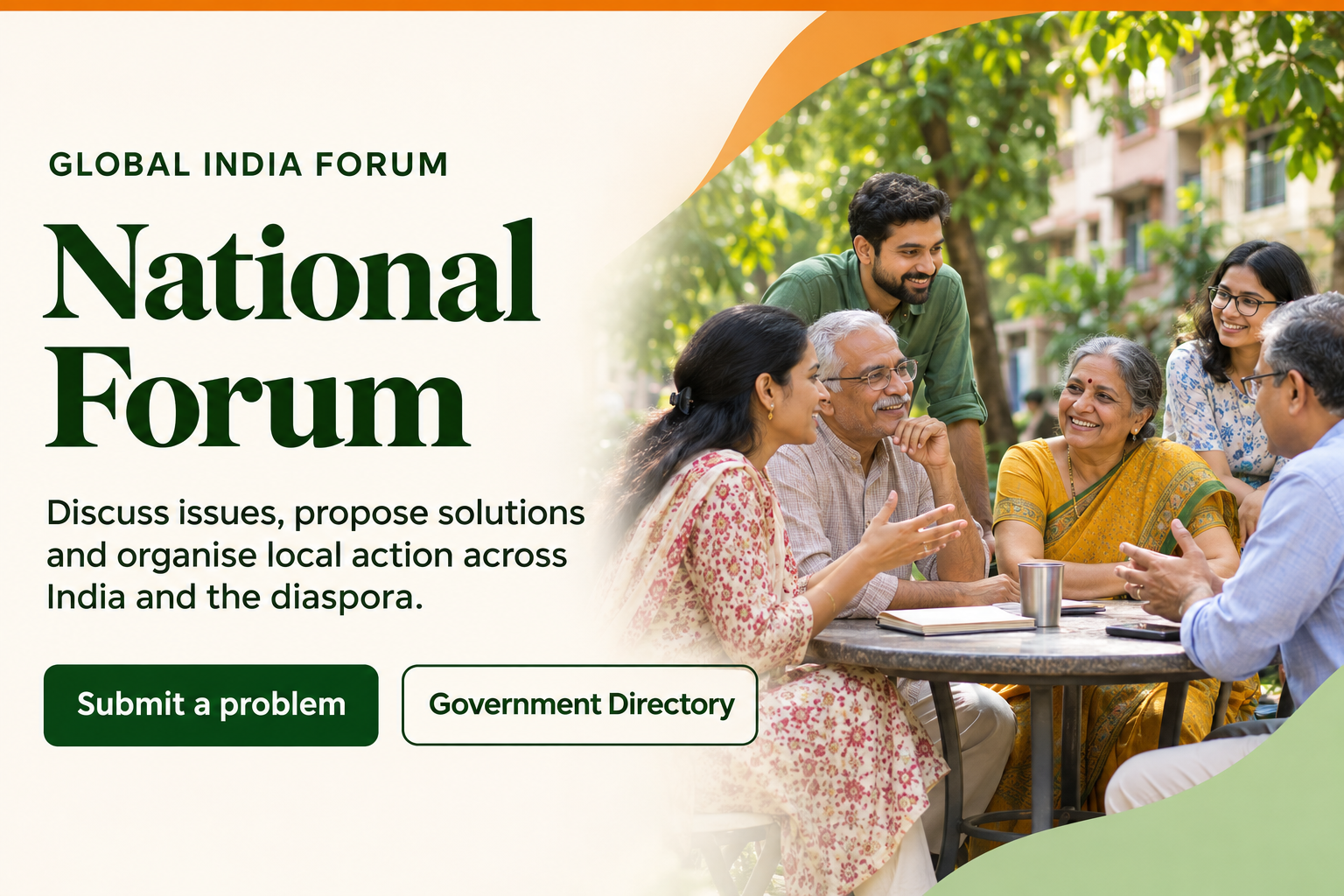
National Forum · Topic introduction
Community: an introduction
Building stronger communities through trust, inclusion and local action
Introductory overview prepared by Indias.com with AI assistance (November 2026) to open forum discussion. General background, not official guidance; check official sources before acting.
Tags: Community · Local action · Inclusion · Civic participation · Neighbourhoods · National Forum

Community life in India takes many forms: villages, urban neighbourhoods, housing societies, informal settlements, self-help groups and networks built around work, language or shared interests. These connections help people find support, share information and solve everyday problems. They also shape who feels welcome, whose concerns are heard and who can use common spaces safely.
Strong communities matter as migration, urban growth and changing family arrangements reshape daily life. Heat, floods, public health concerns and pressure on basic services make local cooperation valuable. Digital groups can connect neighbours quickly, but they can also spread rumours or leave out people without reliable internet access. The challenge is to build cooperation that includes everyone, rather than only the most visible or influential residents.
Key challenges: belonging, fairness and trust
A community is not automatically inclusive. Caste discrimination, religious prejudice, gender barriers and unequal incomes can affect participation and access to shared resources. Migrants, tenants, persons with disabilities and people who speak a different language may struggle to be heard. Older people and those living alone can face isolation even in busy neighbourhoods.
Local disagreements often concern waste, water, noise, parking, street use or the upkeep of common areas. They become harder to resolve when responsibilities are unclear, decisions are made privately or complaints turn into personal attacks. Volunteer fatigue is another problem: a few people may carry most of the work while others feel disconnected from decisions.
Practical steps citizens can take locally
Start with one shared problem that residents can describe clearly. Walk through the area with people who experience it differently, including women, older residents, sanitation workers and persons with disabilities. Record the location, impact and responsible public body where known. Avoid collecting unnecessary personal information or sharing photographs without consent.
Hold short, accessible meetings and offer an offline way to contribute. Use local languages where needed. Agree on a modest action plan, name willing volunteers and publish simple updates on tasks and spending. Rotate responsibilities so that leadership does not become permanent or exclusive.
Useful activities might include checking on isolated neighbours, organising reading groups, improving waste segregation or identifying barriers in shared spaces. Seek permission where required and leave hazardous work to trained personnel. Community action should support public services, not replace official duties or paid workers. In online groups, verify claims before forwarding them and discourage abuse. Diaspora members can contribute skills or resources while allowing local residents to set priorities.
Working with public institutions
Collective requests are more useful when they state the problem, provide relevant evidence and propose a realistic next step. Keep copies of submissions and acknowledgement numbers. Follow up respectfully, recognising that different issues belong to different authorities. Informal mediation should never pressure someone to give up legal rights or remain in danger.
Relevant official channels and national programmes include Gram Sabha, municipal ward offices, Centralised Public Grievance Redress and Monitoring System (CPGRAMS), District Legal Services Authorities, Swachh Bharat Mission and Deendayal Antyodaya Yojana–National Rural Livelihoods Mission.
Check local eligibility, procedures and availability before proceeding. Share what worked, what failed and what others could adapt, without exposing private details.
Questions for the forum
What shared problem in your village or neighbourhood could residents and the responsible authority realistically address together, and what should the first step be?
Whose voices are missing from local decisions, and what practical change would make participation easier and safer for them?
Which community initiative have you seen succeed or struggle, and what lessons about funding, accountability and long-term participation could others use?
Related articles
- Courtesy Matters: an introductionBuilding everyday respect in India’s shared spaces, public services and online conversations
- Education: an introductionBetter learning, fairer access and practical local action for education in India
- Health: an introductionBetter health in India starts with prevention, accessible care and stronger local action.
- Hygiene & Cleanliness: an introductionCleaner neighbourhoods, safer sanitation and shared responsibility across India
Related
- Discuss Community on the National Forum
- Central & State Government Initiatives
Sources
Write in Indian languages (transliteration)
Type in Indian languages
Type English letters (e.g. namaste), check the spelling, then press Insert. Works on your device only.
Insert copies the text so you can paste it into a search, comment or contact box. Transliteration changes spelling, not meaning.