
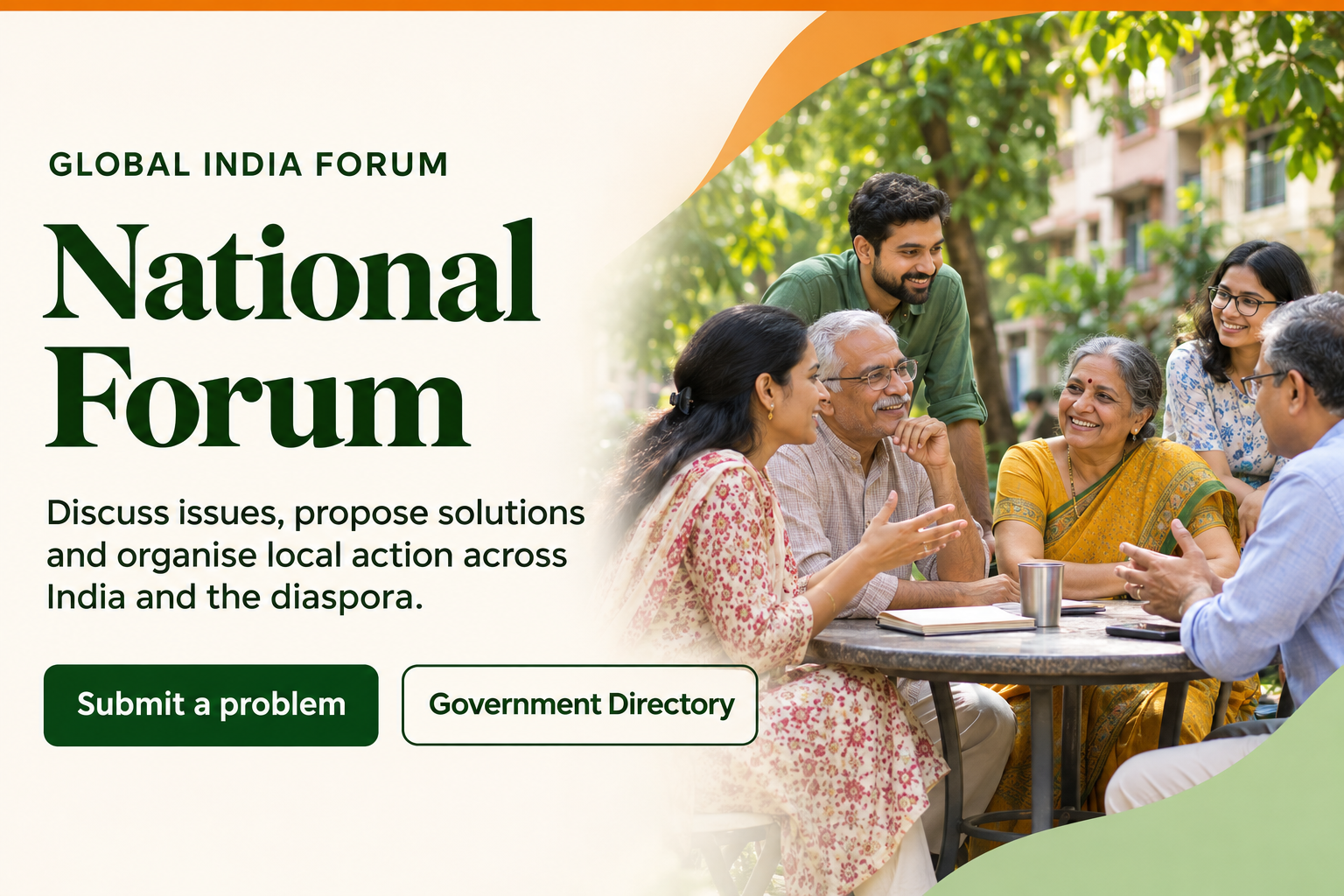
National Forum · Topic introduction
Courtesy Matters: an introduction
Building everyday respect in India’s shared spaces, public services and online conversations
Introductory overview prepared by Indias.com with AI assistance (November 2026) to open forum discussion. General background, not official guidance; check official sources before acting.
Tags: Courtesy · Civic sense · Respect · Community · Public spaces · National Forum
Courtesy is the everyday practice of treating others with consideration: waiting your turn, listening without interrupting, keeping shared spaces usable and disagreeing without humiliation. In India, where people of many languages, religions and social backgrounds share streets, workplaces and public services, these small actions help daily life run more smoothly. They also signal who feels welcome and whose needs are being overlooked.
Crowded transport, busy service counters and digital conversations make courtesy especially relevant today. Pressure on time and space can create friction, but it does not excuse intimidation or disrespect. This forum invites people in India and the diaspora to discuss everyday problems and workable solutions without blaming entire communities or treating courtesy as a substitute for better infrastructure and accountable institutions.
Courtesy starts with equal respect
Courtesy should not depend on someone’s income, occupation, caste, gender, age, disability or fluency in a particular language. Speaking respectfully to a sanitation worker, delivery worker or domestic worker matters just as much as being polite to a manager. Asking before photographing someone, respecting personal space and accepting a refusal are also basic forms of consideration.
Common challenges include queue-jumping, unnecessary honking, littering, loud audio in shared spaces and abusive exchanges online. People with disabilities, older people and caregivers can face additional obstacles when entrances, seats or pathways are blocked. Not every difficulty is caused by bad manners: unclear queues, inaccessible buildings and confusing instructions can also produce conflict.
Courtesy must not mean silence in the face of harassment or discrimination. People can set firm boundaries, challenge unfair treatment and make complaints without threats or personal abuse.
Practical habits citizens can adopt
Start with behaviour that is visible and repeatable. Join queues, let passengers exit before boarding, keep footpaths and ramps clear, and lower your voice or use headphones in shared spaces. Ask whether assistance is wanted rather than assuming. When language is a barrier, use simple words and patience instead of ridicule.
On roads, follow traffic rules, give way where required and avoid turning a mistake into a confrontation. At service counters, carry necessary documents where possible, ask for clarification calmly and respect staff members’ personal boundaries. Staff and institutions, in turn, should provide clear information and treat users fairly.
Online, check a claim before forwarding it, avoid sharing private details without consent and criticise ideas rather than identities. If you make a mistake, a brief apology and correction are often more useful than a prolonged argument. Where a situation feels unsafe, step away and seek appropriate help.
Make respectful behaviour easier locally
Resident groups, schools, market associations and workplaces can agree on a few clear expectations: orderly queues, accessible entrances, considerate noise levels and respectful complaint handling. Develop these with workers, tenants and people with disabilities, not only office-bearers. Use readable signs in locally understood languages and avoid rules that unfairly exclude particular groups.
Try small improvements before launching broad campaigns. Mark a queue, keep a shared entrance unobstructed or establish fair moderation rules for a neighbourhood messaging group. Review whether the change helped, invite feedback and adjust it. Public shaming and posting identifiable photographs can create fresh harm rather than solve the problem.
For concerns beyond ordinary interpersonal friction, choose a route suited to the issue. Relevant official channels and national programmes include CPGRAMS, National Consumer Helpline, Swachh Bharat Mission and Accessible India Campaign. Courtesy supports civic responsibility; it does not replace enforceable rights or reliable public services.
Questions for the forum
Which everyday discourtesy causes the most difficulty in your locality, and what practical change could reduce it?
How can communities encourage respectful behaviour without public shaming, discrimination or unnecessary policing?
What local initiative has worked, and how could others adapt it while including people whose needs are often overlooked?
Related articles
- Community: an introductionBuilding stronger communities through trust, inclusion and local action
- Education: an introductionBetter learning, fairer access and practical local action for education in India
- Health: an introductionBetter health in India starts with prevention, accessible care and stronger local action.
- Hygiene & Cleanliness: an introductionCleaner neighbourhoods, safer sanitation and shared responsibility across India
Related
- Discuss Courtesy Matters on the National Forum
- Central & State Government Initiatives
Sources
Write in Indian languages (transliteration)
Type in Indian languages
Type English letters (e.g. namaste), check the spelling, then press Insert. Works on your device only.
Insert copies the text so you can paste it into a search, comment or contact box. Transliteration changes spelling, not meaning.