
India information · Places & topics
Kalamkari
Textile traditions of Srikalahasti and Machilipatnam–Pedana in Andhra Pradesh
Wikipedia — Kalamkari ↗Indias.com source-based synthesis and abridgement of Wikipedia contributor text under CC BY-SA 4.0, captured 21 November 2026. Wording and organisation adapted; this is background information, not a live travel or administrative update. The Wikipedia craft source has sourcing-quality warnings; disputed age claims are not adopted here.
Tags: Kalamkari · Andhra Pradesh · Srikalahasti · Machilipatnam · culture
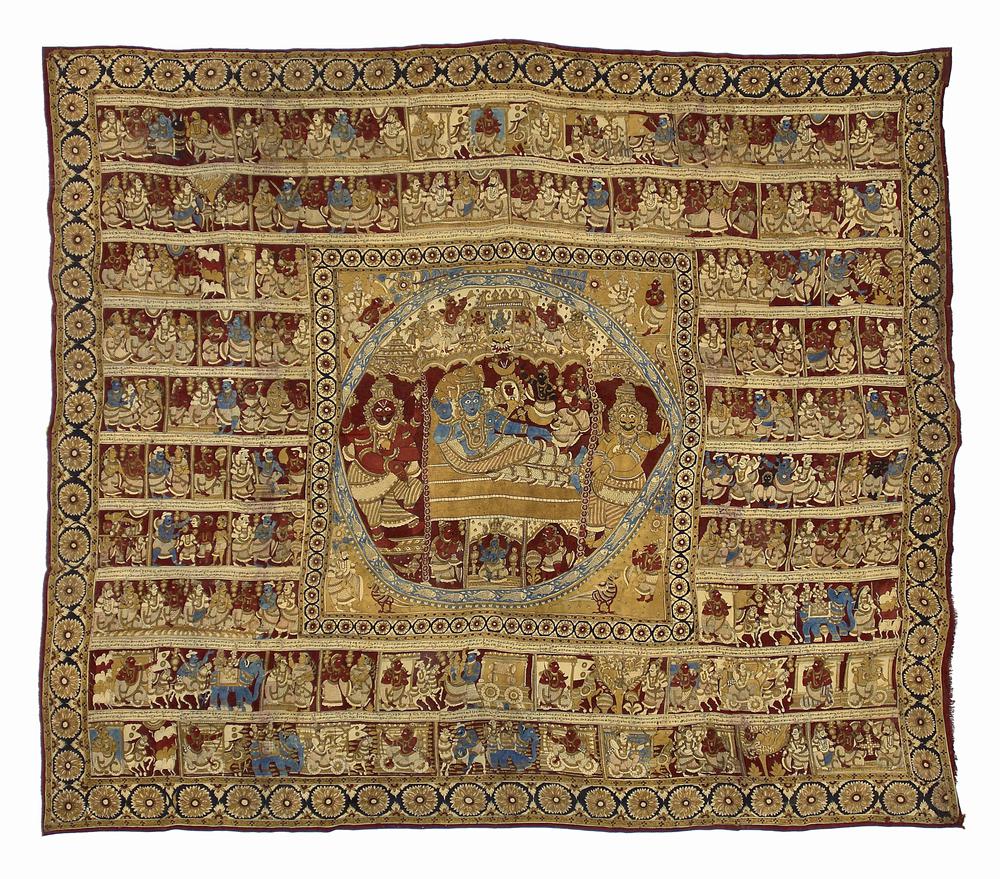
Kalamkari is a textile-art tradition associated with drawing, painting and block printing on cloth. In Andhra Pradesh, the two principal forms are linked to Srikalahasti and the Machilipatnam–Pedana area. Their techniques and visual traditions differ even though they share the same craft name.
The word combines terms associated with a pen and craftsmanship. Storytelling, temple imagery, floral decoration and the trade in printed textiles all form part of its cultural background. A product described as Kalamkari today is not automatically made using one traditional process.
Geography and craft centres
The hand-drawn tradition is associated with Srikalahasti in Tirupati district. The block-printed tradition is associated with Machilipatnam and nearby Pedana in Krishna district, toward the Bay of Bengal coast.
These centres place the craft within both the southern temple landscape and the coastal trading landscape of Andhra Pradesh. District names in older writing may predate recent administrative changes; the town and workshop identity is often more useful for understanding a particular textile.
Srikalahasti: drawing with the kalam
In the Srikalahasti style, a pen-like tool is used for freehand drawing and colouring. Narrative panels and religious subjects are prominent in the source discussion, including scenes drawn from Indian epics and devotional traditions.
The resulting cloth is not simply a repeating block print. Composition, outlined figures and the sequence of preparing and colouring the fabric are central to this approach. The maker and workshop should be credited when a specific contemporary work is shown.
Machilipatnam and Pedana: block printing
The Machilipatnam–Pedana tradition uses carved blocks to repeat designs on fabric. The source describes Persian-influenced motifs and historical patronage connected with the Golconda region and textile trade.
A repeated floral pattern, a narrative hand-painted panel and a modern screen-printed imitation may look related but have different production histories. The craft name alone does not settle which method or dyes were used.
Dyes, preparation and materials
Traditional Kalamkari is associated with cotton, fabric preparation, mordants and natural dyes. Dyeing and washing are stages in a process rather than a single application of colour to untreated cloth.
The Wikipedia source discusses many historical claims, some with uneven documentation. This page does not assign the craft a precise prehistoric origin or guarantee that every product sold under the name uses natural dyes.
Cultural heritage and identifying a piece
The source distinguishes registered geographic traditions for Srikalahasti and Machilipatnam. Such recognition refers to specified regional products, not every commercially printed textile that uses similar motifs.
When interpreting or purchasing a piece, ask about the making centre, hand drawing or block printing, materials and artist. The illustrated museum textile depicts Vishnu on the serpent Ananta; it is an example of narrative textile imagery, not a verified current workshop product.
Related articles
- DhimsaCommunity dance associated with Araku and the adjoining Koraput region of Andhra Pradesh and Odisha
- Telugu literatureTelugu-language writing across Andhra Pradesh, Telangana and Telugu-speaking communities
- NannayaEleventh-century Telugu poet associated with Rajamahendravaram and the Godavari region
- Visakhapatnam AirportA passenger guide to the coastal city's civil airport in Andhra Pradesh.
Related
- Andhra Pradesh state guide
- Telugu language
- Telugu literature