Restored from the original Indias.com state hub. Its AI-drafted descriptions and source claims remain pending editorial verification; the district list below uses the government directory checked on 19 November 2026.
Overview
Rajasthan, located in the northwestern region of India, is renowned for its rich cultural heritage, historic significance, and diverse landscapes. As the largest state in India by area, Rajasthan boasts a distinctive identity defined by its vibrant traditions, colorful festivals, and architectural marvels. Jaipur, the capital city, is famous for its palaces and forts, reflecting the grandeur of the erstwhile royal kingdoms. The state plays a significant role in India's economy, particularly in sectors such as agriculture, tourism, and textiles, while its geographical diversity ranges from the Thar Desert to fertile plains. The languages spoken include Hindi and Rajasthani, which together weave a narrative of the region's unique cultural identity and traditions.
Rajasthan, known as the 'Land of Kings,' is India's largest state by area, occupying about 342,239 square kilometers in the northwestern part of the country. Bordered by Punjab to the north, Haryana to the northeast, and several other states including Gujarat and Madhya Pradesh, Rajasthan also shares an international border with Pakistan. The state's geographic diversity includes the vast Thar Desert, deserts, plains, hills, and numerous vibrant cities. Its capital, Jaipur, celebrated as the 'Pink City,' is not only a beautiful blend of modernity and tradition but also serves as an important cultural and economic center within the state.
The cultural identity of Rajasthan is rich and variegated, shaped by its long history of royal dominance, the influence of various dynasties, and a blend of tribal and folk traditions. Iconic festivals, such as Teej, Gangaur, and Pushkar Fair, showcase the state’s artistic heritage through music, dance, and colorful attires. The art of Rajasthani folk music and dance, including Ghoomar and Kalbeliya, captivates visitors and locals alike, preserving the antiquity of the region. Rajasthan is also famous for its traditional handicrafts, such as block printing, blue pottery, and jewelry making, which reflect local artisanship and innovation.
Rajasthan plays a significant economic role in India, contributing notably to sectors like agriculture, tourism, and textiles. The state is a major producer of commodities like bajra (pearl millet), wheat, and mustard oil. Tourism is a vital component of Rajasthan's economy, with the state attracting millions of visitors every year to its majestic forts, palaces, and natural landscapes, including the beautiful Ranthambore National Park. The textile industry is also a key economic driver, with traditional crafts and modern production coexisting to support both local artisans and commercial enterprises.
The region is characterized by its fortifications, with iconic structures such as Mehrangarh Fort in Jodhpur and Amer Fort in Jaipur, serving as testaments to Rajasthan's storied past. The architecture reflects a blend of Indo-Saracenic, Mughal, and Rajputana styles, making the state a significant point of interest for historians and architects alike. Moreover, Rajasthan's deserts, cantilevered by the Aravalli range, present a stunning landscape that contrasts its vibrant cities with the serene dunes, fostering a unique ecosystem that is home to various flora and fauna, including the Great Indian Bustard.
In summary, Rajasthan is a state that offers a tapestry of historical grandeur, cultural vibrancy, and economic significance. Its contribution to India's composite culture, along with its diverse topography and thriving economy, render it an intriguing destination for scholars, tourists, and locals alike. The languages spoken here, primarily Hindi and Rajasthani, further emphasize the depth and uniqueness of the state’s identity, making it a remarkable example of India's rich tapestry.
Textile Industry Contribution
Approximately 35% of the state's industrial output
Government of Rajasthan · 2020
Marble Production
Rajasthan accounts for 90% of India's marble production
Indian Bureau of Mines · 2021
Employment in Tourism
Approximately 10% of the state's employment is in the tourism sector
Ministry of Tourism · 2019
IT Sector Growth Rate
The IT sector is projected to grow at a rate of 15% annually
NASSCOM · 2022
Manufacturing Growth
Rajasthan has seen a 7% increase in manufacturing output since 2019
Ministry of Commerce · 2022
Questions readers ask
What are the major industries in Rajasthan?
The major industries in Rajasthan include textiles, mining, tourism, manufacturing, and information technology.
Which city is known as the industrial hub of Rajasthan?
Jaipur is known as the major industrial hub of Rajasthan, particularly for textiles and handicrafts.
How does tourism contribute to Rajasthan's economy?
Tourism significantly contributes to Rajasthan's economy by creating job opportunities and supporting local businesses.
What initiatives has the Rajasthan government taken to boost industry?
The Rajasthan Investment Promotion Scheme (RIPS) and development of industrial parks are some initiatives to promote industrial growth.
What is the significance of the textile industry in Rajasthan?
The textile industry is one of the largest contributors to Rajasthan's industrial output, employing a large workforce and promoting local craftsmanship.
Rajasthan, known for its rich cultural heritage and vibrant history, has witnessed the rise and fall of numerous empires and dynasties. Its origins trace back to ancient times when it was part of the Indus Valley Civilization. Throughout the medieval period, powerful Rajput kingdoms like Mewar and Marwar emerged, showcasing valor and chivalry. The colonial era saw the British establishing dominance over the region, significantly impacting its socio-political landscape. The struggle for independence was fueled by local leaders who rallied for freedom from colonial rule. After India gained independence in 1947, Rajasthan was formed by merging several princely states. Since then, the state has made strides in development while preserving its cultural essence.
The history of Rajasthan is a tapestry woven with the threads of valor, resilience, and rich cultural legacies. The region's early origins can be traced back to the Indus Valley Civilization, which flourished around 2500 BCE in modern-day northern India. Archaeological findings from sites such as Kalibangan indicate that this area was pivotal in the development of urban society.
Moving into the medieval era, around the 6th century CE, Rajasthan became the cradle of many prominent Rajput clans that ruled various regions. Kingdoms like Mewar, ruled by the Sisodia dynasty, and Marwar, governed by the Rathores, became notable for their fierce warrior traditions and a code of honor that defined their social fabric. The legendary Maharana Pratap, a key figure from Mewar, is celebrated for his resistance against the Mughal empire, particularly in the Battle of Haldighati in 1576. This battle is emblematic of the Rajput valor against the Mughal forces led by Akbar.
The Mughal Empire played a significant role in Rajasthan, especially under the reigns of Akbar and his successors. They formed strategic alliances with Rajput kings, incorporating them into the Mughal administrative framework while allowing them to maintain a degree of autonomy. The period saw a flourishing of art, architecture, and culture, with the construction of magnificent forts and palaces, such as those in Jaipur, which became a significant cultural center.
The colonial period began in the 18th century as the British East India Company started exerting control over Indian territories, including Rajasthan. Treaties such as the Treaty of Deogaon in 1803 marked the expansion of British influence. During this time, Rajasthan was fragmented into numerous princely states, leading to diverse governance and varying degrees of British intervention.
The struggle for independence was pivotal for Rajasthan, with key figures like freedom fighter Mohan Lal Sukhadia emerging as significant leaders. The Indian National Congress orchestrated movements across the state, encouraging people to rally against colonial rule.
Upon gaining independence in 1947, Rajasthan went through a significant transformation. The state was formed in 1956 through the merger of numerous princely states into one administrative region. Jaipur was chosen as the capital, symbolizing the historical richness of the region. In the subsequent decades, Rajasthan has focused on economic growth while protecting its heritage, showcasing a blend of modernity and tradition. Major developments in tourism and infrastructure have made it a vital contributor to India's economy.
Today, Rajasthan stands as a testimony to its storied past, offering a unique blend of tradition and progress, attracting visitors with its historical landmarks, vibrant culture, and resilient spirit.
Indus Valley Civilization
Inhabited around 2500 BCE
Archaeological findings · 2500 BCE
Battle of Haldighati
Fought in 1576 between Maharana Pratap and Akbar's forces
Historical texts · 1576
Formation of Rajasthan
Merged several princely states into one state
Government of India records · 1956
Treaty of Deogaon
Marked British expansion into Rajasthan
Historical treaties · 1803
Mohan Lal Sukhadia
Notable freedom fighter from Rajasthan
Historical records · 1940s
Questions readers ask
What is the significance of the Battle of Haldighati?
The Battle of Haldighati is a landmark conflict symbolizing the Rajput resistance against Mughal domination, particularly under Maharana Pratap.
When was Rajasthan formed as a state?
Rajasthan was formed on March 30, 1956, by merging several princely states.
Which languages are predominantly spoken in Rajasthan?
The primary languages spoken in Rajasthan are Hindi and Rajasthani.
What were the major influences on Rajasthan during the Mughal era?
The Mughal era saw significant political alliances with Rajput kings, enhancing cultural exchanges and architectural developments.
What role did Rajasthan play in India's independence movement?
Rajasthan was a significant battleground for freedom fighters, contributing to the broader struggle for independence against British colonial rule.
Rajasthan, located in the northwestern part of India, is the largest state by area in the country, covering approximately 342,239 square kilometers. It shares its borders with five Indian states: Punjab to the north, Haryana to the northeast, Uttar Pradesh to the east, Madhya Pradesh to the southeast, and Gujarat to the southwest. The state is characterized by its diverse terrain, ranging from the Thar Desert in the west, known for its arid conditions, to the Aravalli Range which runs diagonally across the state. Significant rivers like the Chambal, Banas, and Luni traverse the landscape, while its lakes, such as Sambhar Lake, offer wetland environments. Rajasthan's soil varies from sandy in the desert areas to fertile alluvium in the river valleys. The region is rich in mineral resources, particularly limestone and marble. Despite its harsh climate, Rajasthan hosts a variety of biodiversity hotspots, including wildlife found in its national parks and sanctuaries.
Rajasthan is situated in the northwestern part of India, bordered by five states: Punjab to the north, Haryana to the northeast, Uttar Pradesh to the east, Madhya Pradesh to the southeast, and Gujarat to the southwest. It is also adjacent to the international border with Pakistan to the northwest. With an area of approximately 342,239 square kilometers, it is the largest state in India.
The terrain of Rajasthan is diverse and features a mix of deserts, mountains, plateaus, and plains. The Thar Desert, also known as the Great Indian Desert, covers a significant part of the state, characterized by its sand dunes, sparse vegetation, and extreme temperatures. In contrast, the Aravalli Range, one of the oldest mountain ranges in India, runs diagonally through the state, offering a stark contrast to the surrounding desert landscape. The Aravallis are not only a geographical feature but also a vital watershed for the region.
Rajasthan has several notable rivers, including the Chambal, Banas, and Luni. The Chambal River is significant for its role in irrigation and as a natural boundary, while the dried bed of the Luni River is notable for its unique saline water, which adds to the region’s geological complexity. Lakes such as Sambhar Lake, which is the largest saline lake in India, provide important wetland habitats supporting various species of flora and fauna.
The state’s soil types are as varied as its terrain. The western part features sandy soil typical of desert regions, which is less fertile. In contrast, areas near rivers have alluvial soil, which is suitable for agriculture. This variation in soil types affects the types of crops grown, with crops like bajra and gram being predominant in drier regions, while wheat and mustard are cultivated in more fertile areas.
Rajasthan is endowed with rich mineral resources, including limestone, marble, and gypsum, making it a significant player in India's mining sector. The state is also known for its extensive marble production, especially in areas around Makrana.
Despite its primarily arid climate, Rajasthan features several biodiversity hotspots. National parks and wildlife sanctuaries, such as Ranthambore and Sariska, provide refuge to a variety of wildlife. These protected areas are crucial for the conservation of species like the Bengal tiger and various migratory birds. The unique ecosystems of Rajasthan support a range of habitats, including dry deciduous forests in the eastern regions and grasslands in the south.
Additionally, the state plays host to diverse flora and fauna, adapted to its climatic extremes. The biodiversity includes numerous endemic species of plants and animals, highlighting the importance of conservation efforts in the region.
Area of Rajasthan
342,239 square kilometers
Census of India · 2023
Luni River characteristics
Known for its saline water
Indian Rivers Authority · 2023
Sambhar Lake area
Largest saline lake in India
Ministry of Environment, Forest and Climate Change · 2023
Rajasthan, located in the northwestern part of India, boasts a diverse climate across its different regions, primarily categorized into a desert climate. Characterized by extreme temperatures, summers can be blistering hot, with maxima exceeding 45°C (113°F), while winters can get quite chilly, especially in the northern areas where temperatures drop to around 5°C (41°F). The monsoon season, typically between June and September, brings most of the annual rainfall, which can vary greatly from region to region. Rajasthan experiences low humidity levels due to its arid landscape, leading to dry conditions. However, it is also prone to extreme weather events, including heat waves and droughts, affecting agricultural productivity and water resources.
Rajasthan's climate is primarily classified as a desert climate, with variations influenced by geographical features and altitude. The state is divided into three distinct regions: the desert region in the west, Aravalli hills in the central and eastern regions, and the semi-arid plains. The climate exhibits stark contrasts between summer and winter, as well as distinct seasonal variations.
During the summer months from April to June, temperatures soar, often reaching up to 45°C (113°F) in several districts. Jaipur, the capital city, typically sees daily highs around 40°C (104°F), making it crucial for residents to adapt to the extreme heat with adequate hydration and protective clothing. The period is characterized by dry weather, with very little humidity, creating an environment conducive to heat-related illnesses.
Winter sets in from November to February, bringing a stark contrast to the preceding months with temperatures falling significantly. In areas like Mount Abu, the temperature can dip to around 5°C (41°F), while in desert areas, nighttime temperatures can also be chilly, necessitating warm clothing.
The monsoon season begins in June, with rain clouds moving in from the southwest. The southwest monsoon brings much-needed rainfall, but the amount varies dramatically across the state. The eastern and southern regions tend to receive more rain, averaging between 600 mm to 800 mm annually, whereas the western desert areas may receive less than 250 mm per year. The monsoon typically lasts until September, but in some parts, it may extend into early October.
Humidity levels in Rajasthan are generally low, especially in the desert regions, making the heat feel more intense during the summer months. In the monsoon, humidity increases but remains manageable in comparison to other Indian states. The average annual humidity levels range from 30% to 60%, depending on the season and region.
Rajasthan faces several regional hazards, primarily due to its topographical and climatic conditions. The state is prone to heat waves, especially during the summer months when temperatures can be dangerously high. Additionally, droughts are a common occurrence, particularly in the western parts of the state, where water scarcity severely impacts agriculture and livelihoods. Flooding can occur in regions with higher rainfall, particularly during the monsoon, although the arid landscape usually absorbs excess water efficiently. Cyclones are infrequent; however, southern districts sometimes experience effects from cyclonic storms originating in the Arabian Sea, leading to severe weather conditions. Landslides are less common due to the flat desert landscape, but hill regions may experience them during heavy rains.
In summary, Rajasthan's climate is marked by extreme temperatures, a distinct monsoon season, and various weather-related hazards that shape the lives of its residents. Understanding these climatic features is essential for effective resource management, particularly in agriculture, water conservation, and disaster preparedness.
Average annual rainfall in Rajasthan
250 mm to 800 mm
India Meteorological Department · 2021
Record high temperature in Rajasthan
51.0 °C
Indian Meteorological Department · 2016
Lowest recorded temperature in Rajasthan
0.0 °C
Indian Meteorological Department · 2021
Questions readers ask
What is the hottest month in Rajasthan?
The hottest month is usually June, where temperatures can frequently exceed 45°C.
How does the monsoon affect Rajasthan's climate?
The monsoon brings crucial rainfall between June and September, vital for agriculture, but the amount is highly variable across regions.
Is Rajasthan prone to any natural disasters?
Yes, Rajasthan is prone to heat waves, droughts, and occasional floods during the monsoon season.
What are the humidity levels like in Rajasthan?
Humidity levels typically range from 30% to 60%, generally remaining low except during the monsoon season.
Rajasthan, the largest state in India by area, is home to a diverse population that reflects the cultural richness of the region. As per the 2011 Census, Rajasthan has a population of approximately 68 million people, with a growth rate of 21.44% since the previous census in 2001. The state's urban-rural split illustrates that around 24% of the population lives in urban areas, while 76% reside in rural settings. Major population centers like Jaipur, the capital, Ajmer, and Udaipur, are notable for their significant urban populations. Hindi and Rajasthani are the primary languages spoken, with a literacy rate of 66.11% reported in 2011. Migration patterns in Rajasthan show a mix of inter-state and intra-state movements, often driven by economic opportunities and agricultural work. The diaspora communities, especially in countries such as the USA, UAE, and Canada, continue to maintain cultural ties with their roots in Rajasthan.
Rajasthan, known for its vibrant culture and history, has a population that reflects the complexity and diversity of its socio-economic landscape. According to the Census of India 2011, Rajasthan's population stood at approximately 68 million, marking a significant increase from 56.5 million in 2001. This growth rate of 21.44% is noteworthy, as it indicates a steadily increasing population in a state characterized by its vast desert regions and rural demographics.
The urban-rural division in Rajasthan is quite pronounced. Approximately 76% of the population resides in rural areas, while only 24% are urban dwellers. This urbanization is concentrated in major cities such as Jaipur, which serves as the state's capital and is one of the largest cities in the region. Other significant urban centers include Jodhpur, Udaipur, and Ajmer, each with its unique cultural and historical significance. Jaipur, known as the Pink City, boasts a high population density, serving as a hub for commerce and tourism.
Language plays a crucial role in the identity of Rajasthan's population. Hindi serves as the official language, while Rajasthani is widely spoken across the state, with several dialects contributing to the rich linguistic tapestry. Additionally, Urdu and English are also spoken, particularly in urban areas and among educated populations. This linguistic diversity is reflective of Rajasthan's cultural heritage and its interactions with various communities over centuries.
Literacy in Rajasthan, as recorded in the 2011 census, was 66.11%. This represents a significant increase from previous years, although it still lags behind the national average of 74%. Efforts to improve literacy rates include government initiatives to enhance education quality and accessibility, particularly in rural areas where resources are often limited.
Migration is an essential aspect of the demographic landscape. Rajasthan has a history of both internal and external migration, with individuals often moving from rural to urban areas in search of better employment opportunities. Moreover, significant numbers of Marwari individuals have migrated abroad, particularly to the United States, United Arab Emirates, and Canada. These diaspora communities have not only maintained strong cultural ties with their homeland but have also contributed to the local economies through remittances and investments.
In conclusion, the people of Rajasthan embody a diverse and dynamic population whose growth and characteristics continue to evolve. The state's unique demographic trends, coupled with its rich cultural heritage, make Rajasthan an intriguing subject of study in the context of India's broader population dynamics.
Population of Rajasthan as of 2011: approximately 68 million
Rajasthan, renowned for its vibrant culture and rich heritage, offers a unique blend of traditions, arts, and history that reflect its royal past. The state is characterized by its diverse folk traditions, which manifest in its music, dance, and festivals. Rajasthani literature, steeped in historical narratives and folklore, showcases the region's rich storytelling tradition. Folk music is integral to Rajasthani life, with classic forms like Ghoomar and Kalbeliya dance captivating audiences. The state's architecture is marked by majestic forts and palaces, while its crafts, including block printing, pottery, and jewelry, highlight local artisans' skills. Festivals like Pushkar Camel Fair and Teej celebrated with grandeur draw tourists and locals alike. Rajasthan's cultural richness is celebrated in its numerous heritage sites and museums that preserve its history and traditions.
Rajasthan, India's largest state by area, is globally recognized for its diverse and colorful culture that serves as a cultural melting pot influenced by its history and geography. The capital city, Jaipur, is a historic hub that showcases the grandeur of Rajput architecture and urban planning, featuring structures such as the Hawa Mahal and the City Palace.
The traditional clothing in Rajasthan reflects its arid climate and the vibrant culture of the people. Men traditionally wear dhotis or kurta-pajamas complemented by turbans, while women don ghagras and cholis adorned with intricate embroidery and mirror work. The use of bright colors and embellishments signifies not only the aesthetic sense but also cultural identity across different regions of Rajasthan.
Rajasthan boasts a rich literary heritage, with both Hindi and Rajasthani languages flourishing through poetry and prose. Notable literary figures include the legendary poet Meerabai and the modern storyteller Vijay Dan Detha, whose works are revered for their depth and depiction of cultural nuances.
Music and dance forms are integral to Rajasthani culture, with folk performances often depicting tales of valor and folklore. Ghoomar and Kalbeliya are two prominent dance forms celebrated during various festivities. The Ghoomar dance, characterized by its grace and twirling movements, is performed by women, while the Kalbeliya dance, inspired by the snake-charming community, is vigorous and involves intricate footwork.
The festivals of Rajasthan reflect the grandeur and festive spirit of its people. Festivals such as Teej, a celebration of the monsoon, and Diwali commemorate mythological stories and reflect social beliefs. The Pushkar Camel Fair, held annually, showcases the traditional commerce of the region, along with folk performances, art displays, and competitions.
Rajasthan is also home to numerous heritage sites, including the UNESCO World Heritage Sites of Jantar Mantar, Amer Fort, and the Hill Forts of Rajasthan. These sites not only represent architectural excellence but also narrate the history and tradition of the region. Museums like the Albert Hall Museum and the City Palace Museum preserve artifacts that represent the royal history and cultural richness of the state.
In addition to its historical wealth, the art and crafts of Rajasthan stand out globally. Traditional crafts such as block printing, pottery, hand-woven textiles, and intricate jewelry making have been preserved and passed down through generations. Artisan communities thrive across the state, contributing to Rajasthan's identity as a hub of creativity.
Cultural institutions such as the Rajasthan Lalit Kala Akademi, Rajasthan Sangeet Natak Akademi, and various folklore research centers play an important role in promoting the art and culture of Rajasthan. These institutions support contemporary artists and provide a platform to showcase traditional arts, ensuring that the rich cultural heritage of Rajasthan continues to thrive.
In conclusion, Rajasthan's culture is a vibrant tapestry woven from its traditions, arts, architecture, and customs. Its festivals, music, dance, literature, crafts, and heritage sites not only reflect the spirit of the state but also contribute significantly to India's diverse cultural landscape.
Number of UNESCO World Heritage Sites
6
UNESCO · 2021
Official languages
Hindi, Rajasthani
Government of Rajasthan · 2021
Pushkar Camel Fair annual visitors
Over 1 million
Tourism Department of Rajasthan · 2022
Number of museums in Rajasthan
Over 40
Rajasthan State Tourism · 2022
Questions readers ask
What is the significance of folk music in Rajasthan?
Folk music plays a vital role in expressing the cultural heritage and traditions of Rajasthan, often associated with festivals, celebrations, and storytelling.
Rajasthan, known for its majestic palaces and deserts, offers a culinary landscape rich in flavors and traditions. The state's cuisine is deeply influenced by its geography and lifestyle, with staple foods often revolving around lentils, grain, and high-calorie dishes that provide nourishment in the arid climate. Rajasthani food is predominantly vegetarian, showcasing a variety of traditional dishes such as Dal Baati Churma and Gatte ki Sabzi. Breakfast items like Poha and Kachori are popular, while snacks like Bikaneri Bhujia and Mirchi Vada tantalize the taste buds. Street food stalls are prevalent, offering Chaat and Samosas. Rajasthani sweets like Ghewar and Malpua are festive favorites. With a rich use of spices and local ingredients like besan and millet, the cuisine reflects the cultural heritage of Rajasthan. Festival foods and seasonal specialties further enhance the diverse gastronomic offerings of this vibrant state.
Rajasthan's cuisine is an exquisite reflection of its rich cultural heritage, geography, and climate. The state's staple foods feature lentils, whole grains, and a variety of vegetables that are well-suited for its arid environment. Due to scarcity of water, vegetarian food dominates the culinary landscape, though non-vegetarian dishes also hold significance in certain communities.
One of the most iconic dishes of Rajasthan is Dal Baati Churma, which consists of baked round loaves (baati) served with spicy lentil curry (dal) and sweet crushed wheat (churma). Another famous dish is Gatte ki Sabzi, made with gram flour dumplings cooked in a spicy curry. Rajasthani Thali, a platter of various dishes, offers a comprehensive taste experience, showcasing a mix of flavors, textures, and colors.
Breakfast in Rajasthan often includes dishes like Poha (flattened rice) and Kachori (stuffed and fried pastry), providing a hearty start to the day. For snacks, the state is renowned for its Bikaneri Bhujia, a crispy savory delight, and Mirchi Vada, a spicy green chili stuffed with potato filling. Street food is quite popular here; vendors sell Chaat, Dahi Puri, and Samosas, adding a vibrant touch to the culinary scene.
Sweets are an integral part of Rajasthani cuisine, with Ghewar, a disc-shaped sweet made from flour and soaked in sugar syrup, being a significant treat particularly during festivals. Other sweets include Malpua and Barfi, rich in flavor and presentation. Beverage options often include Lassi, a yogurt-based drink, and Chai, the ubiquitous tea enjoyed across the state.
Carnivorous dishes are present in certain regions, predominantly in the form of mutton and chicken preparations. Keema and Laal Maas, a spicy mutton curry, are examples of the gutsy non-vegetarian offerings of Rajasthan.
Festival foods highlight the culinary diversity, with dishes like Pyaaz Kachori and various sweets being prepared during celebrations. Seasonal specialties, such as dishes made from fresh produce, also play an important role in Rajasthan's foodculture.
Rajasthan’s cuisine is characterized by its use of aromatic spices such as cumin, coriander, turmeric, and red chili. Key ingredients include gram flour (besan), millet (bajra), and a range of dried beans and pulses, which not only give depth to the flavors but also provide vital nutrition in a challenging environment. This unique blend of ingredients and cooking styles results in a vibrant array of dishes that epitomize the spirit of Rajasthan's rich culture.
Rajasthan, located in the northwestern region of India, boasts a diverse agricultural landscape that significantly contributes to its economy. The state primarily relies on traditional agricultural practices due to its varied climatic conditions and limited water resources. Major food crops include wheat, barley, and pulses, while cash crops such as cotton, mustard, and sugarcane are also prominent. Rajasthan is noted for its production of fruits, notably the traditional Kesar mango, and vegetables like onion and garlic. The state has a significant livestock population, contributing to dairy production, with Rajasthan being one of the leading milk producers in India. Efforts towards irrigation and modern agricultural practices are ongoing, with various farmer organizations and research institutions supporting this vital sector.
Rajasthan's agricultural environment is influenced by its climatic conditions, which range from arid to semi-arid. Water scarcity is a significant challenge, making irrigation a crucial element of farming. The state has invested in structures such as the Indira Gandhi Canal, which draws water from the Punjab and Harike Canal systems, helping to extend irrigated farming into otherwise dry areas.
In terms of crops, Rajasthan primarily produces food grains like wheat and barley, especially in the regions of Shekhawati and Marwar. These grains are sown during the rabi season, taking advantage of cooler temperatures and the residual moisture from the monsoon.
For cash crops, Rajasthan is among the leading producers of cotton, contributing significantly to India's textile industry. Mustard seeds are another vital cash crop, while sugarcane is grown mostly in the southern districts, aided by improved irrigation facilities. Additionally, Rajasthan is renowned for its large-scale cultivation of spices such as cumin and coriander, which are essential both for domestic consumption and export.
Fruits play a key role in Rajasthan's agricultural portfolio. The Kesar mango, especially from the Sikar and Hanumangarh districts, is celebrated for its rich flavor and quality. Other fruits, including pomegranates and guavas, have also seen increased popularity among farmers. In the vegetable sector, Rajasthan is a leading producer of garlic and onion, contributing to major markets across the country.
The livestock sector is another pillar of Rajasthan's agriculture, with a predominance of cattle, sheep, and goats. The state is one of the top milk producers in India, with dairy farming being economically important for many rural households. In keeping with this, several initiatives have been launched to enhance dairy production and quality.
Fisheries, while not as prominently developed as other agricultural segments, have seen improvements in recent years, particularly in inland water bodies. The state government promotes aquaculture to boost fish production.
Rajasthan’s forestry resources, primarily made up of deciduous forests, also contribute to agricultural practices through the provision of fodder and other non-timber forest products.
Farmer organizations, including cooperatives, play a vital role in promoting best practices, providing credit, and facilitating access to markets. The Indian Farmers Fertiliser Cooperative (IFFCO) and the Rajasthan Cooperative Dairy Federation are examples of successful entities in this regard. Research institutions like the Maharana Pratap University of Agriculture and Technology are at the forefront of agricultural innovation, focusing on sustainable practices tailored to the unique challenges of Rajasthan's environment.
In conclusion, Rajasthan's agricultural landscape is marked by its resilience and adaptability in the face of climatic challenges. With ongoing governmental and non-governmental efforts, the state's agricultural sector is evolving, aiming to achieve greater sustainability and productivity for its farmers.
Rajasthan, India's largest state by area, has a diverse economy that combines traditional industries with emerging sectors. The state has historically relied on agriculture, livestock, and handicrafts, but recent trends show significant growth in manufacturing and services. As of 2020-21, Rajasthan's Gross State Domestic Product (GSDP) was recorded at ₹10.15 lakh crore, showcasing its economic progress (source: Ministry of Statistics and Programme Implementation). The economy is bolstered by a burgeoning tourism sector, attracting millions of visitors annually. Though traditionally agrarian, the state's investment climate is improving, attracting both domestic and foreign investments, particularly in information technology and renewable energy. This transformation, coupled with the establishment of Micro, Small, and Medium Enterprises (MSMEs) and a growing startup ecosystem, contributes to Rajasthan's evolving economic landscape.
Rajasthan's economy is characterized by its historical roots in agriculture and its present-day diversification into various sectors. Traditionally, the state's economy was predominantly dependent on agriculture, contributing substantially to the livelihoods of its population. Rajasthan is known for its crops like wheat, barley, and pulses, with a significant focus on livestock for dairy and wool production.
Over the years, the economic landscape of Rajasthan has transformed significantly. The state has seen the establishment of various industries, particularly in the manufacturing and service sectors. As of the fiscal year 2020-21, the state's Gross State Domestic Product (GSDP) was estimated to be ₹10.15 lakh crore, highlighting the ongoing economic development (source: Ministry of Statistics and Programme Implementation).
The state's key sectors include mining, tourism, agriculture, and handicrafts. Rajasthan is rich in mineral resources, including limestone, marble, and sandstone, making mining a vital component of its economy. The tourism sector is another critical area, benefiting from the state's rich cultural heritage, with attractions like palaces, forts, and desert landscapes drawing millions of tourists each year.
Moreover, Rajasthan's urban centers, particularly Jaipur, are becoming hubs for IT and business process management outsourcing, further diversifying the economy. The government is promoting an investment-friendly environment that aims to attract both domestic and foreign investors through various incentives and policies.
Per capita income in Rajasthan has also seen notable progress. According to the Economic Survey of Rajasthan 2021-22, the per capita income in the state stood at ₹1,41,244 for the fiscal year 2021-22, reflecting an increasing standard of living. Employment opportunities are expanding in both urban and rural areas, with growth in sectors such as IT, retail, and hospitality.
The state government has implemented multiple initiatives to encourage the establishment and growth of Micro, Small, and Medium Enterprises (MSMEs). These enterprises constitute a significant portion of the state’s economy, contributing substantially to job creation and industrial output. Rajasthan has been actively promoting startup culture, fostering innovation and entrepreneurship among the youth. Various incubation centers and funding schemes have been established to support startups, particularly in technology and service sectors.
Despite the positive economic indicators, challenges like unemployment, particularly in rural areas, remain. The state is focusing on skill development programs to enhance employability and meet the demands of a rapidly changing economy. Encouragingly, remittances from the migrant population working in other states and abroad also contribute significantly to the local economy, bolstering income levels in various districts. Overall, Rajasthan's economy is on a path of growth and diversification, with significant potential for future development.
Gross State Domestic Product (GSDP)
₹10.15 lakh crore
Ministry of Statistics and Programme Implementation · 2020-21
Per Capita Income
₹1,41,244
Economic Survey of Rajasthan · 2021-22
Contribution of Tourism to Economy
Millions of tourists annually
State Tourism Department
Questions readers ask
What are the main economic activities in Rajasthan?
The main economic activities in Rajasthan include agriculture, mining, tourism, and handicrafts.
How has the investment climate in Rajasthan changed?
Rajasthan is improving its investment climate by offering incentives and creating a friendly environment for both domestic and foreign investors.
What is the significance of MSMEs in the Rajasthan economy?
MSMEs are crucial for job creation and contribute significantly to the economic output of the state.
How does tourism impact Rajasthan's economy?
Tourism is a major economic driver for Rajasthan, bringing in substantial revenue and creating numerous employment opportunities.
What initiatives are there for startups in Rajasthan?
Rajasthan has various incubation centers and funding schemes aimed at promoting startups, especially in technology and service sectors.
Rajasthan, known as the 'Land of Kings,' captivates travelers with its rich historical heritage, vibrant culture, and remarkable landscapes. The state's capital, Jaipur, often referred to as the 'Pink City,' is famous for its royal palaces, including the Hawa Mahal and Amber Fort. The best time to visit Rajasthan is during the winter months from October to March when the weather is pleasant and ideal for exploring its majestic forts and colorful bazaars. Major destinations include Udaipur, Jodhpur, and Jaisalmer, each offering enchanting architectural wonders and unique experiences. While Rajasthan doesn't have beaches, its picturesque deserts and hills offer thrilling adventure activities such as camel safaris and desert camping. Wildlife enthusiasts can explore Ranthambore and Sariska National Parks. Responsible tourism practices are encouraged to preserve the state's cultural heritage and environment.
Rajasthan, located in northwestern India, is emblematic of India's regal splendor, showcasing a blend of history, culture, and nature that beckons travelers from across the globe. Often referred to as the 'Land of Kings,' it boasts a rich tapestry of palaces, forts, and havelis, each narrating tales of its royal past. Visitors can experience the rich traditions of the state, which include folk dances, music, and delicious Rajasthani cuisine.
**Best Time to Visit**
The ideal time to visit Rajasthan is from October to March. During these months, the weather is relatively cool and pleasant, making it perfect for sightseeing. The state's summer months (April to June) can be extremely hot, with temperatures soaring above 45°C (113°F), while the monsoon season (July to September) brings humidity and occasional heavy rains, which may affect travel plans.
**Major Destinations**
1. **Jaipur**: The capital city, known for its stunning architecture including the City Palace, Jantar Mantar, and the iconic Hawa Mahal. Jaipur is also part of the UNESCO World Heritage Site noted for its Pink City charm.
2. **Udaipur**: Often called the 'City of Lakes,' Udaipur is famous for its beautiful lakes and palaces. The City Palace and Lake Pichola are must-visit attractions. Udaipur’s romantic ambiance makes it a popular choice for honeymoons.
3. **Jodhpur**: Known as the 'Blue City' for its blue-painted houses, Jodhpur is home to the mighty Mehrangarh Fort, which offers panoramic views of the city and is one of the largest forts in India.
4. **Jaisalmer**: This city is famous for its beautiful sandstone architecture, including the Jaisalmer Fort, which is one of the largest forts in the world and a UNESCO World Heritage Site. Visitors can also enjoy camel safaris in the nearby Thar Desert.
5. **Pushkar**: Known for its sacred Pushkar Lake and the annual Pushkar Camel Fair, this city offers a spiritual experience with its numerous temples, including the famous Brahma Temple.
**Adventure Activities**
Rajasthan offers a variety of adventure activities, including:
- **Camel Safaris** through the Thar Desert, where travelers can experience the vast sandy landscapes.
- **Hot Air Ballooning** in Jaipur for a bird's eye view of the stunning landscape.
- **Trekking** in the Aravalli hills around Udaipur, which provides breathtaking views and close encounters with nature.
- **Bird Watching** in the numerous national parks like Ranthambore, home to diverse fauna including the Bengal tiger.
**Wildlife**
For wildlife enthusiasts, Rajasthan is home to several national parks and wildlife sanctuaries, with Ranthambore National Park being the most famous for its tiger population. Sariska National Park and Keoladeo Ghana National Park (a UNESCO World Heritage Site) are other notable habitats with rich biodiversity.
**Cultural and Historical Sites**
Rajasthan's wealth of cultural and historical sites makes it unique. The forts and palaces in Amer, Chittorgarh, and more provide glimpses into the glorious past of the Rajput kings. Religious sites like the Dilwara Temples in Mount Abu and the Navgauva Temples in Osian complement the state's historical narrative.
**Responsible Tourism**
As tourism continues to grow, it's essential to promote responsible practices, such as respecting local customs and traditions, minimizing waste, and supporting local artisans and businesses. Visitors are encouraged to engage in eco-friendly activities and enjoy the beauty of Rajasthan’s landscapes responsibly while safeguarding its rich cultural heritage.
Rajasthan Area
342,239 km²
India Census 2021 · 2021
Tourism Contribution to GDP
10.8%
WTTC · 2019
UNESCO Heritage Sites
6
UNESCO · 2023
Ranthambore National Park Size
392 km²
National Park Authority · 2023
Questions readers ask
What is the best mode of transportation in Rajasthan?
The best modes of transportation include hiring a car with a driver, buses, and trains. The state also has domestic flights connecting major cities.
Are there any safety concerns for tourists?
Rajasthan is generally safe for tourists, but it is advisable to take standard precautions like avoiding isolated areas at night and keeping an eye on personal belongings.
What are the traditional cuisines to try in Rajasthan?
Some must-try dishes include Dal Baati Churma, Gatte ki Sabzi, and Rabri. Don't miss the street food in cities like Jaipur.
Is Rajasthan suitable for family vacations?
Yes, Rajasthan is family-friendly with various attractions, entertainment options, and adventure activities for all ages.
What cultural festivals can be experienced in Rajasthan?
Rajasthan, India's largest state by area, boasts a diverse transportation system that includes air, rail, and road networks. The capital city, Jaipur, is well-connected with several airports, including Jaipur International Airport (JAI), which serves both domestic and international flights. The state has a robust railway system, with major railway stations in cities such as Jaipur, Jodhpur, and Udaipur, facilitating efficient movement across regions. Rajasthan's extensive national and state highways enhance connectivity, making road travel convenient for both passengers and freight transport. The state also has a growing bus network operated by the Rajasthan State Road Transport Corporation (RSRTC), offering extensive intra-state and inter-state services. However, Rajasthan has limited water transport options, with no significant ports or ferry services, focusing mainly on its land-based transportation systems.
Rajasthan, known for its rich cultural heritage and vast landscapes, presents an extensive transportation network that plays a vital role in connecting its urban and rural areas. The state's capital, Jaipur, is served by the Jaipur International Airport (IATA: JAI), which caters to a large number of domestic and international passengers. This airport is pivotal for tourism in Rajasthan, linking major cities across India and abroad, facilitating easy access for travelers looking to explore the state's myriad attractions.
Apart from air travel, Rajasthan is well connected by an efficient railway system. The Indian Railways operates numerous trains linking major cities within the state and beyond. Key railway stations include Jaipur Junction, Jodhpur Junction, and Udaipur City. These stations are significant stops on several important rail routes, ensuring that passengers can travel comfortably and conveniently throughout the state.
The road network in Rajasthan is also substantial, boasting a wide range of national and state highways that connect various districts and towns. Among the significant national highways are NH 48, which connects Delhi to Mumbai by passing through Rajasthan, and NH 62, which links Jaisalmer to the state border with Gujarat. These highways facilitate not only passenger transport but also the movement of goods, making them crucial for the state's economy.
Furthermore, the Rajasthan State Road Transport Corporation (RSRTC) operates an extensive bus network, providing affordable and reliable services connecting cities and rural areas alike. These buses play a crucial role in ensuring that even remote areas have access to larger urban centers, enhancing mobility for daily commuters as well as tourists. The comprehensive bus services cover not only local routes but also inter-state travel, linking Rajasthan with neighboring states.
Despite its robust land and air transport systems, Rajasthan lacks significant water transport options. The state does not have major ports or ferry services, primarily due to its geographical location far from the sea. Most transport relies on land-based systems, although some lakes and rivers exist, they are not utilized for commercial water transport.
In summary, Rajasthan's transportation infrastructure includes various modes, primarily focused on road and rail networks, ensuring connectivity across its vast landscape. The continuous developments in these areas aim to provide better accessibility and enhanced travel experiences for residents and visitors alike.
Rajasthan has made significant strides in the field of education over the years, with a focus on improving literacy rates and establishing diverse educational institutions. The state has a structured school system that includes both government and private schools, following the national curriculum. Notable universities, such as the University of Rajasthan and the Maharaja Sawai Bhawani Singh College of Engineering, contribute to higher education in various fields including engineering, medicine, and arts. In recent years, Rajasthan has become home to several premier technical and medical colleges, particularly in urban centers like Jaipur and Udaipur. The state's literacy rate stands at 66.11% according to the 2011 census, but numerous initiatives have been launched to enhance educational accessibility and quality. In summary, Rajasthan is an important educational hub in North India, fostering the growth of knowledge and skills across disciplines.
Rajasthan's education system reflects its diverse culture, with a blend of traditional and modern educational practices. The state adheres to the national education policies and aims to provide quality education from primary to higher education levels.
The school system in Rajasthan is categorized into two main sectors: government schools and private schools. The government schools are funded and managed by the state government, while private schools are established by private organizations and individuals. The education system primarily follows the curriculum defined by the Rajasthan Board of Secondary Education, which is responsible for conducting examinations at the secondary and higher secondary levels.
One notable aspect of Rajasthan's education system is the emphasis on increasing female literacy rates and providing education in rural areas. Several initiatives, such as the Rajasthan Educational Initiative, have been launched to encourage enrollment and retention of girls in schools. Secondary and higher secondary education enrollment has also seen a gradual increase over the years, contributing to improved literacy rates among the youth.
Rajasthan is home to several prominent universities that cater to a wide range of academic disciplines. The University of Rajasthan, established in 1947, is one of the oldest in the state and offers various undergraduate, postgraduate, and research programs. Other notable universities include the Birla Institute of Technology and Science (BITS), Pilani, known for its engineering and sciences programs, and the Rajasthan University of Health Sciences, which specializes in medical education.
In the realm of technical education, several institutions come to the forefront. The Rajasthan Technical University, located in Kota, offers engineering courses across various specializations, and has become a crucial part of the state's engineering education landscape. Other noteworthy technical colleges include the Ajmer Institute of Technology and the National Institute of Technology (NIT), Jaipur.
Medical education in Rajasthan is also robust, with institutions such as the Sawai Man Singh Medical College in Jaipur, which provides comprehensive courses in medicine and surgery. The state has seen an increase in the establishment of private medical colleges to cater to the growing demand for healthcare professionals.
Rajasthan boasts several research institutions, including the Central Salt and Marine Chemicals Research Institute at Bhavnagar, which contribute to advancements in science and technology. Additionally, the Indian Institute of Management (IIM), Udaipur, focuses on management education and research, enhancing the state's educational reputation on a national level.
The literacy rate in Rajasthan, as per the 2011 Census, stands at 66.11%, indicating a blend of progress, especially when compared to previous decades. Efforts by the state government and various NGOs to promote education have led to rising enrollment figures, although challenges remain in terms of overall educational quality and accessibility.
Major educational hubs include cities like Jaipur, Udaipur, and Kota, where most of the state’s institutions are concentrated. The government is actively involved in developing policies to strengthen the higher education sector and improve the quality of education in the state, indicating a commitment to fostering a knowledgeable society.
Literacy Rate
66.11%
Census of India · 2011
University of Rajasthan Established
1947
University of Rajasthan · 1947
Rajasthan Technical University Enrollment
Over 1 lakh students
Rajasthan Technical University · 2021
Sawai Man Singh Medical College Established
1947
Sawai Man Singh Medical College · 1947
Questions readers ask
What are the major universities in Rajasthan?
Major universities include the University of Rajasthan, Birla Institute of Technology and Science, and Rajasthan University of Health Sciences.
What is the literacy rate in Rajasthan?
The literacy rate in Rajasthan is 66.11% as per the 2011 Census.
Which city is considered an educational hub in Rajasthan?
Rajasthan, a state in North India with Jaipur as its capital, has a healthcare system that comprises government hospitals, medical colleges, and an expanding public health infrastructure. The state has made strides in improving healthcare access, particularly in rural areas. Medical colleges like Sawai Man Singh Medical College in Jaipur contribute to producing skilled healthcare professionals. The state has also seen growth in medical tourism, attracting patients for treatments in various specialties due to affordable healthcare services. Efforts are ongoing to enhance healthcare services, addressing challenges such as a shortage of medical staff in rural regions, particularly in obstetrics and pediatrics. Overall, Rajasthan's healthcare sector is evolving, balancing between improving local health outcomes and providing services for medical tourists.
Rajasthan's healthcare system has developed considerably over the years, with both government and private sectors playing vital roles in addressing the healthcare needs of its population, estimated at approximately 80 million. The state has a comprehensive network of government hospitals with facilities ranging from primary healthcare centers (PHCs) to district hospitals, catering primarily to the rural population.
As of 2023, Rajasthan's public health infrastructure comprises over 1,200 primary health centers (PHCs) and community health centers (CHCs) that ensure healthcare access in remote areas. The state also hosts several well-established medical colleges, such as the Sawai Man Singh Medical College in Jaipur, which was established in 1954 and is among the oldest institutes in the state. These colleges are crucial not only for their educational contributions but also for the services they provide through associated hospitals.
The Rajasthan government has implemented various health programs focusing on maternal and child health, communicable diseases, and non-communicable diseases. Initiatives such as the Rajasthan Urban Health Program (RUHP) and the National Health Mission (NHM) have aimed at reducing health disparities and improving healthcare quality across urban and rural regions. Health camps, immunization drives, and awareness programs are regularly organized to promote health literacy among citizens.
In recent years, Rajasthan has also made a mark in the field of medical tourism. Many hospitals in cities like Jaipur and Jodhpur have modern facilities and offer a range of medical services, including orthopedic surgery, cosmetic procedures, and cardiac care at competitive prices. The state attracts both domestic and international patients, leveraging its skilled healthcare professionals and advanced medical technologies.
Despite these advancements, challenges remain, such as a shortage of healthcare professionals in certain areas, especially in specialties like obstetrics and pediatrics, and ensuring that healthcare facilities are adequately equipped and staffed. Rural areas of Rajasthan still face barriers in accessing timely and quality healthcare.
Overall, while Rajasthan continues to improve its healthcare landscape through robust public health initiatives and an expanding medical infrastructure, it aims to balance the provision of healthcare services to its residents and catering to the influx of medical tourists, ensuring comprehensive healthcare access for all.
Primary Health Centers in Rajasthan
1200+
Rajasthan Health Department · 2023
Sawai Man Singh Medical College establishment year
1954
Sawai Man Singh Medical College Official Website · 2023
Estimated population of Rajasthan
80 million
Census of India · 2023
Percentage of healthcare facilities in rural areas
Approximately 75%
Rajasthan Health Department · 2023
Growth of medical tourism in Rajasthan
Increasing annually
Economic Times · 2023
Questions readers ask
What are the main healthcare challenges in Rajasthan?
Rajasthan faces challenges such as a shortage of healthcare professionals, particularly in rural areas, and ensuring that healthcare facilities are appropriately equipped.
How many medical colleges are there in Rajasthan?
Rajasthan has several medical colleges, including Sawai Man Singh Medical College, Rajasthan University of Health Sciences, and others, providing a steady stream of healthcare professionals.
What services do hospitals in Rajasthan offer for medical tourism?
Hospitals in Rajasthan offer various services for medical tourists, including orthopedic surgery, cosmetic procedures, and cardiac care, often at competitive prices.
Is healthcare free in Rajasthan?
Government healthcare facilities often provide services at low or no cost for the underprivileged population, though some private services may involve charges.
What steps is the Rajasthan government taking to improve healthcare?
The Rajasthan government is implementing health initiatives focusing on maternal and child health, increasing the number of healthcare facilities, and improving healthcare quality across the state.
Rajasthan, the largest state in India, is renowned not only for its vibrant culture and historic forts but also its diverse natural landscapes. The state features arid deserts, lush wetlands, and a variety of national parks and wildlife sanctuaries. Noteworthy parks like Ranthambore and Sariska are home to significant populations of tigers and other wildlife. Rajasthan's flora and fauna are adapted to the arid climate, with species such as the desert fox, chinkara, and a range of reptiles thriving in these conditions. The state's rivers, including the Chambal and Banas, provide critical habitats for various aquatic life. Conservation efforts are vital as Rajasthan faces environmental challenges such as desertification and water scarcity, prompting initiatives aimed at protecting its unique biodiversity for future generations.
Rajasthan, positioned in the northwestern part of India, is synonymous with its expansive Thar Desert, yet its ecological significance extends beyond arid landscapes. The state encompasses diverse habitats ranging from deserts to forests, wetlands, and river ecosystems.
In terms of flora, Rajasthan boasts a unique mix of vegetation adapted to varying climatic regions. The state is predominantly known for desert plants like khejri (Prosopis cineraria) and various cacti. However, it also features deciduous forests in regions like the Aravalli Range, where trees like sal (Shorea robusta) and teak (Tectona grandis) thrive. The lushness of the forests supports a variety of life forms, making Rajasthan a significant location for biodiversity.
Rajasthan's fauna includes a rich tapestry of wildlife. The famous Ranthambore National Park, a former royal hunting ground, is celebrated for its tiger population, while Sariska Tiger Reserve serves as another critical habitat for these majestic creatures. Additionally, the state sustains species like the Indian gazelle (chinkara), blackbuck, and desert fox, reflecting its diverse ecological patterns. Various wildlife sanctuaries, such as the Keoladeo National Park, also known as Bharatpur Bird Sanctuary, attract thousands of migratory birds every year, particularly from Central Asia, making it a UNESCO World Heritage Site.
The river systems in Rajasthan, notably the Chambal, Banas, and Mahi, play an essential role in the ecosystem. They not only provide water resources but also create vital habitats for aquatic and semi-aquatic species. Rajasthan's wetlands are crucial, especially in the context of migratory bird populations.
However, environmental concerns loom large in Rajasthan, primarily due to desertification, deforestation, and dwindling water resources. Over the years, issues like mining and urbanization have threatened natural habitats. Conservation efforts are underway, with the government and various NGOs focusing on afforestation projects and habitat restoration initiatives to combat land degradation and promote sustainable practices.
Moreover, the Rajasthan State Biodiversity Strategy and Action Plan (2011) underscores the need to balance development and conservation. Educational programs and community-based conservation initiatives play vital roles in raising awareness and engaging local populations in preserving their natural heritage.
In conclusion, Rajasthan's natural environment is intricate and multifaceted, with rich biodiversity that requires diligent conservation efforts amidst prevalent environmental challenges. The state's wildlife sanctuaries and national parks stand as beacons of hope for the preservation of its ecological integrity.
Area of Ranthambore National Park
392 sq km
Official Wildlife Department of Rajasthan · 2020
Number of bird species in Keoladeo National Park
366
Bharatpur Forest Department · 2021
Total number of tigers in Rajasthan
103
All India Tiger Estimation · 2018
Rajasthan Biodiversity Policy implementation year
2011
Government of Rajasthan · 2011
Questions readers ask
What is the climate like in Rajasthan?
Rajasthan experiences a hot desert climate with extreme temperatures, especially in summer. Winters are mild and pleasant.
How many national parks are there in Rajasthan?
Rajasthan has several national parks, including Ranthambore National Park, Sariska Tiger Reserve, and Desert National Park.
What wildlife can be seen in Rajasthan?
Rajasthan is home to tigers, leopards, deer, desert foxes, and numerous bird species, especially in wetlands like Keoladeo.
What conservation measures are being taken in Rajasthan?
Conservation measures include habitat restoration, afforestation, and local community engagement to protect biodiversity.
1Rajasthan is home to the world's largest desert, the Thar Desert, which extends over 200,000 square kilometers.nature
2The city of Jaipur, also known as the Pink City, was painted pink in 1876 to welcome the Prince of Wales, and the color has been preserved ever since.culture
3Rajasthan boasts the Mehrangarh Fort in Jodhpur, one of the largest forts in India, that stands 410 feet above the city and was built in 1459.history
4The state of Rajasthan has the largest number of palaces in India, including the City Palace in Udaipur, a complex of palaces that is still inhabited by members of the former royal family.culture
Source: IndiaTourism.pro state page · Checked 28 Oct 2026 · Copied from the sister site; facts not independently re-verified.
Timeline of Rajasthan
Key historical milestones
300 BCE
The region of Rajasthan was part of the ancient kingdom of Matsya, which is mentioned in several historical texts.
1192
Prithviraj Chauhan, a Rajput king, was defeated by Muhammad Ghori in the First Battle of Tarain, marking the beginning of Muslim rule in northern India.
1527
The Battle of Khanwa was fought near Fatehpur Sikri, where Babur defeated the Rajput forces led by Rana Sanga, strengthening Mughal control in the region.
1600
Jaisalmer was officially established as a city by Rawal Jaisal, becoming a major trade center.
1707
The death of Mughal Emperor Aurangzeb led to a decline in the central authority, allowing Rajput states to assert more independence.
1818
The British East India Company signed treaties with various Rajput states, establishing indirect control over Rajasthan.
1947
Rajasthan became a part of independent India after the country gained independence from British rule.
1956
Rajasthan State was formed on November 1, 1956, by merging several princely states and territories into a single state.
Source: IndiaTourism.pro state page · Checked 28 Oct 2026 · Copied from the sister site; facts not independently re-verified.
People from Rajasthan
Poets, scientists, sportspeople and soldiers born here.
Rajasthan, located in the northwestern region of India, boasts a diverse agricultural landscape that significantly contributes to its economy. The state primarily relies on traditional agricultural practices due to its varied climatic conditions and limited water resources.
Read more
Rajasthan's agricultural environment is influenced by its climatic conditions, which range from arid to semi-arid. Water scarcity is a significant challenge, making irrigation a crucial element of farming. The state has invested in structures such as the Indira Gandhi Canal, which draws water from the Punjab and Harike Canal systems, helping to extend irrigated farming into otherwise dry areas. In terms of crops, Rajasthan primarily produces food grains like wheat and barley, especially in the regions of Shekhawati and Marwar. These grains are sown during the rabi season, taking advantage of cooler temperatures and the residual moisture from the monsoon. For cash crops, Rajasthan is among the leading producers of cotton, contributing significantly to India's textile industry. Mustard seeds are another vital cash crop, while sugarcane is grown mostly in the southern districts, aided by improved irrigation facilities. Additionally, Rajasthan is renowned for its large-scale cultivation of spices such as cumin and coriander, which are essential both for domestic consumption and export. Fruits play a key role in Rajasthan's agricultural portfolio. The Kesar mango, especially from the Sikar and Hanumangarh districts, is celebrated for its rich flavor and quality. Other fruits, including pomegranates and guavas, have also seen increased popularity among farmers. In the vegetable sector, Rajasthan is a leading producer of garlic and onion, contributing to major markets across the country. The livestock sector is another pillar of Rajasthan's agriculture, with a predominance of cattle, sheep, and goats. The state is one of the top milk producers in India, with dairy farming being economically important for many rural households. In keeping with this, several initiatives have been launched to enhance dairy production and quality.
AI-drafted · pending editor review
Industry & livelihoods
Rajasthan, known for its rich cultural heritage and diverse landscapes, has a dynamic industrial sector that significantly contributes to its economy. The key industries in the state include textiles, mining, tourism, manufacturing, and information technology. Jaipur, the capital city, serves as a major industrial hub, particularly for handicrafts and textiles.
Read more
Rajasthan, the largest state in India by area, is notable not only for its picturesque landscapes and historical forts but also for its robust industrial sector. The state's economy has evolved over the years, making it one of the prominent industrial players in the country. Key industries in Rajasthan encompass textiles, mining, manufacturing, information technology, and tourism, which together create a diverse and vibrant economic landscape. The textile industry stands at the forefront of Rajasthan's industrial sector, contributing significantly to the state's economy. Rajasthan is one of the largest producers of cotton textiles, and the various handloom and weaving clusters, especially in towns like Bhilwara, Kota, and Jaipur, highlight the craftsmanship of the artisans. The state hosts multiple textile parks and provides a stable infrastructure for textile production, which employs a substantial workforce, primarily women. Mining is another critical industry for Rajasthan, rich in minerals that are essential for various sectors. The state is known for its production of gemstones, marble, granite, and lime. Places like Udaipur and Jaisalmer are notable for their mining activities. Rajasthan contributes about 90% of the country's total marble production, making it a key player in the global marble market. Moreover, the mining sector is a significant employer, providing jobs to many locals. Manufacturing in Rajasthan has gained momentum with government initiatives to promote entrepreneurship. Industrial regions like Bhiwadi, Neemrana, and Sitapura have seen a rise in production units ranging from automobile components to pharmaceuticals. The establishment of industrial parks and clusters has enabled ancillary industries to thrive, creating a conducive environment for business growth. Moreover, the state government has introduced policies aimed at improving infrastructure and investment in high-tech industries, attracting both national and international businesses.
AI-drafted · pending editor review
Education
Rajasthan has made significant strides in the field of education over the years, with a focus on improving literacy rates and establishing diverse educational institutions. The state has a structured school system that includes both government and private schools, following the national curriculum.
Read more
Rajasthan's education system reflects its diverse culture, with a blend of traditional and modern educational practices. The state adheres to the national education policies and aims to provide quality education from primary to higher education levels. The school system in Rajasthan is categorized into two main sectors: government schools and private schools. The government schools are funded and managed by the state government, while private schools are established by private organizations and individuals. The education system primarily follows the curriculum defined by the Rajasthan Board of Secondary Education, which is responsible for conducting examinations at the secondary and higher secondary levels. One notable aspect of Rajasthan's education system is the emphasis on increasing female literacy rates and providing education in rural areas. Several initiatives, such as the Rajasthan Educational Initiative, have been launched to encourage enrollment and retention of girls in schools. Secondary and higher secondary education enrollment has also seen a gradual increase over the years, contributing to improved literacy rates among the youth. Rajasthan is home to several prominent universities that cater to a wide range of academic disciplines. The University of Rajasthan, established in 1947, is one of the oldest in the state and offers various undergraduate, postgraduate, and research programs. Other notable universities include the Birla Institute of Technology and Science (BITS), Pilani, known for its engineering and sciences programs, and the Rajasthan University of Health Sciences, which specializes in medical education. In the realm of technical education, several institutions come to the forefront. The Rajasthan Technical University, located in Kota, offers engineering courses across various specializations, and has become a crucial part of the state's engineering education landscape.
AI-drafted · pending editor review
Healthcare
Rajasthan, a state in North India with Jaipur as its capital, has a healthcare system that comprises government hospitals, medical colleges, and an expanding public health infrastructure. The state has made strides in improving healthcare access, particularly in rural areas. Medical colleges like Sawai Man Singh Medical College in Jaipur contribute to producing skilled healthcare professionals.
Read more
Rajasthan's healthcare system has developed considerably over the years, with both government and private sectors playing vital roles in addressing the healthcare needs of its population, estimated at approximately 80 million. The state has a comprehensive network of government hospitals with facilities ranging from primary healthcare centers (PHCs) to district hospitals, catering primarily to the rural population. As of 2023, Rajasthan's public health infrastructure comprises over 1,200 primary health centers (PHCs) and community health centers (CHCs) that ensure healthcare access in remote areas. The state also hosts several well-established medical colleges, such as the Sawai Man Singh Medical College in Jaipur, which was established in 1954 and is among the oldest institutes in the state. These colleges are crucial not only for their educational contributions but also for the services they provide through associated hospitals. The Rajasthan government has implemented various health programs focusing on maternal and child health, communicable diseases, and non-communicable diseases. Initiatives such as the Rajasthan Urban Health Program (RUHP) and the National Health Mission (NHM) have aimed at reducing health disparities and improving healthcare quality across urban and rural regions. Health camps, immunization drives, and awareness programs are regularly organized to promote health literacy among citizens. In recent years, Rajasthan has also made a mark in the field of medical tourism. Many hospitals in cities like Jaipur and Jodhpur have modern facilities and offer a range of medical services, including orthopedic surgery, cosmetic procedures, and cardiac care at competitive prices. The state attracts both domestic and international patients, leveraging its skilled healthcare professionals and advanced medical technologies.
Independent community stories and reporting, not a government complaint service. Posting here does not submit a complaint to an authority.
No matching published stories in the available feed. Browse the community and topic links below.
Topic links cover the available feed across India, not verified reports for this locality.
Official complaint channel · Government
For a public-service grievance, check the responsible department’s official process. CPGRAMS is the Government of India’s public-grievance portal, with its own scope and exclusions; it is not an emergency service or an RTI channel.
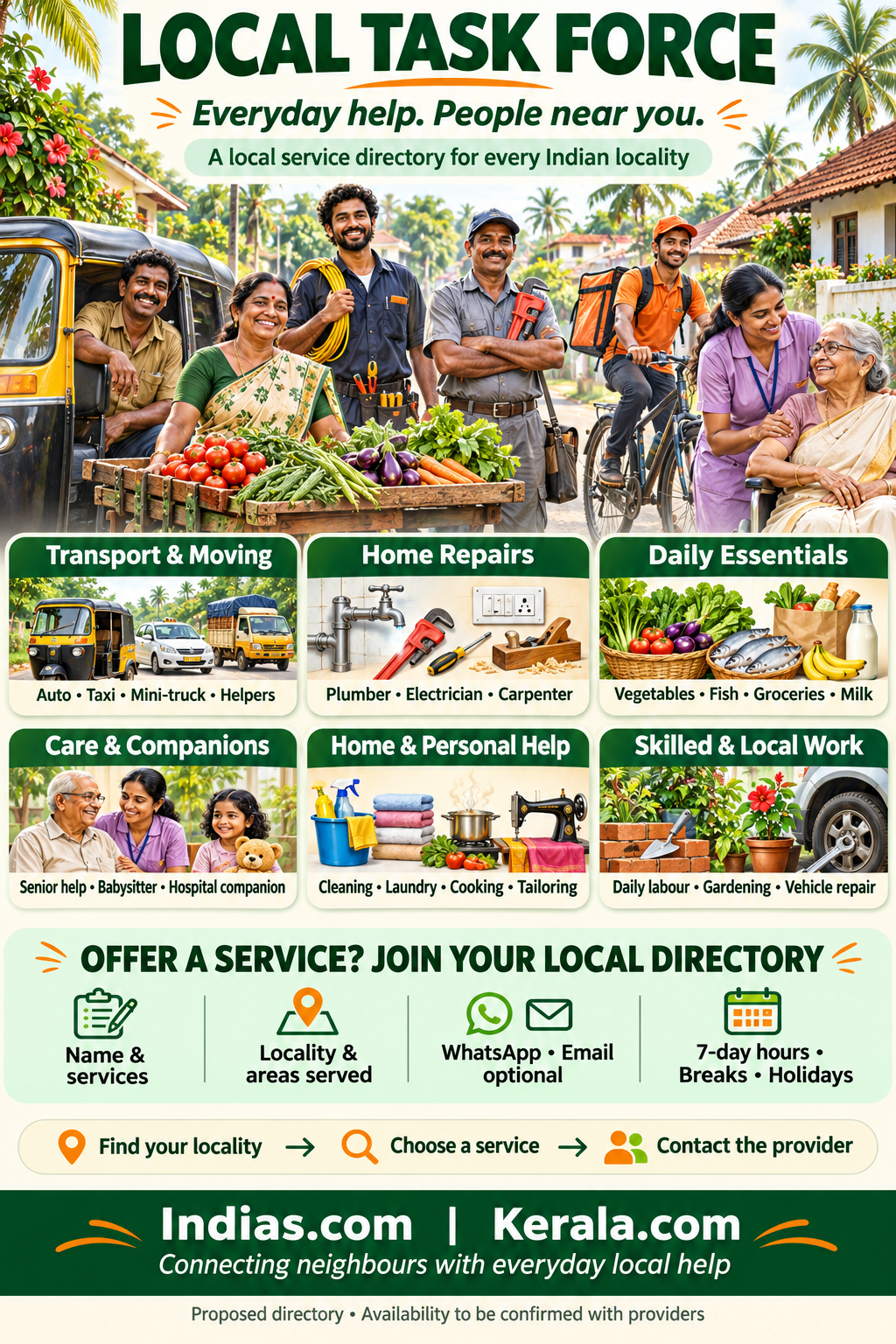
Everyday help from people near Rajasthan: drivers, repairs, vendors, care and more.
Check the provider’s experience, references, charges and suitability before engaging them. Local Task Force is a community directory, not an emergency service, government task force or endorsement.
Rajasthan is a mineral-rich state of India, with agriculture, mining and tourism as its main engines of growth. The state's mines produce gold, silver, sandstone, limestone, marble, rock phosphate, copper and lignite. It is the second-largest producer of cement and contributes one tenth of the salt produced in India.

 Rajasthan